Climate Change: Who Holds the Volume Knob?

Climate change involves everyone, but not everyone holds the same influence over the final outcome.

Every time a new climate report is released, the message often sounds familiar: “More action is needed.”

For many ordinary people, that can feel frustrating.

After all, most people are not running power plants. They are not operating steel factories. They are not writing national energy policies. They are simply trying to get through the day, pay their bills, and keep food on the table.

So who is really responsible?

The truth is that a large share of global greenhouse gas emissions comes from industry, energy production, transportation systems, and government decisions. These are large-scale systems that no single person controls.

That does not mean individuals have no role. People use electricity. They drive cars. They buy products. Their choices become part of a much larger picture.

But climate change is not a solo performance.

A song is shaped by every instrument, yet the loudest instruments have the greatest effect on what the audience hears. In the same way, every person contributes something, but industries and governments hold much of the volume knob.

That is why the debate often feels unfinished. Climate reports call for more action, while many ordinary people wonder what action they are realistically expected to take.

The question is fair.

A person can switch off a light. A government can reshape an energy grid. A factory can change how it produces goods.

All three make a sound.

But they do not all play at the same volume.

Full album. Press play.

⌨ ᴛʸᵖⁱⁿᵍ ᴏᵘᵗ ᵒᶠ ᵗʰᵉ ʙˡᵘᵉ ᵈᵃʳᵉᵐ ᵐᵘˢⁱᶜ ᵇˡᵒᵍ
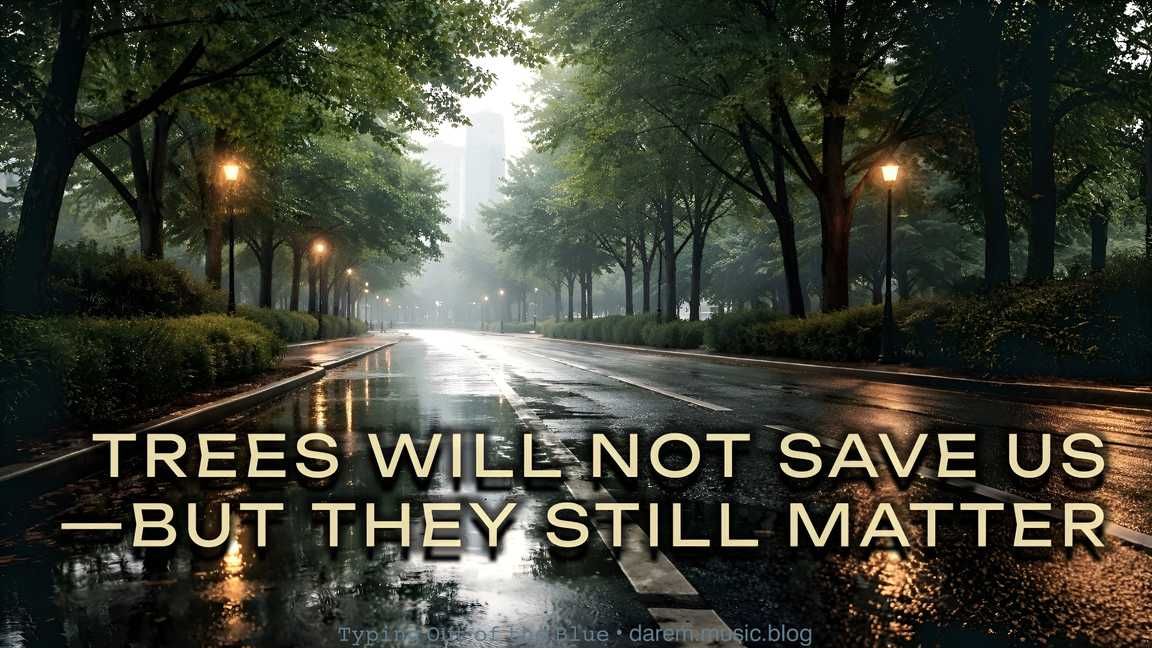
Trees Will Not Save Us—But They Still Matter

Climate change is not a planting problem. So what actually works?

There is a popular idea that says, “Plant more trees and climate change is solved.”

It sounds comforting. But it is not true.

No serious scientist ever said plants can save us from climate change.

What they said was simpler—and more honest: plants help, but only a little.

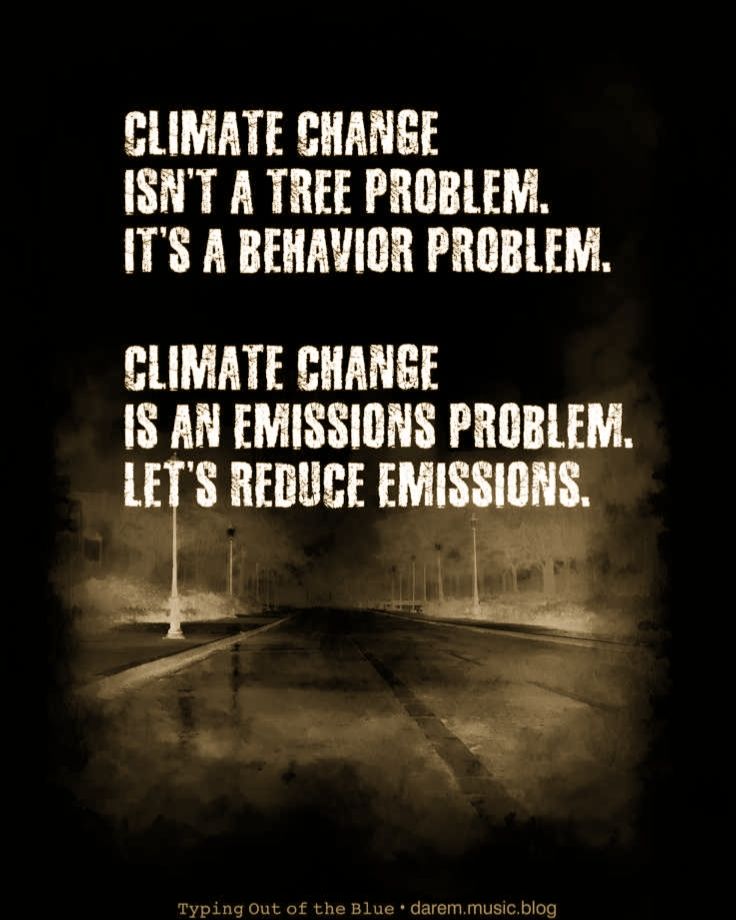
Climate change is an emissions problem.

It comes from fossil fuels, factories, transport, and endless consumption.

Trees cannot absorb carbon faster than humans release it. Even if the planet were filled with trees, as long as emissions continue, we still lose.

Recently, new studies showed that plants actually absorb less CO₂ than climate models once assumed¹.

This corrected an old belief that nature could take in more carbon as CO₂ levels rose.

But this is not the turning point some people think it is.

Even if the old belief were true—even if plants really could absorb much more CO₂—the impact on climate change would still be limited. Human emissions are simply too large and too constant for plants to offset in any meaningful way.

So the new finding does not change the conclusion.

It only removes a false sense of comfort that should never have existed.

So what is the real role of trees?

Trees are protectors, not saviors.

They:

  • limit floods
  • hold soil and prevent erosion
  • cool cities
  • protect water systems
  • reduce damage during storms

That is their true strength—local, physical, and immediate.

Think of trees as a shield, not a reset button.

They help us survive the impact—but they do not erase the cause.

So what is the easiest smart thing to do?

  • Use less electricity you do not need.
  • Drive less when walking or one short ride is enough.
  • Buy less, keep things longer.
  • Plant trees, but stop using them as excuses for bad habits.
  • Support rules that limit pollution, even when they are inconvenient.
  • Talk about climate change without panic or preaching—just facts.

Bottom line:

Plant trees, yes.

But cut emissions, always.

Nature helps us cope.

Only humans can choose to change.

¹ Kou-Giesbrecht, S., et al. Nitrogen limitation reduces the CO₂ fertilization effect. PNAS.

⌨ ᴛʸᵖⁱⁿᵍ ᴏᵘᵗ ᵒᶠ ᵗʰᵉ ʙˡᵘᵉ ᵈᵃʳᵉᵐ ᵐᵘˢⁱᶜ ᵇˡᵒᵍ
Digital Albums by Darem Placer on Bandcamp
Listen. Buy. Download.