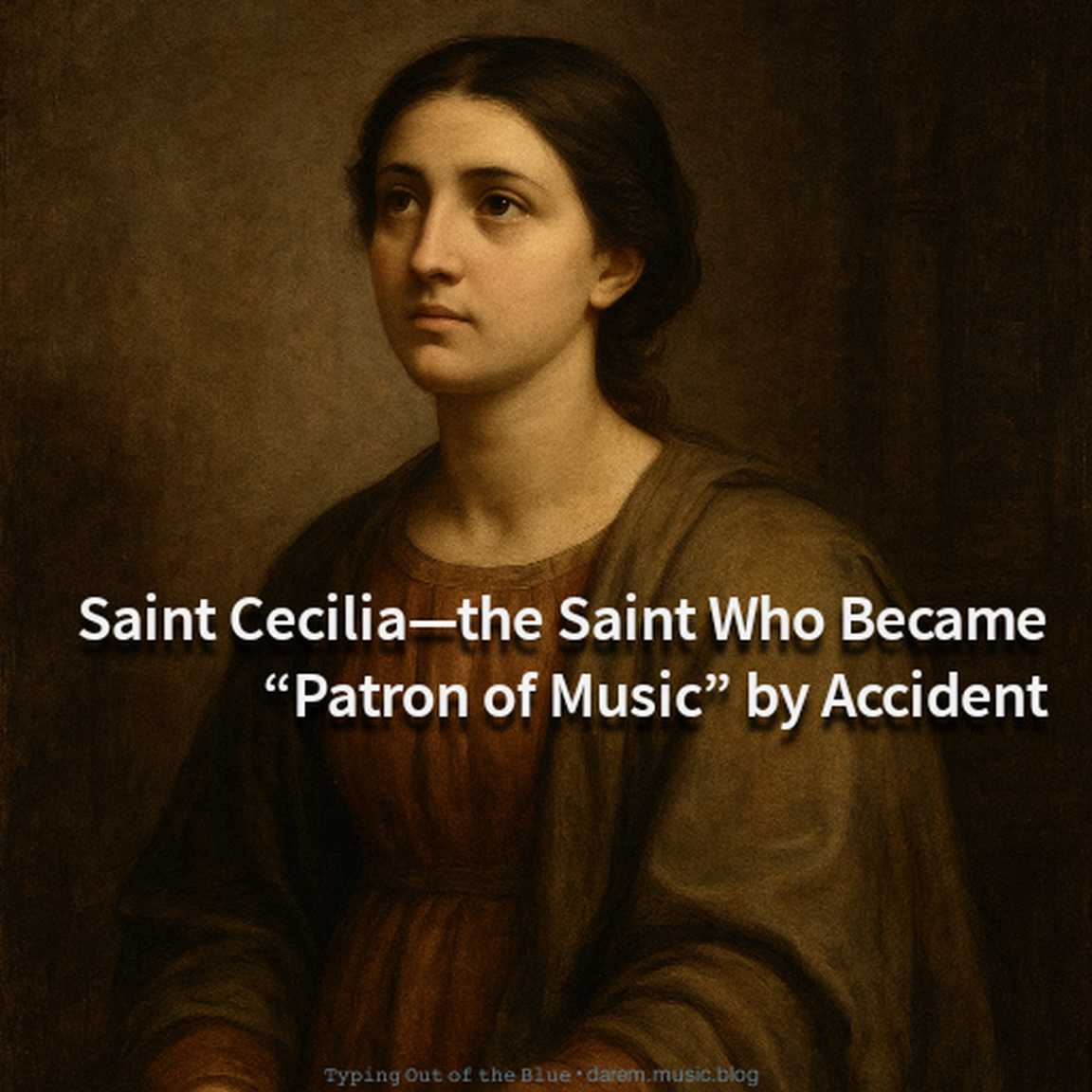
Saint Cecilia lived in third-century Rome, a time when Christians practiced their faith quietly—always aware that the Empire could turn against them without warning. She wasn’t known for singing in public or composing hymns. No records say she played any instrument. Her life was about courage, not concerts. So how did she end up holding a giant organ in almost every painting?
The shift happened centuries after her death. During the Middle Ages—long after Rome had fallen and Europe had changed—a devotional text called Passio Sanctae Caeciliae reshaped how people saw her. It included one line about her wedding day: “Cantantibus organis illa in corde suo soli Domino decantabat.” Meaning: “While the instruments played, she sang in her heart to the Lord.”
But the word organis didn’t mean “pipe organ.” In early Roman life, it simply meant instruments—the usual banquet music at a wedding. Cecilia wasn’t performing. She was praying silently while musicians played in the background.
Medieval artists misunderstood the phrase. By their time—roughly the 12th to 15th centuries—the pipe organ was rising as the main church instrument. So when they read organis, they imagined Cecilia playing one. Painters repeated the scene. Churches adopted it. And over time, the quiet Roman martyr from the 200s became the “patron of music” in the 1400s and beyond.
History says she wasn’t a musician. Tradition says she inspired music.
And somewhere between those two worlds—ancient Rome and medieval Europe—a symbol was born.
Saint Cecilia reminds us that the deepest songs aren’t always heard. Some remain in the heart—steady and faithful—even when the world around you plays a different tune.
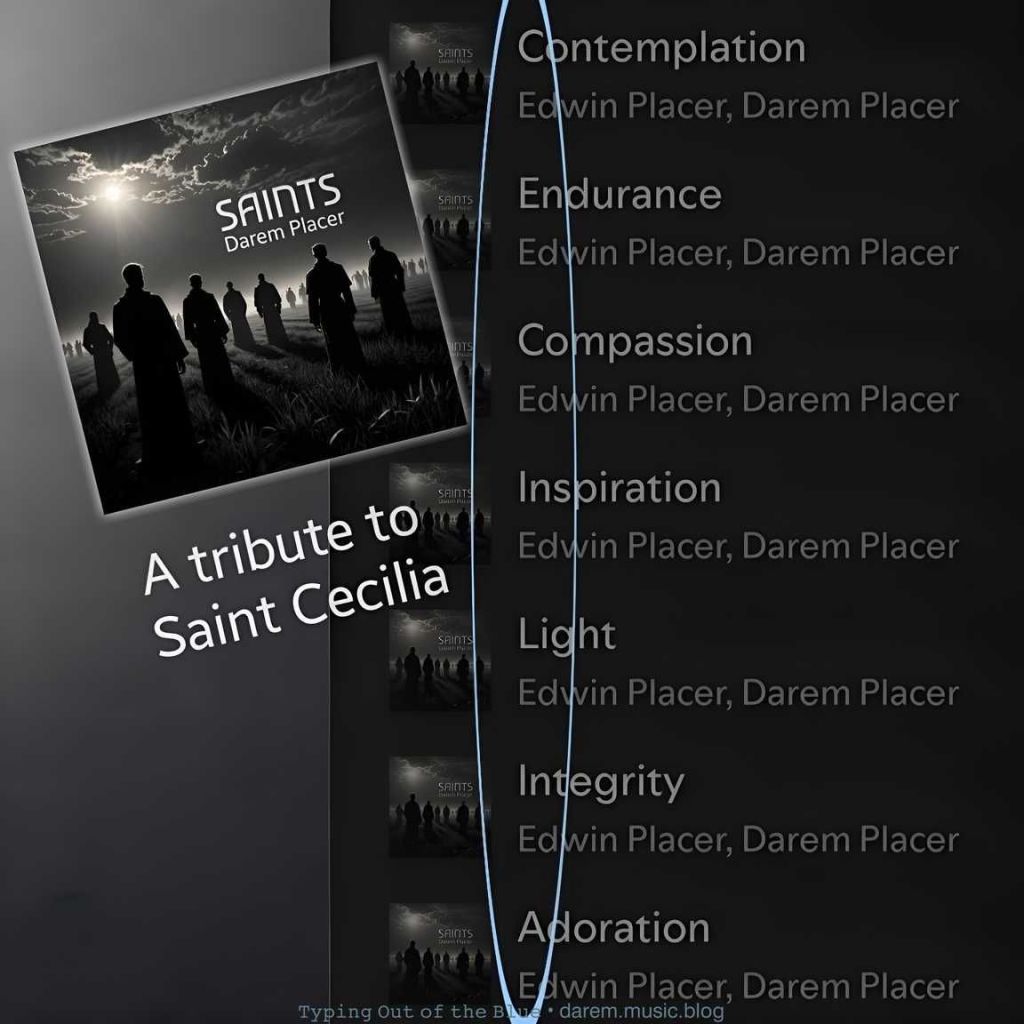
I wrote this album as a tribute to Saint Cecilia. I planned every track title so the first letters would quietly spell her name—CECILIA. It wasn’t random. It wasn’t subconscious. It was intentional, a small creative nod to the saint I believed stood with musicians.
Only later did I learn that her title as “patron of music” came from a medieval mistranslation, not from her actual life. For a moment, it felt strange, almost disappointing, to discover that the role I admired wasn’t historically accurate.
But the tribute still stands, just on a different ground.
Because even if the music title came later, Cecilia’s story is still shaped by quiet strength, steady faith, and the kind of courage that doesn’t need applause. And those virtues—Contemplation, Endurance, Compassion, Inspiration, Light, Integrity, Adoration—still carry her name with meaning.
The music didn’t honor a mistake.
It honored the symbol she became.
And sometimes that’s enough.

Listen on Apple Music, Apple Music Classical, and YouTube Music
⌨ ᴛʸᵖⁱⁿᵍ ᴏᵘᵗ ᵒᶠ ᵗʰᵉ ʙˡᵘᵉ ᵈᵃʳᵉᵐ ᵐᵘˢⁱᶜ ᵇˡᵒᵍ