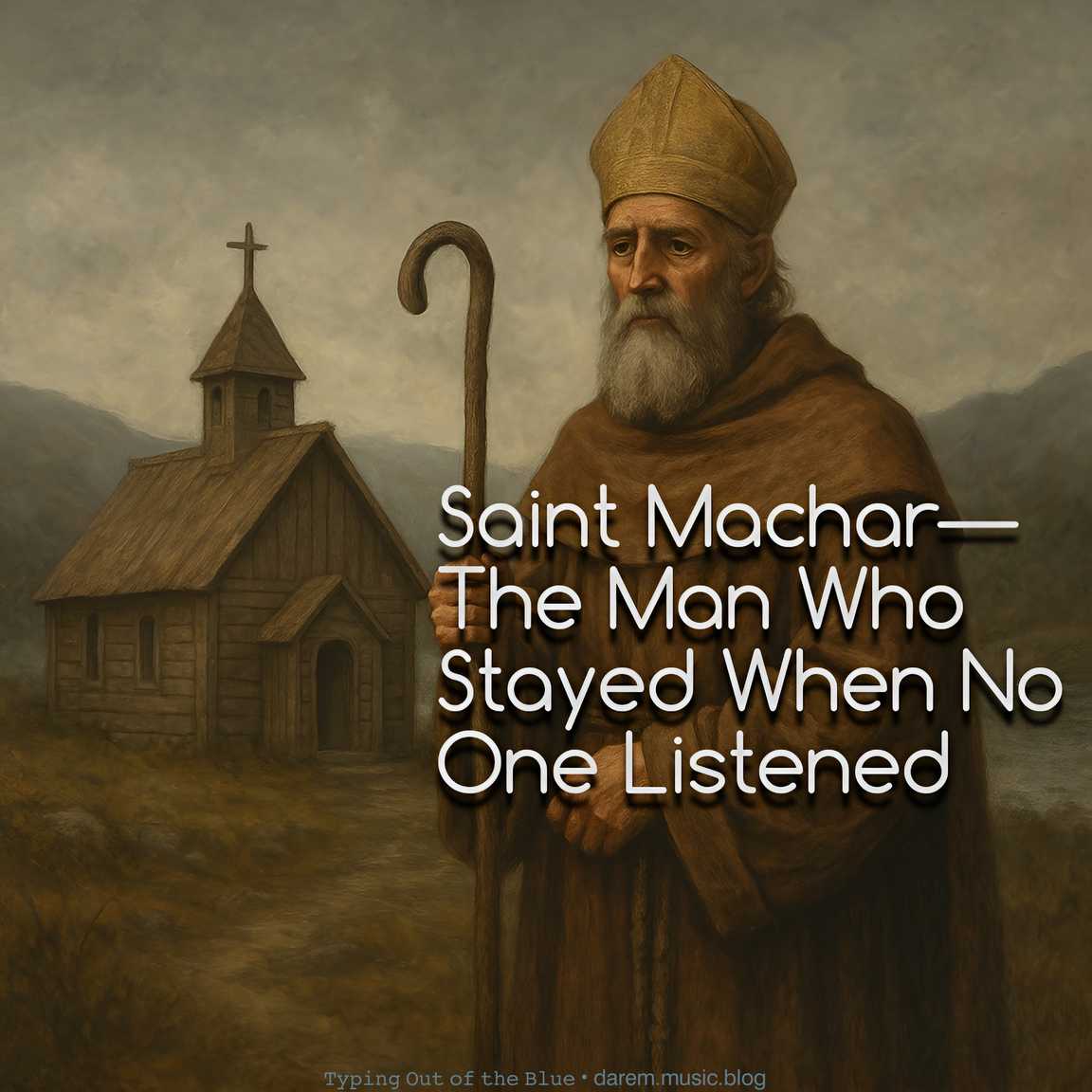
Saint Machar—The Man Who Stayed When No One Listened

Alone in a cold land, one man kept working quietly—his mission forgotten by many, but never erased by time.

Bishop Machar came from Ireland in the 6th century, one of St Columba’s companions. When Columba sent missionaries across the sea to bring faith to Scotland, he was sent alone to the northeast—to the land of the Picts. It was cold, wild, and full of disbelief.

He had no helpers, no shelter, no welcome. He lived among the locals, learned their language, shared their meals, and cared for their sick. He didn’t begin with preaching—he began with compassion. Over time, his quiet life spoke louder than any sermon.

Decades passed. The seasons changed, the faces around him came and went, but he stayed. Through loneliness, hunger, and endless winters, he kept working for the people who once doubted him. Near the curve of the River Don, shaped like a shepherd’s staff, he and the villagers built a small wooden church—a symbol of hope born from patience.

Saint Machar never chased recognition. He gave his life to a place that barely knew his name, and that’s what made his mission powerful. Centuries later, the church he built still stands—proof that purpose lasts longer than applause.

⌨ ᴛʸᵖⁱⁿᵍ ᴏᵘᵗ ᵒᶠ ᵗʰᵉ ʙˡᵘᵉ ᵈᵃʳᵉᵐ ᵐᵘˢⁱᶜ ᵇˡᵒᵍ
Traces of courage, silence, and sacrifice—this is Saints.

Listen on Apple Music, Apple Music Classical, and YouTube Music
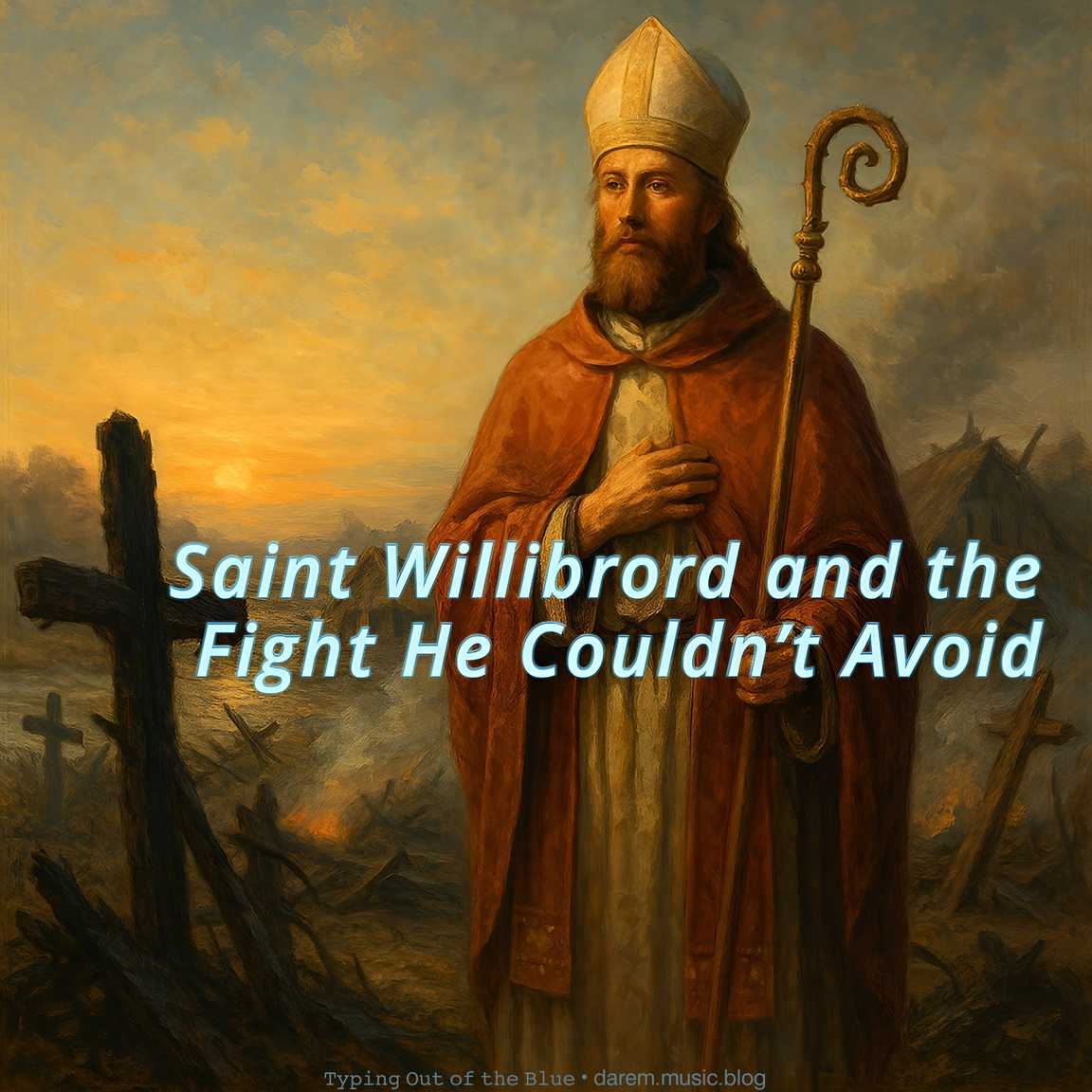
Saint Willibrord and the Fight He Couldn’t Avoid

From England to Frisia, he spread faith with courage, facing the king’s resistance and rebuilding in hope.

Around the year 690 AD, Bishop Willibrord went from Northumbria, England to Frisia, a region that is now part of the Netherlands, with a clear goal—to share his faith and bring peace to people who didn’t know Christ yet. For some time, his mission grew fast. He built churches, trained new believers, and found support from the Frankish leaders, the rulers of a powerful early kingdom that covered parts of today’s France, Belgium, and western Germany, who ruled nearby.

But not everyone welcomed him. The Frisian ruler, King Radbod, saw his work as a threat. He believed Bishop Willibrord’s faith would destroy their old ways and weaken his rule. So he started fighting back. Churches were burned, monks were forced to leave, and years of work disappeared almost overnight.

Bishop Willibrord could have given up, but he didn’t. He went back to Echternach, in what is now Luxembourg, where he rebuilt quietly. He continued teaching, sending new missionaries, and preparing for better times. After King Radbod’s death, Bishop Willibrord returned and started again—patiently, without anger, and with stronger faith than before.

He learned that doing what’s right doesn’t always mean winning fast. Sometimes, you lose everything first before the truth takes root.

That’s what made Saint Willibrord’s mission stand out. He didn’t fight with hate or pride. He fought with patience, prayer, and endurance. And in the end, his quiet strength changed a nation.

⌨ ᴛʸᵖⁱⁿᵍ ᴏᵘᵗ ᵒᶠ ᵗʰᵉ ʙˡᵘᵉ ᵈᵃʳᵉᵐ ᵐᵘˢⁱᶜ ᵇˡᵒᵍ

Traces of courage, silence, and sacrifice—this is Saints.

Listen on Apple Music, Apple Music Classical, and YouTube Music