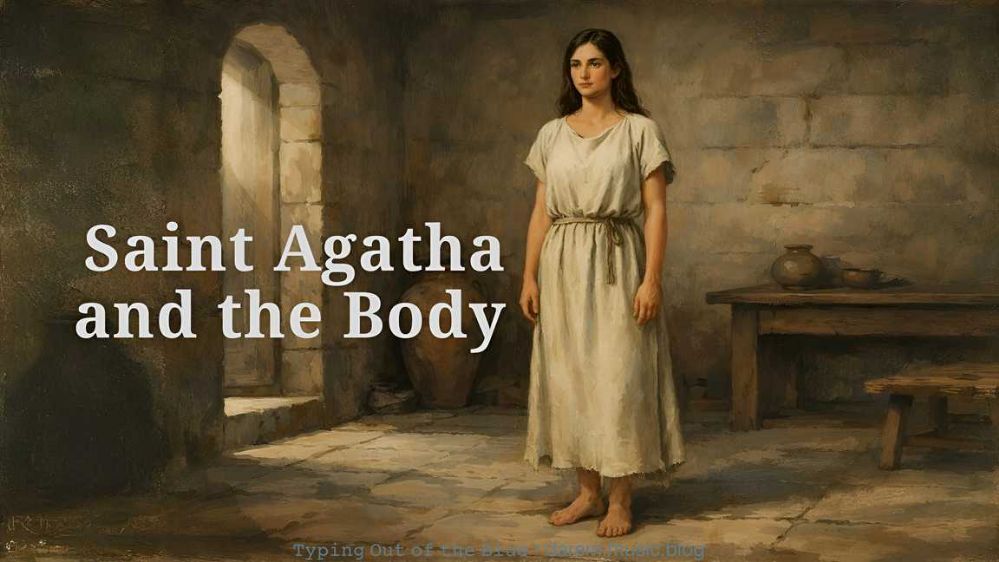
Agatha lived in the 3rd century, around 251, in Sicily. She was a young Christian woman at a time when refusing the Roman gods could cost you your life. Agatha chose a consecrated life early. She did not marry and did not try to protect herself through influence or power. When a Roman official demanded that she deny her faith, she said no. That refusal led to her arrest and imprisonment.
While in custody, she was tortured. One part of the torture was meant to humiliate her as a woman. Her breasts were deliberately mutilated to force her to change her decision and strip her of dignity. It did not work. Even after this, injured and weakened, she did not renounce her faith. She remained composed, prayed, and eventually died from what she endured.
This part of her story stayed with the early Christian community. Over time, people facing breast illness and physical suffering turned to Agatha, drawn by the belief that she understood bodily pain and vulnerability through her own experience.
She also became linked to nurses and caregivers. Nurses stay close to pain. They tend wounds, watch over fragile bodies, and remain present when healing is slow or uncertain. That kind of staying reflects the way Agatha lived her final days, faithful within suffering she did not choose.
Illness brings fear. Bodies fail. Care demands time and patience. Saint Agatha’s story holds to a simple truth. Dignity does not disappear when the body is wounded, and strength can exist even when a person can only endure, silently, what life has placed in front of them.
Let’s keep learning the saints’ way—day by day.
⌨ ᴛʸᵖⁱⁿᵍ ᴏᵘᵗ ᵒᶠ ᵗʰᵉ ʙˡᵘᵉ ᵈᵃʳᵉᵐ ᵐᵘˢⁱᶜ ᵇˡᵒᵍ