Saint Lawrence of Brindisi’s Stories
A friar who carried no sword found himself in places where words could matter more than weapons.

A friar who carried no sword found himself in places where words could matter more than weapons.
A bishop who helped explain the Christian faith clearly during one of the Church’s most confusing times.
Cyril lived in the fourth century, during a time when Christianity was still finding its footing after centuries of persecution. He was born around the year 313 in or near Jerusalem, not long after the Roman Empire began allowing Christians to practice their faith openly.
He eventually became the Bishop of Jerusalem, but his life as a bishop was far from peaceful. The Church at that time was divided by theological arguments, especially about who Jesus truly is. One major debate involved Arianism, a teaching that denied the full divinity of Christ. Cyril firmly defended the belief that Jesus is truly God and truly man, a teaching the Church had already affirmed.
Because of these conflicts, Cyril was exiled three times from Jerusalem. Different political and religious factions kept pushing him out of his position. Yet every time circumstances changed, he returned and continued guiding the Christian community.
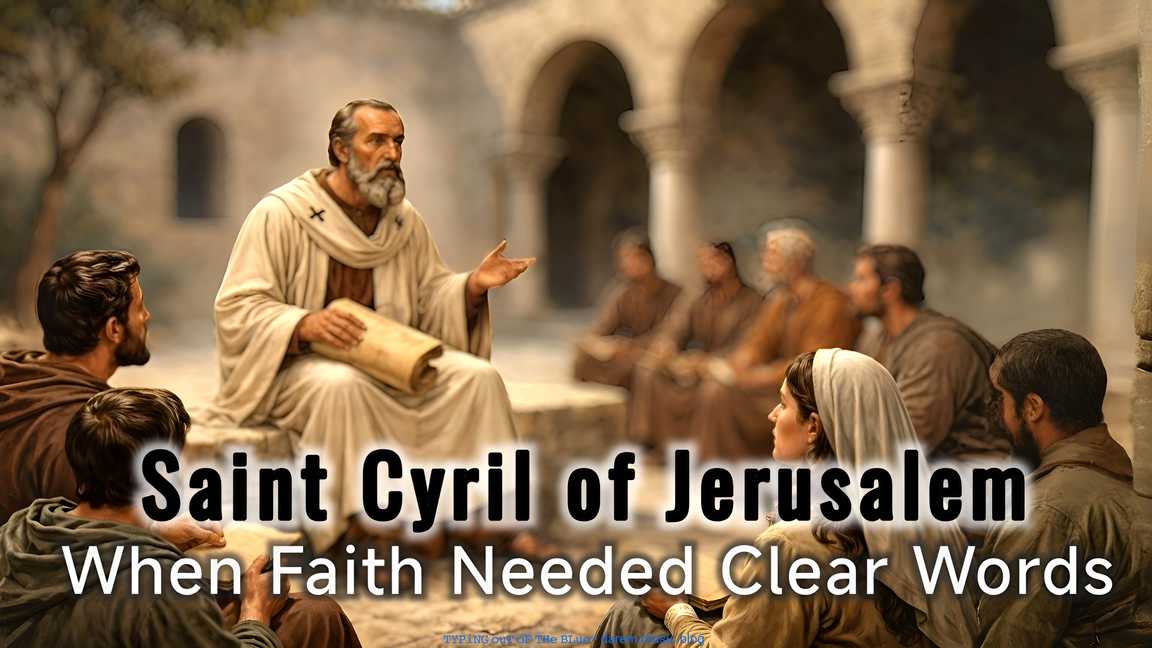
One of the reasons he is remembered today is his Catechetical Lectures. These were teachings given to people preparing for baptism in Jerusalem. In simple and clear language, he explained the Christian faith, the meaning of the sacraments, and the importance of living a faithful life. These lectures remain valuable historical records of how early Christians understood and practiced their faith.
Cyril also lived during the time when Christianity began to develop more organized worship and liturgy. His writings give us a rare glimpse of how the early Church celebrated the Eucharist and welcomed new believers.
He died in 386, after many years of service to the Church. Centuries later, the Church recognized the lasting importance of his teachings and named him a Doctor of the Church in 1883.
His life quietly shows that faith sometimes requires patience and endurance. Disagreements, misunderstandings, and setbacks can come even within communities of believers. Yet Saint Cyril’s example reminds us that staying faithful to truth and continuing to teach with clarity can still make a lasting difference.
Let’s keep learning the saints’ way—day by day.
⌨ ᴛʸᵖⁱⁿᵍ ᴏᵘᵗ ᵒᶠ ᵗʰᵉ ʙˡᵘᵉ ᵈᵃʳᵉᵐ ᵐᵘˢⁱᶜ ᵇˡᵒᵍ