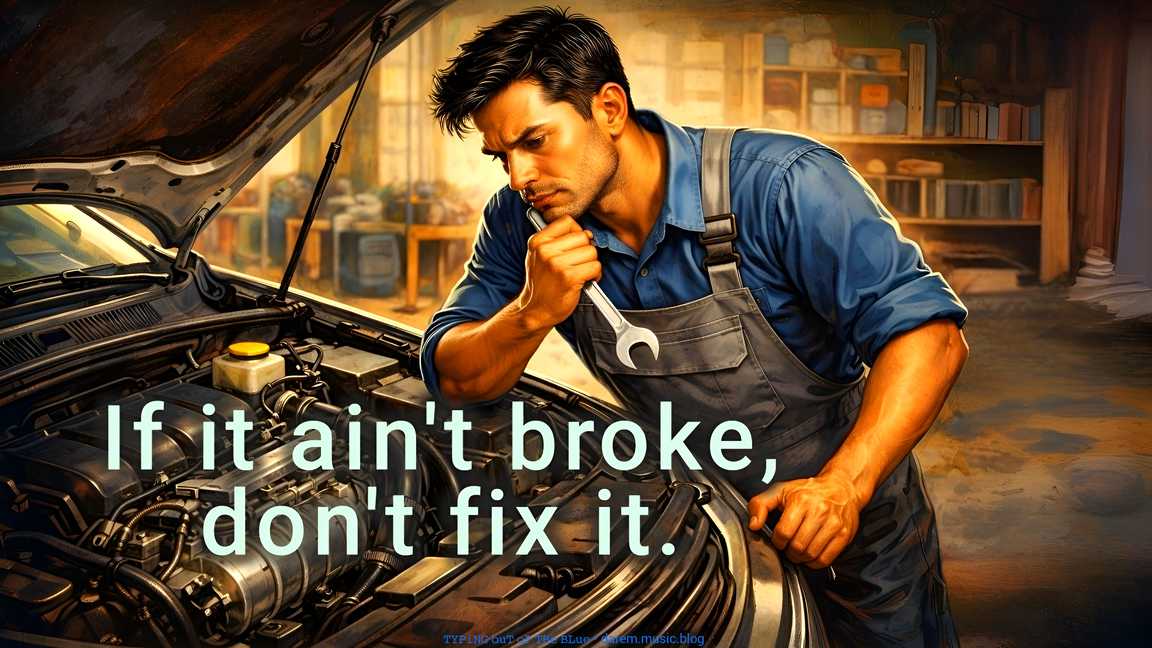
If It Ain’t Broke, Don’t Fix It

Stability is good. But knowing when to change before something breaks is better.

For those who’d rather listen.

When should we not follow the line, “If it ain’t broke, don’t fix it”?

It is a common saying. If something is working, we leave it alone. Like an old refrigerator that still cools our food. It runs. It does its job. Why touch it?

But there are times when this rule should not apply to us.

First, when danger is coming. Our roof may be fine. But a strong storm is on the way. Do we wait until it breaks before fixing weak parts? No. If we can see the risk ahead, it is better for us to act early.

Second, when something works but is no longer safe. It may still run. But if it no longer gets updates or support, it becomes risky for us. It is not broken yet, but it is exposed. Waiting may cost us more later.

Third, when there is a clearly better option. Not just newer. Not just faster. But truly better in quality, cost, or long-term results. Staying the same just because it works can stop us from growing.

Fourth, when “not broken” only means “good enough.” Something can function but still be weak or slow. In that case, improvement is not about fixing damage. It is about helping us do better.

Fifth, when safety is involved. In fields like aviation, medicine, or engineering, we do not wait for failure. We check and improve systems before problems happen. The cost of waiting is too high.

At the same time, the rule still has value for us.

If change is driven by ego, boredom, or the desire to look innovative, it can create problems. Not everything needs improvement. Stability matters too.

So when should we not follow the rule?

• When we can clearly see risk ahead. 
• When something works but is becoming unsafe for us. 
• When there is a truly better option for us. 
• When “good enough” is holding us back. 
• When waiting could cause serious damage.

“If it ain’t broke, don’t fix it” is not a strict rule for us. It is a guide.

The key is knowing when to protect what works for us—and when to improve it before it fails.

⌨ ᴛʸᵖⁱⁿᵍ ᴏᵘᵗ ᵒᶠ ᵗʰᵉ ʙˡᵘᵉ ᵈᵃʳᵉᵐ ᵐᵘˢⁱᶜ ᵇˡᵒᵍ

Unbroken Pisces of a Tangled Mind • Darem Placer

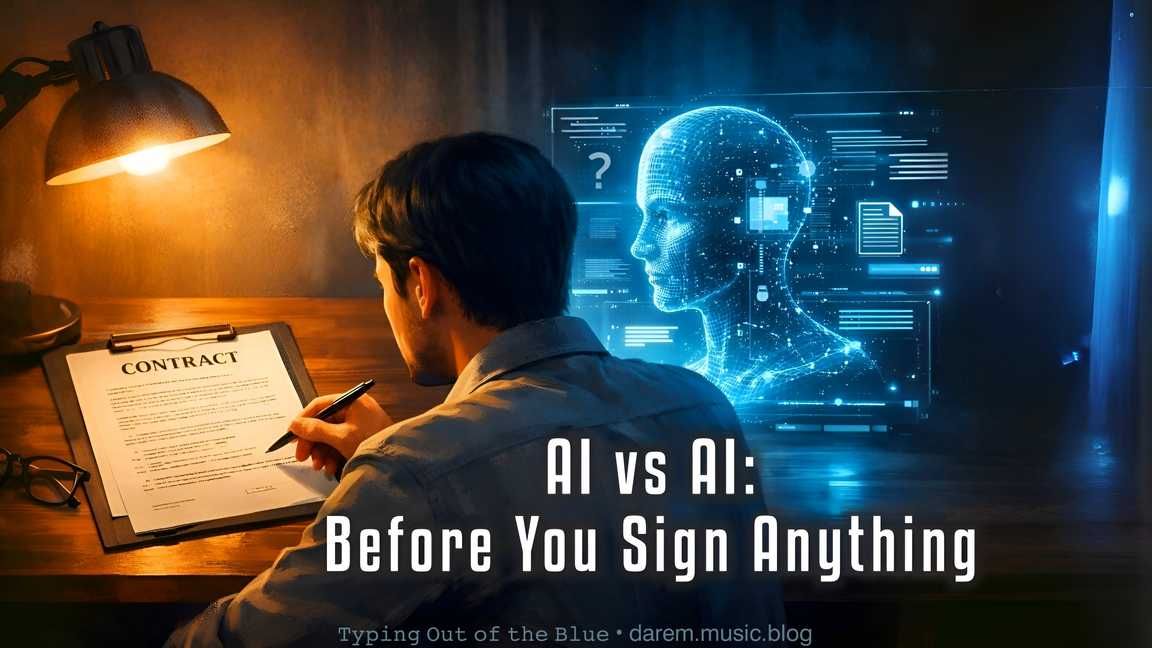
AI vs AI: Before You Sign Anything

Contracts today are often written with AI. Reading them without help may no longer be enough before you sign.

For those who’d rather listen.

Almost everything today comes with a contract, even the simplest things. A small service, a quick signup, a basic agreement. Then suddenly you are handed a document that is more complicated than the thing you are agreeing to.

That is not accidental. Many modern contracts are no longer written purely by humans. They are assisted by AI, built from templates, optimized for risk, and filled with language designed to survive future changes. Polite tone. Clean structure. Harmless-looking clauses that quietly cover a lot of ground.

So if the contract was likely drafted with AI tools, why would you read it without help?

Depending on AI in this situation is not laziness. It is balance.

This is not about letting AI decide for you. It is about using AI as a lens. A pattern spotter. A way to test language that was designed to be flexible, expandable, and protective of the other side.

A simple way to do this is to scan or photograph the contract, upload it to an AI you trust, and ask direct questions. What is the worst-case scenario for me here? Which clauses quietly favor the other side? What parts could be used differently if technology changes? You are not asking AI to decide for you. You are using it to spot risks before you sign.

Modern contracts are no longer built around specific situations. They are built around concepts. Access. Use. Distribution. Derivatives. Training. Reuse. These words do not expire. They adapt.

The real danger is not AI. The danger is speed reading. Contracts today are written slowly and strategically, but signed quickly by people who assume the document matches the simplicity of the product.

A simple rule still applies. If you cannot explain a clause back to yourself in plain language, you did not understand it. And if you did not understand it, signing becomes a gamble.

The side asking you to sign is already inside an AI-built safe zone. Using AI before you sign is not about beating them. It is about finding where you stand, what you gain, and where the balance actually is.

This is why AI vs AI makes sense in this era. They wrote the maze with tools. You bring your own tools to read it.

Depending on AI here is not surrender. It is awareness. The signature is still yours, but now your eyes are open.

⌨ ᴛʸᵖⁱⁿᵍ ᴏᵘᵗ ᵒᶠ ᵗʰᵉ ʙˡᵘᵉ ᵈᵃʳᵉᵐ ᵐᵘˢⁱᶜ ᵇˡᵒᵍ