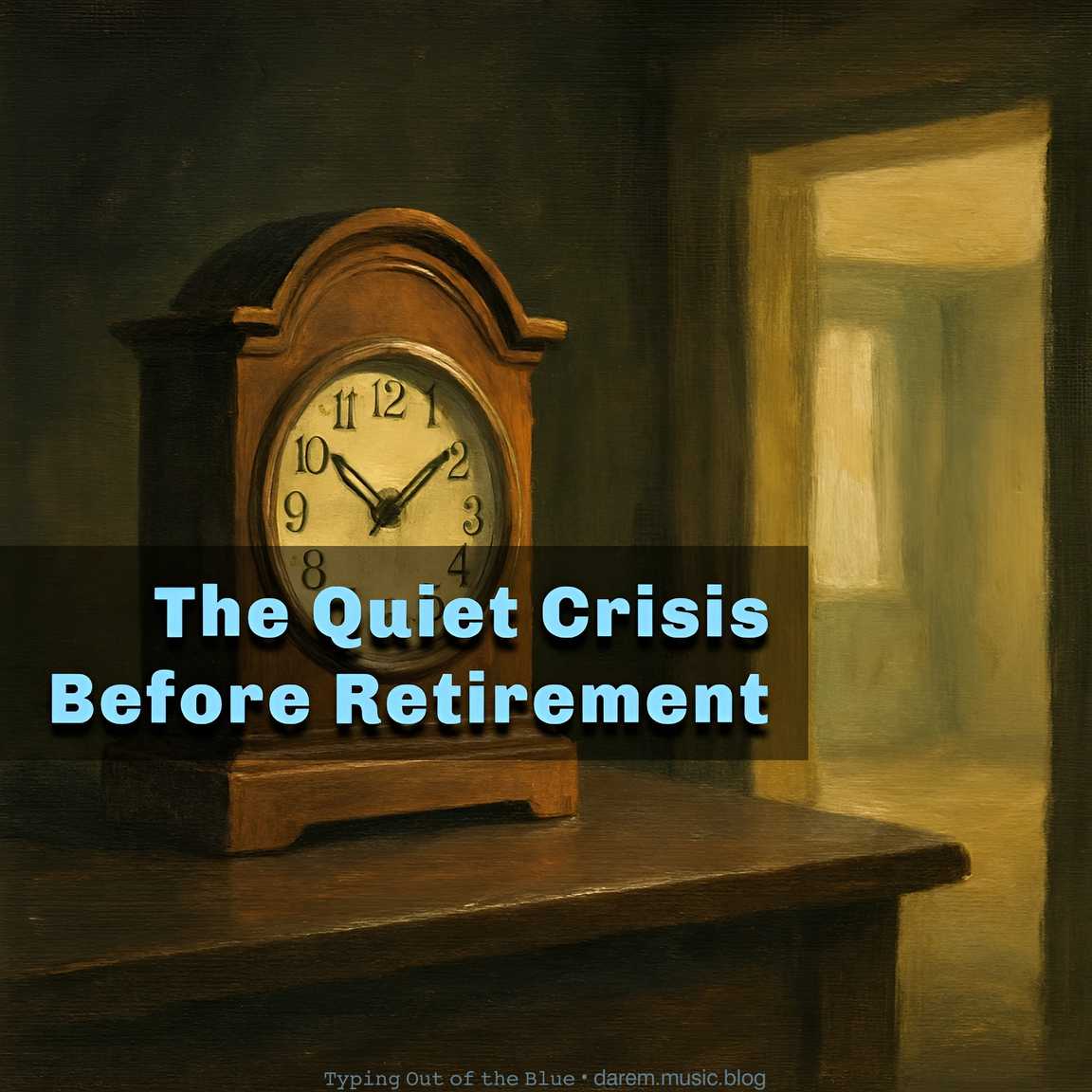
The Quiet Crisis Before Retirement

The common worries people feel before retirement, and how this stage eventually comes to everyone.

Lately, I’ve been curious about something I’ve seen in other people—the quiet crisis that appears before retirement. It’s not dramatic. It usually begins with a small question in their mind: “What happens after all of this?” And watching them face it makes you realize that sooner or later, every one of us will reach that same turning point.

You can see how long-time workers start to shift inside. They’ve spent years carrying responsibilities, solving problems, and being the steady presence everyone depends on. So when retirement comes into view, the whole idea feels unfamiliar. Not frightening, not sad—just a different rhythm they haven’t tried before.

Then the deeper questions follow.

What will my days look like?
Will I still feel useful?
Who am I when the routine slows down?

People call this a pre-retirement crisis. It’s not a breakdown. It’s the heart adjusting after decades of structure and purpose. When someone has poured so much of their life into work, stepping away from that rhythm naturally creates a pause.

But retirement isn’t an ending. It’s a shift in tempo. A season where people can choose their own pace, their own mornings, and their own kind of purpose. They don’t lose themselves—they just begin shaping a personal chapter that’s been waiting in the background for years.

Maybe this whole phase is life giving them space to prepare for that new chapter—one that finally belongs to them after giving so much to everyone else.

Old • Darem Placer

Thoughts drift like clouds across a fading sky—until I find myself in a quiet room—Alone With a Piano.

Listen to Alone With a Piano on Apple Music and YouTube Music

Alone with a Piano includes Old.

⌨ ᴛʸᵖⁱⁿᵍ ᴏᵘᵗ ᵒᶠ ᵗʰᵉ ʙˡᵘᵉ ᵈᵃʳᵉᵐ ᵐᵘˢⁱᶜ ᵇˡᵒᵍ
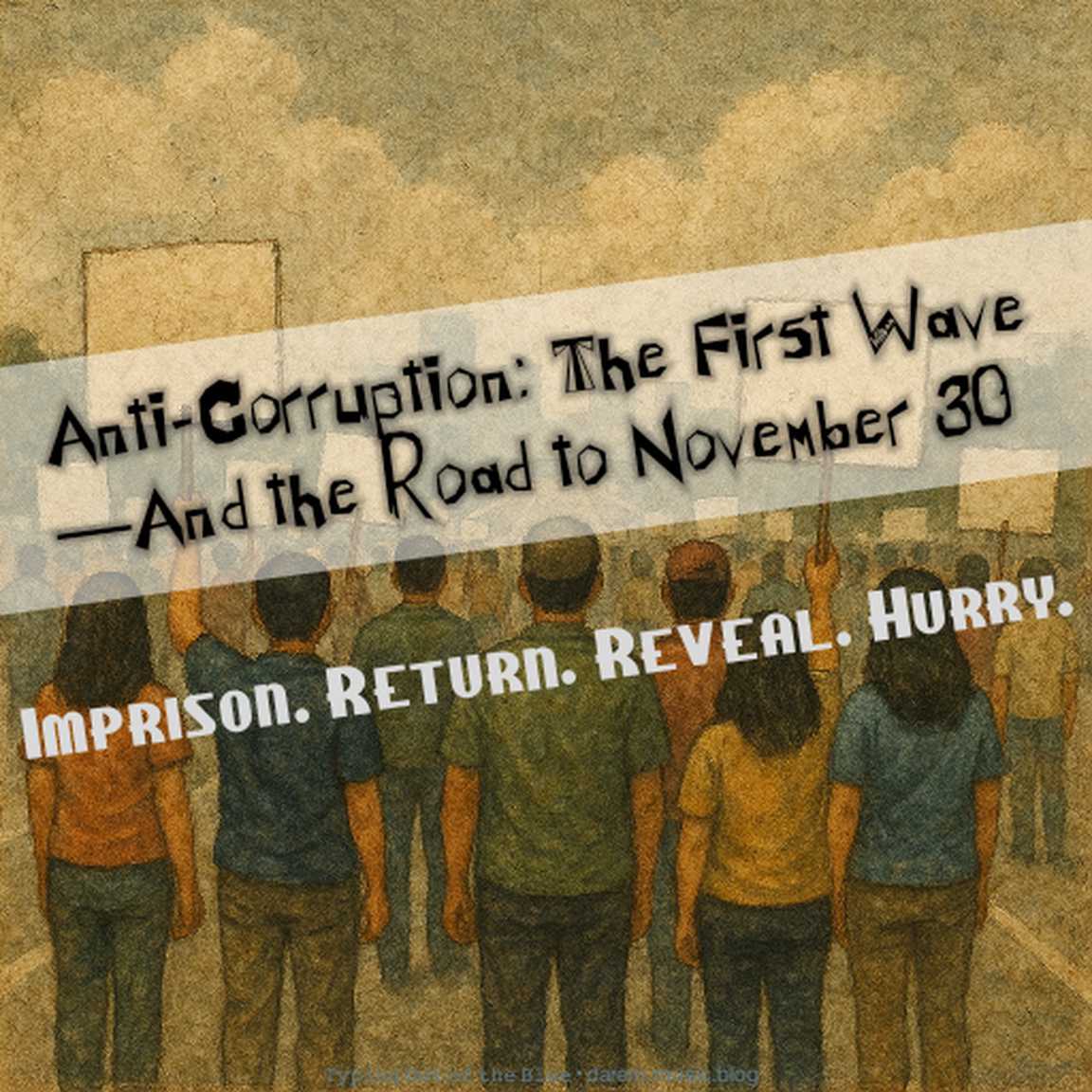
Anti-Corruption: The First Wave—And the Road to November 30

A clear look at how a citizens’ anti-corruption movement began, grew, and now approaches a defining moment.

The first wave started long before anyone called it a “movement.” It began when church leaders and civil-society groups finally said what many people were already thinking. They were the first to make the call. Then groups on the ground—like Taumbayan Ayaw sa Magnanakaw at Abusado Network Alliance (TAMA NA)—picked it up and began shaping it into something bigger.

From there, the circle widened fast. Student organizations joined. Labor unions stepped in. Youth groups, faith communities, civic alliances, even political coalitions—each one adding their own weight until September 21, 2025, no longer felt like an ordinary day on the calendar.

Why that date?

Because September 21 carries a shadow. It’s the anniversary of Martial Law—a day remembered not for silence, but for what silence cost. Choosing that day wasn’t random—it was symbolic. A reminder that accountability loses its value when people wait too long to demand it.

The reason behind the call was clear: alleged massive corruption in infrastructure and flood-control projects—misused funds, ghost projects, and billions that never made sense. People weren’t chasing shallow fuss or empty drama—they were chasing answers. And the more those answers stayed hidden, the more the movement pressed forward.

It didn’t grow because one person led it. It grew because nobody could keep pretending the questions were small.

By the time the gatherings in EDSA People Power Monument ended on September 21, the first wave had done its job. It proved that frustration wasn’t isolated. It showed that ordinary people, spread across different groups, could still move in the same direction without waiting for a central figure to tell them what to do.

That’s why November 30, 2025 exists. Not as a replay, not as a louder version of the same cry—but as the continuation. And the date carries its own weight. November 30 is Bonifacio Day—a reminder of the kind of bravery that refuses silence, the kind that steps forward even when it’s risky. The next half of a conversation that September started. The moment where whispers sharpen into a clear request for something concrete—answers, accountability, even just one visible step toward setting things right.

On November 30, people are set to gather again at the EDSA People Power Monument, hoping that this second wave brings something more solid than silence.

If something real finally happens on November 30, then that’s where the true turning point begins.

And after that, the line stays blank—waiting for whatever comes next.

Imprison. Return. Reveal. Hurry.

⌨ ᴛʸᵖⁱⁿᵍ ᴏᵘᵗ ᵒᶠ ᵗʰᵉ ʙˡᵘᵉ ᵈᵃʳᵉᵐ ᵐᵘˢⁱᶜ ᵇˡᵒᵍ