Deck the Halls—The Story

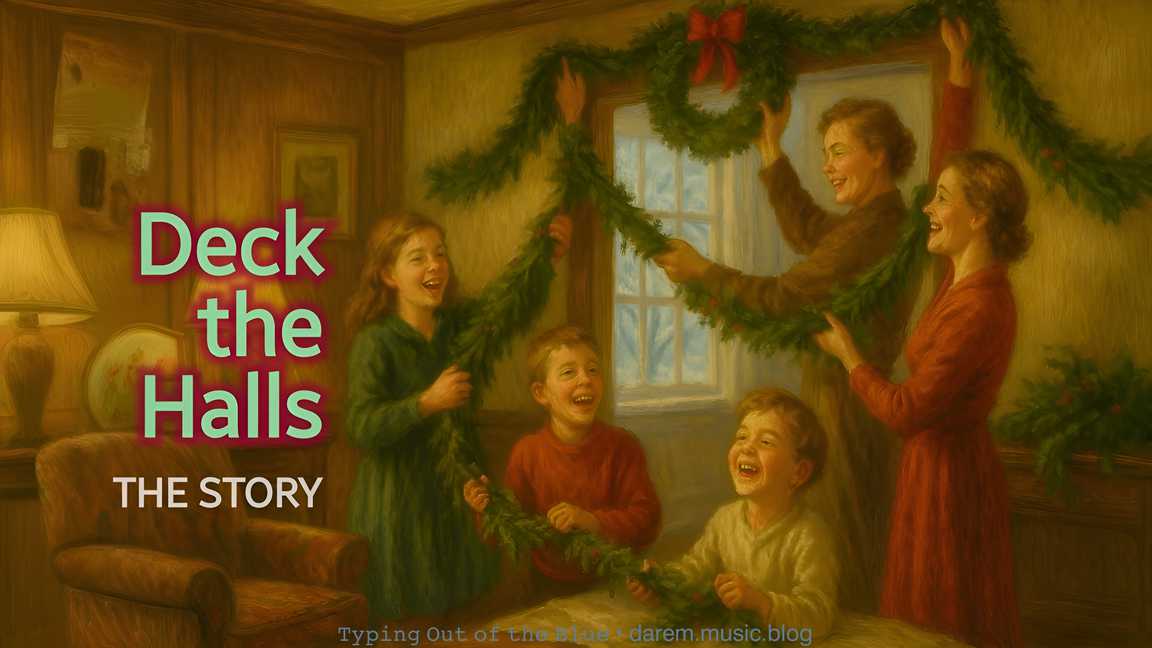
A lively home lights up as a family decorates together and welcomes the warmth of Christmas

The house was busy the moment people arrived. Someone rushed in carrying fresh holly, and everyone helped cover the halls with it until the rooms looked ready for the season. Laughter kept breaking out as they worked, like the cheer of the holiday was pushing its way in ahead of the cold.

When they finished decorating, they went off to change into their bright festival clothes. They returned wearing colors that stood out even in the dim winter light, and the whole place suddenly felt warmer.

A yule log was set on the fire, and its flame caught quickly. The glow spread across the room just as one of the guests picked up a harp and played a familiar tune. Voices followed the melody, rising and falling with the rhythm of an old Yuletide carol everyone already knew by heart.

The group moved closer to the fire, telling small stories from past winters. Outside, the old year felt like it was slipping away fast, but inside the house, no one seemed bothered by time. More friends arrived—young men and women brushing snow from their coats—and they joined the singing without hesitation.

The wind outside stayed sharp, but it didn’t matter. The house was bright, filled with music, and alive with people enjoying the season together.

Deck the Halls

The melody dates back to the 16th century and comes from the Welsh winter song “Nos Galan.” The English version familiar today was prepared by Thomas Oliphant in 1862.

Merely Christmas • Darem Placer
Out this season on Bandcamp.

⌨ ᴛʸᵖⁱⁿᵍ ᴏᵘᵗ ᵒᶠ ᵗʰᵉ ʙˡᵘᵉ ᵈᵃʳᵉᵐ ᵐᵘˢⁱᶜ ᵇˡᵒᵍ
When Solutions Ask People to Adjust

Everyday numbers sound reasonable—until Filipino life has to adjust to them.

How Everyday Numbers Meet Filipino Life

Some decisions sound reasonable—until they meet everyday life.

A daily meal budget of P64 is described as enough to avoid food poverty.
In real markets, that amount barely covers rice and a simple viand, even before prices change.

A P500 Noche Buena budget is presented as sufficient.
For many Filipino families, Noche Buena is not one item. It is shared food, preparation, and tradition. The number does not reflect how celebrations actually happen.

Mall sales are suspended to manage traffic and crowding.
Instead of improving flow and planning, economic activity pauses, and workers and small sellers carry the impact.

E-bikes are restricted or removed from major roads.
Without proper lanes or ready alternatives, commuters are left to adjust routes, time, or daily expenses.

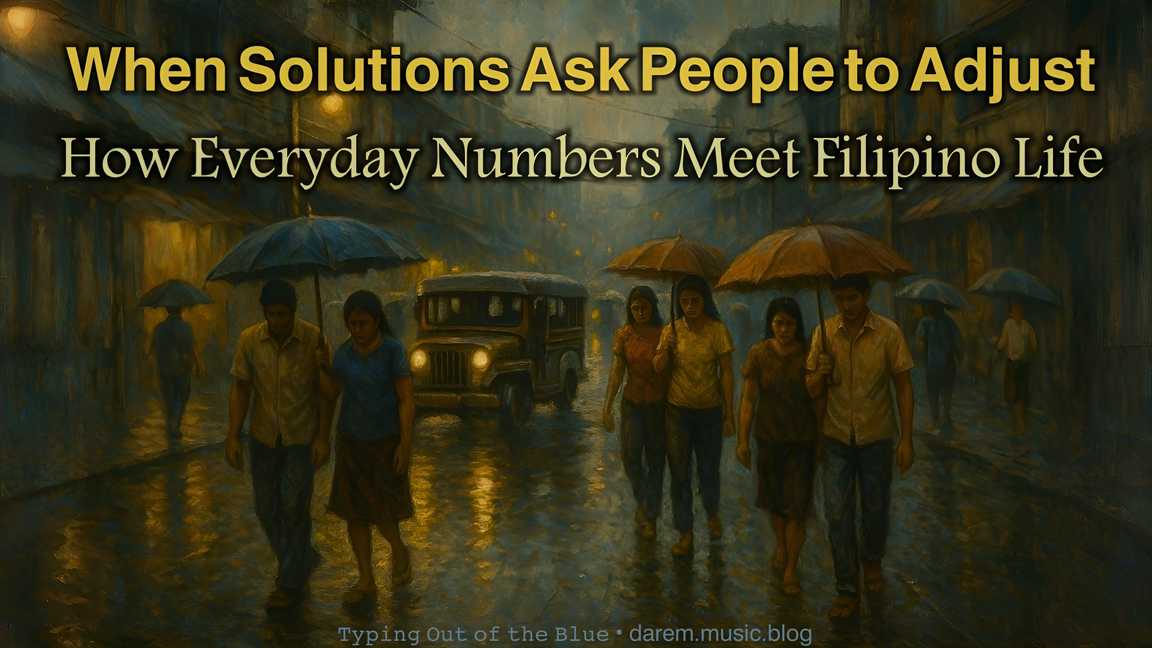
Flooding during heavy rain is treated as routine.
People lift appliances, avoid roads, cancel plans, or stay home. The adjustment happens at the household level, while the condition repeats.

Public hospitals are described as accessible and affordable.
In practice, patients bring their own supplies, wait for hours, or look elsewhere if they can. The gap is filled by personal effort.

This is not about politics.
It is about how numbers behave when they leave paper and enter daily life.

Ang mas masakit? Laging may tone na parang:
Diskarte nyo na yan.”
Pwede na yan.”
Kaya nyo na yan.”
Masasanay din kayo.”

What follows is not anger, but expectation.

The expectation that people will stretch budgets.
The expectation that commuters will find another way.
The expectation that families will make do.

This frames daily life as something that can always be adjusted.

Not as lived experience.
Not as partnership.
But as figures that can be recalculated.

Each decision may have its reason.
Each announcement may sound logical.

But logic on paper is different from life on the street.

Filipinos adapt. They always have.
But adaptation should not be the permanent solution.

Reality responds quietly—through receipts, commutes, hospital lines, and rain-soaked streets.

⌨ ᴛʸᵖⁱⁿᵍ ᴏᵘᵗ ᵒᶠ ᵗʰᵉ ʙˡᵘᵉ ᵈᵃʳᵉᵐ ᵐᵘˢⁱᶜ ᵇˡᵒᵍ

Merely Christmas • Darem Placer
Out this season on Bandcamp.