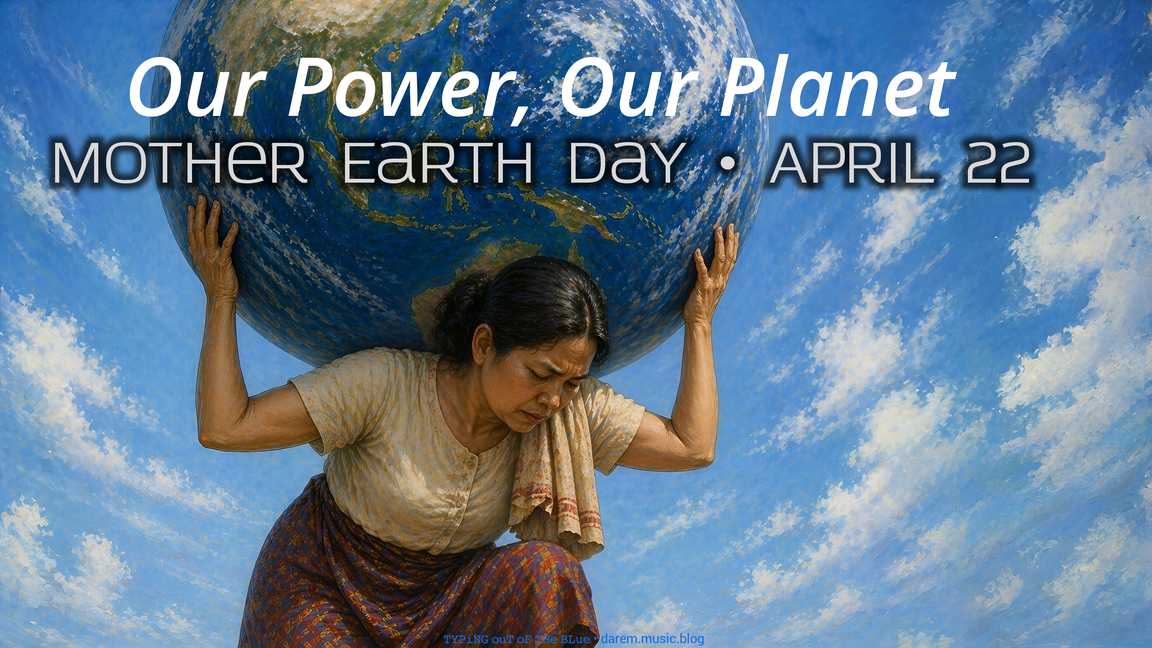
There’s a reason people call the Earth “Mother.” Not as poetry. Not as a slogan. It’s something older than that.
A mother gives, and the house runs because she does. Food is there. Water is there. The lights are on. No one stops to count how many small things had to work just to make that happen.
That is how we live on this planet.
The ground holds us. The air keeps us breathing. The oceans do more than we notice. It all works in the background, steady enough to feel permanent, until small changes begin to show. Hotter days that linger. Floods where they did not happen before. Resources that cost more, last shorter, or run out faster than expected.
The shift is not only around us. It is in how we live. We take quickly. We replace instead of repair. We ignore instead of adjust. Not out of bad intent, just habit. And habit, repeated, sets direction.
That is where things turn.
The same patterns can be redirected by the same kind of choices. Nothing grand, nothing perfect, just consistent.
Use what lasts. Fix what still works. Buy only what will be used. Cut waste where it builds. Support what does not take more than it gives.
A mother keeps a home running through what she does every day. Not once, not occasionally, but daily. What we do now becomes the condition we live in next.
The power is already in the way we live. What we do with it decides what kind of planet we keep.
⌨ ᴛʸᵖⁱⁿᵍ ᴏᵘᵗ ᵒᶠ ᵗʰᵉ ʙˡᵘᵉ ᵈᵃʳᵉᵐ ᵐᵘˢⁱᶜ ᵇˡᵒᵍ