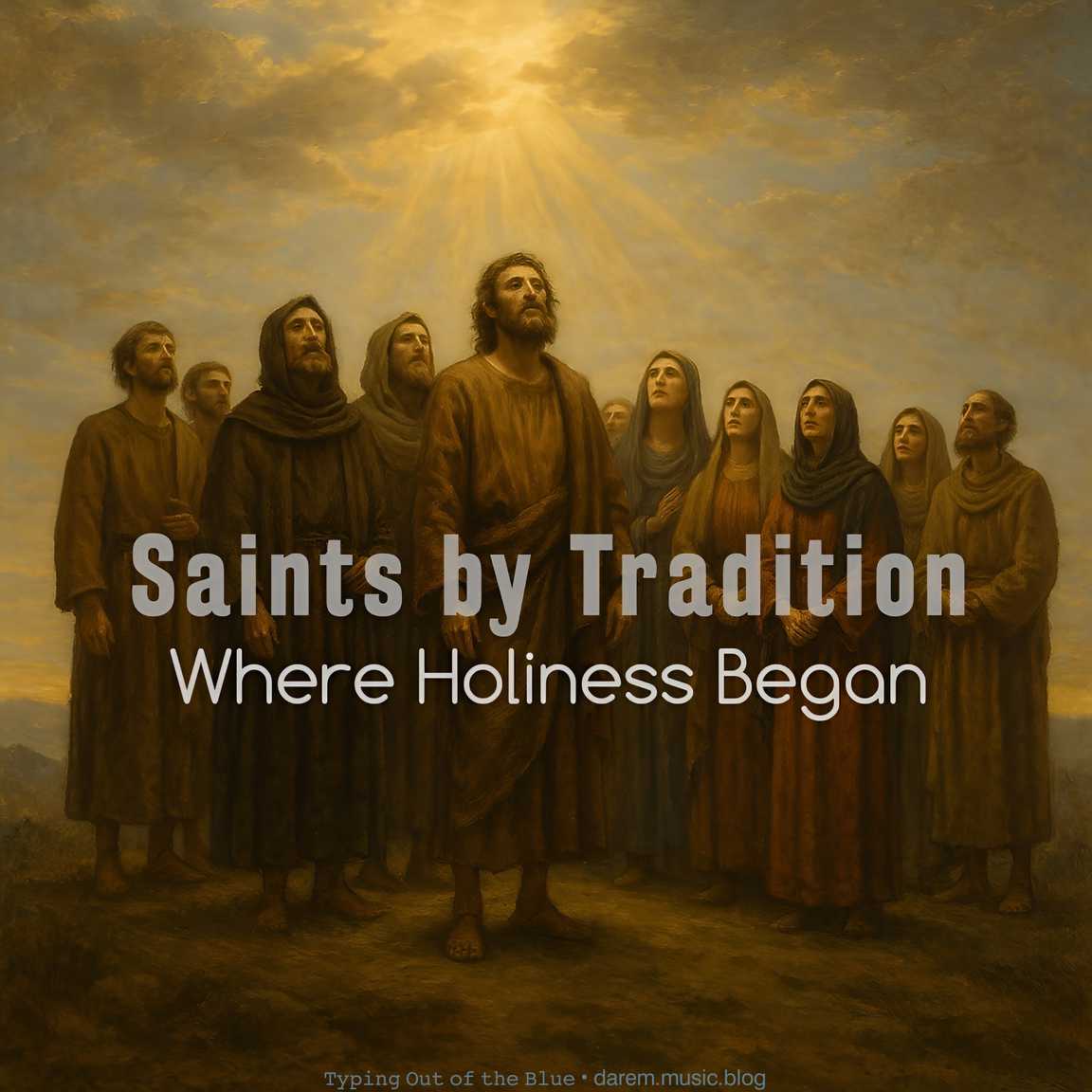
Saints by Tradition—Where Holiness Began

Before sainthood had documents or decrees, the first saints lived holiness so real—it echoed through generations.

Before there were Vatican seals, Latin decrees, and canonization papers, sainthood was simpler—it was lived, not declared. The early Church didn’t wait for Rome to confirm what the people already saw: lives so pure, so selfless, that they reflected Heaven on earth. These are the saints by tradition—those whose faith endured through the voice of generations, not through signatures on parchment.

✝️ The Pre-Congregation Era

Before 1000 AD, sainthood was local. The faithful honored martyrs, monks, mothers, and hermits whose holiness burned through history. When Saint Ulrich of Augsburg was formally canonized in 993, he became the first in history to be “officially” approved by the pope. Everyone before him? Saints by faith and memory.

Scholars estimate there are about 6,000 to 8,000 saints by tradition—people revered long before any Vatican process existed. Here are just ten of them.

🌿 Ten Saints by Tradition

1. Saint Peter the Apostle — Fisherman turned rock of the Church, crucified upside down in Rome.

2. Saint Paul the Apostle — Persecutor turned preacher whose letters still shape Christian thought.

3. Saint Mary Magdalene — The first to witness the Resurrection; the messenger of the risen Christ.

4. Saint Anthony the Great — Egyptian hermit whose desert solitude birthed monastic life.

5. Saint Catherine of Alexandria — Scholar and martyr who defended her faith against pagan philosophers.

6. Saint Monica — Mother whose persistent prayers converted her once-lost son, Augustine.

7. Saint Augustine of Hippo — Rebel-turned-theologian who wrote Confessions and defined grace.

8. Saint Martin of Tours — Soldier who shared half his cloak with a beggar and found Christ in compassion.

9. Saint Nicholas of Myra — Bishop known for secret generosity, long before he inspired Santa Claus.

10. Saint Frideswide of Oxford — Noblewoman who founded a monastery and became Oxford’s patron of mercy.

They didn’t need to be certified—their holiness was truly lived.

Holiness, after all, isn’t a title—it’s a witness kept alive by lives that point the way Home.

⌨ ᴛʸᵖⁱⁿᵍ ᴏᵘᵗ ᵒᶠ ᵗʰᵉ ʙˡᵘᵉ ᵈᵃʳᵉᵐ ᵐᵘˢⁱᶜ ᵇˡᵒᵍ
Traces of courage, silence, and sacrifice—this is Saints.

Listen on Apple Music, Apple Music Classical, and YouTube Music
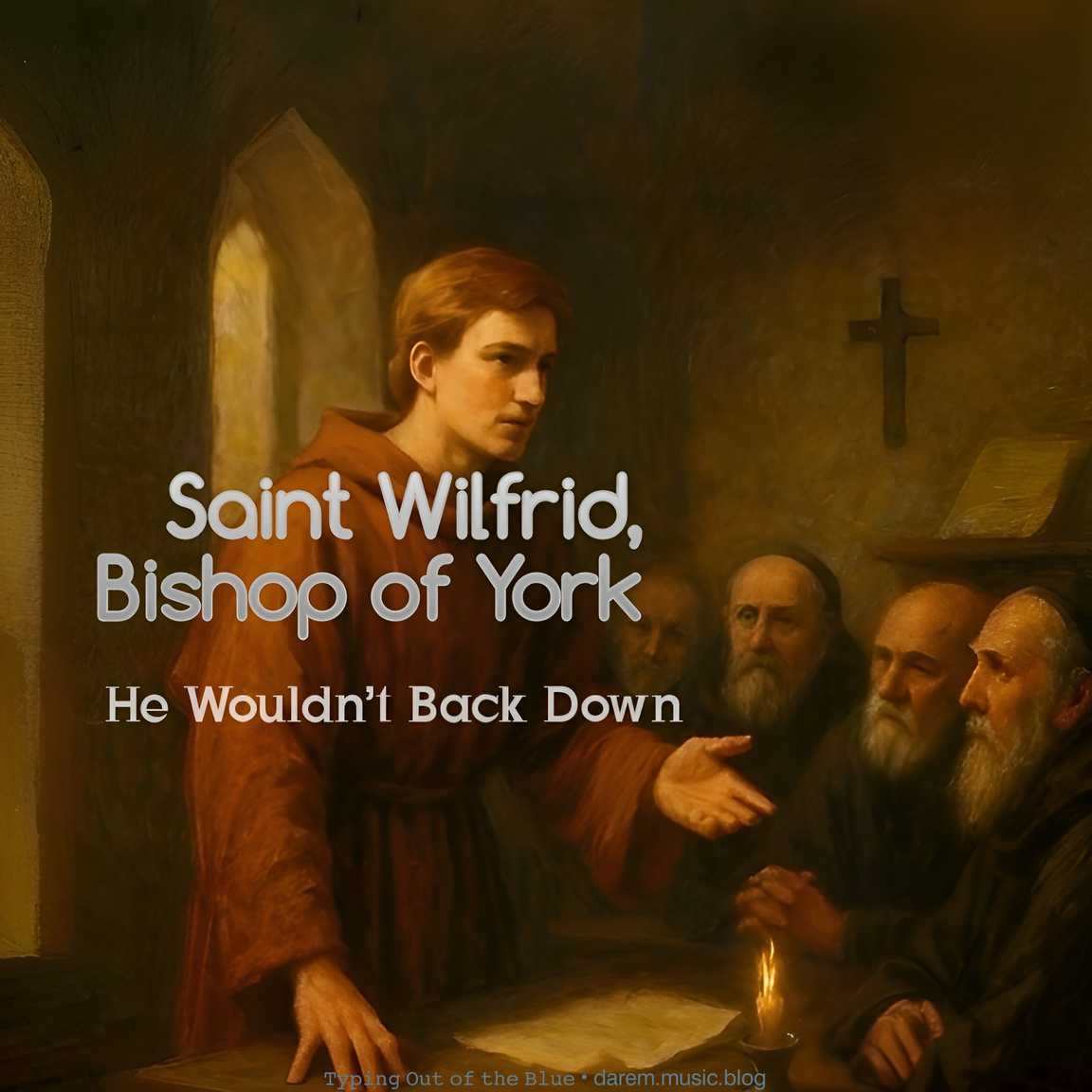
Saint Wilfrid, Bishop of York

Even a stubborn heart can become holy when it stands for truth, not pride.

He Wouldn’t Back Down

When a young Wilfrid, still training as a monk, was told to follow the old Celtic ways, he calmly crossed his arms, looked the elder monks in the eye, and said, “But Rome does it better.” That was his way—calm face, firm tone, no retreat. Even as a student, he was known for his fearless honesty.

Years passed. Wilfrid grew wiser but never softer. He studied deeply, traveled far, and went on pilgrimage to Rome, where he fell in love with its order, its chant, and its faith that spoke one language. When he returned to England, his heart burned to bring that same harmony home.

By the year 664, the English Church stood divided—different groups followed different traditions. A great council was called at Whitby, where leaders had to decide which way the whole country would follow. There, Father Wilfrid was no longer the young monk with folded arms but a bold priest with a steady voice. He spoke with fire and clarity, defending what he believed was the true order of God. His conviction turned the tide, uniting England under one faith.

Because of his wisdom and leadership, Father Wilfrid was soon chosen as Bishop of York. But his path was never peaceful. He clashed with rulers and church leaders alike, and was exiled more than once. Yet every exile became a mission—wherever he went, he built churches, cared for the poor, and brought the Gospel to those who had none.

Some people are born gentle; others are born strong so that gentleness can survive. Bishop Wilfrid was the second kind. His courage made way for peace. His stubborn faith became a bridge between the old and the new.

And maybe that’s the quiet lesson he left us: God can shape even a stubborn heart—not by breaking it, but by teaching it where to stand.

⌨ ᴛʸᵖⁱⁿᵍ ᴏᵘᵗ ᵒᶠ ᵗʰᵉ ʙˡᵘᵉ ᵈᵃʳᵉᵐ ᵐᵘˢⁱᶜ ᵇˡᵒᵍ

Traces of courage, silence, and sacrifice—this is Saints.

Listen on Apple Music, Apple Music Classical, and YouTube Music