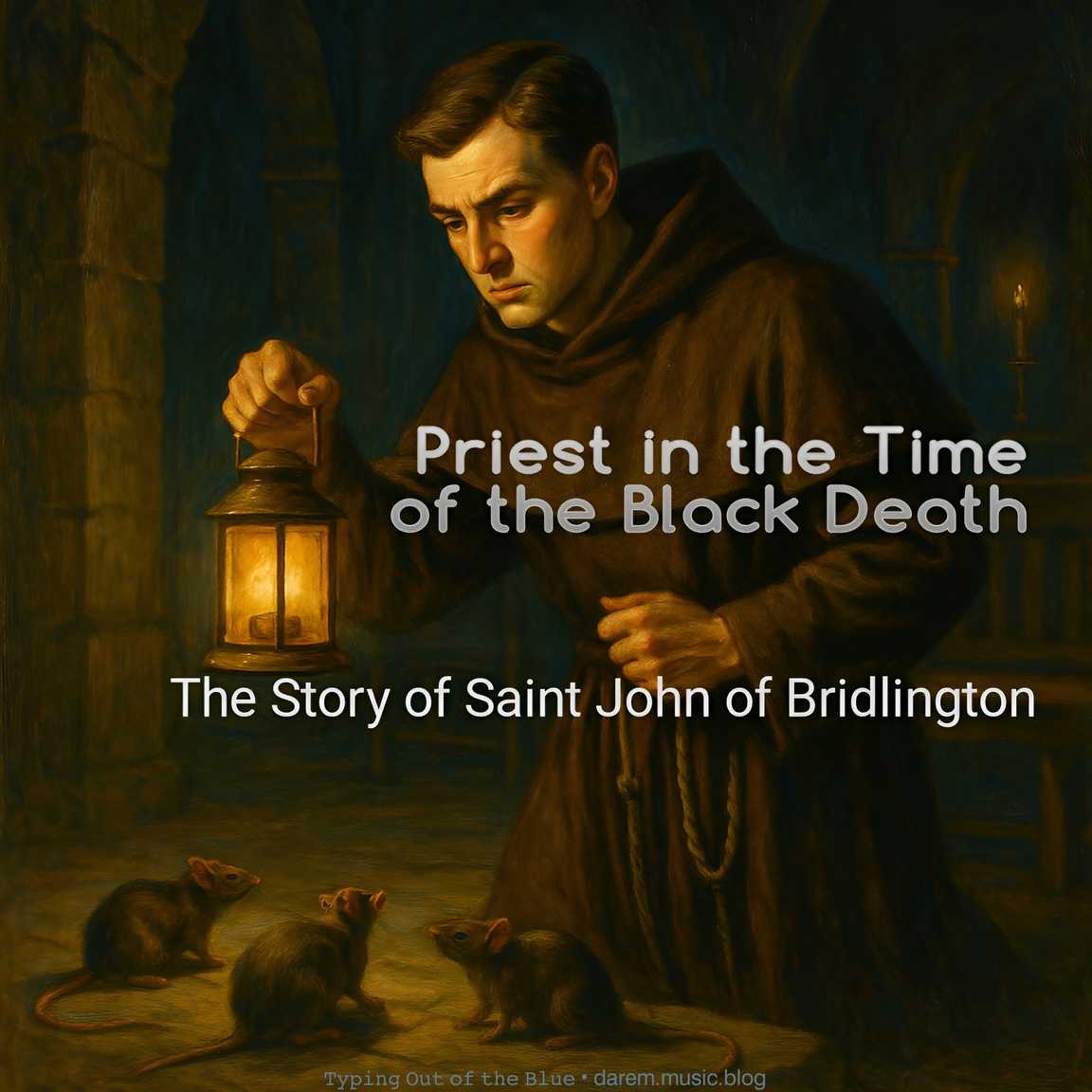
Priest in the Time of the Black Death

A young priest enters the Church during the Black Death, risking his life to serve the sick when many priests have already died.

The Story of Saint John of Bridlington

In 1348, rats lived even inside churches in England. They ran under pews, hid in cellars, and slipped through cracks in old stone floors. I guess those “religious rats” were the most faithful ones—they were always there, day or night. But no one knew that these same rats carried fleas, and the fleas carried the Black Death.

Soon, people began dying very fast. Families disappeared. Streets went silent. Funeral bells kept ringing. And because priests stayed close to the sick—blessing them, praying beside them, and touching the dying—many priests were the first to fall. Some churches lost all their clergy. A few priests ran away. Others stayed and died in service.

During this fearful time, a young man named John chose to enter the priesthood. He knew the danger. He knew the church was filled with rats, and that serving the sick meant risking his life. But still, he stepped forward and became Father John.

Not long after, when others refused to go near the sick, Father John visited the dying, prayed with abandoned families, and brought food to homes no one else would touch. In a time when people tried only to save themselves, Father John gave himself to others—quietly, humbly, and without fear.

This is how the story of Saint John of Bridlington began.

⌨ ᴛʸᵖⁱⁿᵍ ᴏᵘᵗ ᵒᶠ ᵗʰᵉ ʙˡᵘᵉ ᵈᵃʳᵉᵐ ᵐᵘˢⁱᶜ ᵇˡᵒᵍ
Traces of courage, silence, and sacrifice—this is Saints.

Listen on Apple Music, Apple Music Classical, and YouTube Music
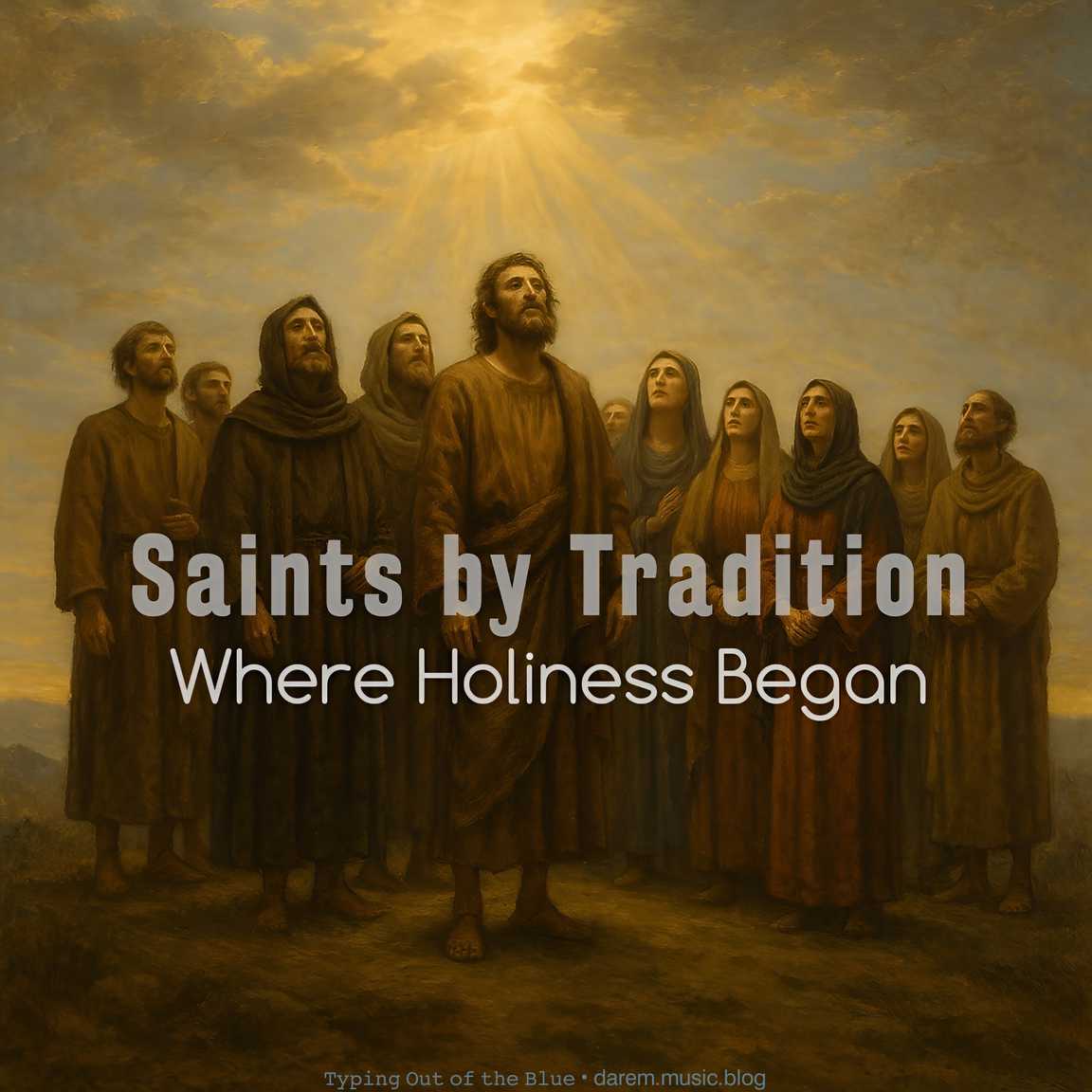
Saints by Tradition—Where Holiness Began

Before sainthood had documents or decrees, the first saints lived holiness so real—it echoed through generations.

Before there were Vatican seals, Latin decrees, and canonization papers, sainthood was simpler—it was lived, not declared. The early Church didn’t wait for Rome to confirm what the people already saw: lives so pure, so selfless, that they reflected Heaven on earth. These are the saints by tradition—those whose faith endured through the voice of generations, not through signatures on parchment.

✝️ The Pre-Congregation Era

Before 1000 AD, sainthood was local. The faithful honored martyrs, monks, mothers, and hermits whose holiness burned through history. When Saint Ulrich of Augsburg was formally canonized in 993, he became the first in history to be “officially” approved by the pope. Everyone before him? Saints by faith and memory.

Scholars estimate there are about 6,000 to 8,000 saints by tradition—people revered long before any Vatican process existed. Here are just ten of them.

🌿 Ten Saints by Tradition

1. Saint Peter the Apostle — Fisherman turned rock of the Church, crucified upside down in Rome.

2. Saint Paul the Apostle — Persecutor turned preacher whose letters still shape Christian thought.

3. Saint Mary Magdalene — The first to witness the Resurrection; the messenger of the risen Christ.

4. Saint Anthony the Great — Egyptian hermit whose desert solitude birthed monastic life.

5. Saint Catherine of Alexandria — Scholar and martyr who defended her faith against pagan philosophers.

6. Saint Monica — Mother whose persistent prayers converted her once-lost son, Augustine.

7. Saint Augustine of Hippo — Rebel-turned-theologian who wrote Confessions and defined grace.

8. Saint Martin of Tours — Soldier who shared half his cloak with a beggar and found Christ in compassion.

9. Saint Nicholas of Myra — Bishop known for secret generosity, long before he inspired Santa Claus.

10. Saint Frideswide of Oxford — Noblewoman who founded a monastery and became Oxford’s patron of mercy.

They didn’t need to be certified—their holiness was truly lived.

Holiness, after all, isn’t a title—it’s a witness kept alive by lives that point the way Home.

⌨ ᴛʸᵖⁱⁿᵍ ᴏᵘᵗ ᵒᶠ ᵗʰᵉ ʙˡᵘᵉ ᵈᵃʳᵉᵐ ᵐᵘˢⁱᶜ ᵇˡᵒᵍ

Traces of courage, silence, and sacrifice—this is Saints.

Listen on Apple Music, Apple Music Classical, and YouTube Music