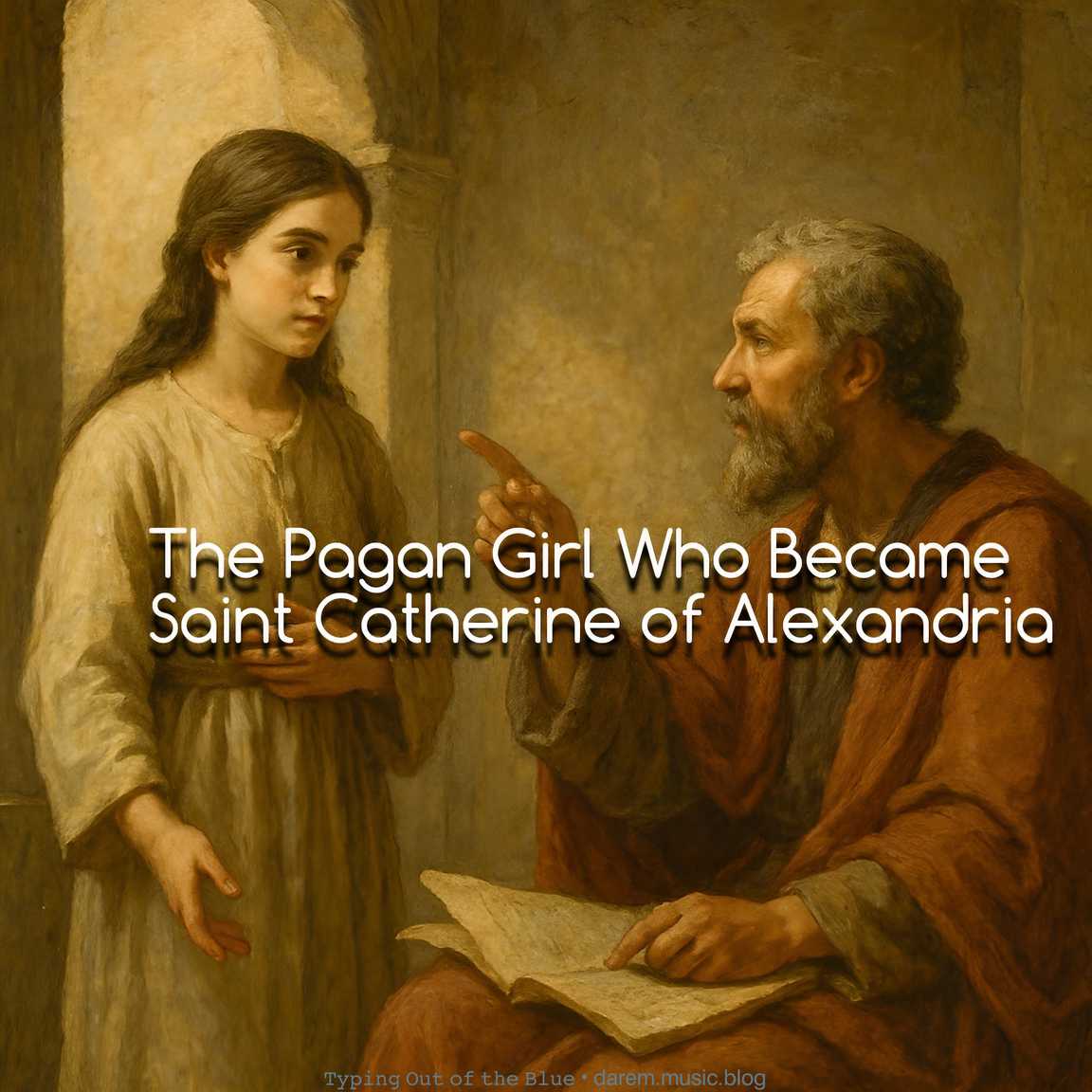
Saint Catherine lived in Alexandria, Egypt, during the early 300s when the Roman Empire ruled the region. She was born into a wealthy pagan family and grew up around books, teachers, and many ideas. People expected her to follow the old gods and the traditions she knew.
Catherine was known for her sharp mind. From a young age, she joined debates and often won them. She was confident—sometimes too confident—and many people saw her as someone hard to defeat.
But one discussion changed her path.
Catherine challenged a Christian teacher, thinking it would be another easy win. Instead, it became the first debate she didn’t win. She heard clear explanations about one God and the worth of every person—answers she couldn’t dismiss. That moment stayed with her and slowly led her to the Christian faith.
After her conversion, things shifted.
When the emperor gathered scholars to challenge her, Catherine understood their views because she had once believed the same things. Tradition says she never lost a debate after that first one. Her calm and steady words moved several scholars to rethink what they believed.
The emperor became angry and ordered her arrest. Early stories say the empress secretly visited Catherine in prison because she wanted to understand her courage. Their short meeting left a deep mark.
Catherine was executed when she was about eighteen years old. Her story lived on because people saw a young woman who searched for truth, accepted it, and stood firm even when the cost was high.
Today, Saint Catherine is honored as the patron of students and thinkers, guiding young minds to stay curious, clear, and brave.
Note on Her Story
Saint Catherine’s story was first told in the early Christian communities of Alexandria. These accounts were passed down for many years, so some details are remembered through tradition. But her courage, her search for truth, and the way she stood firm have always been part of how the first believers described her life.
⌨ ᴛʸᵖⁱⁿᵍ ᴏᵘᵗ ᵒᶠ ᵗʰᵉ ʙˡᵘᵉ ᵈᵃʳᵉᵐ ᵐᵘˢⁱᶜ ᵇˡᵒᵍ

Listen on Apple Music, Apple Music Classical, and YouTube Music