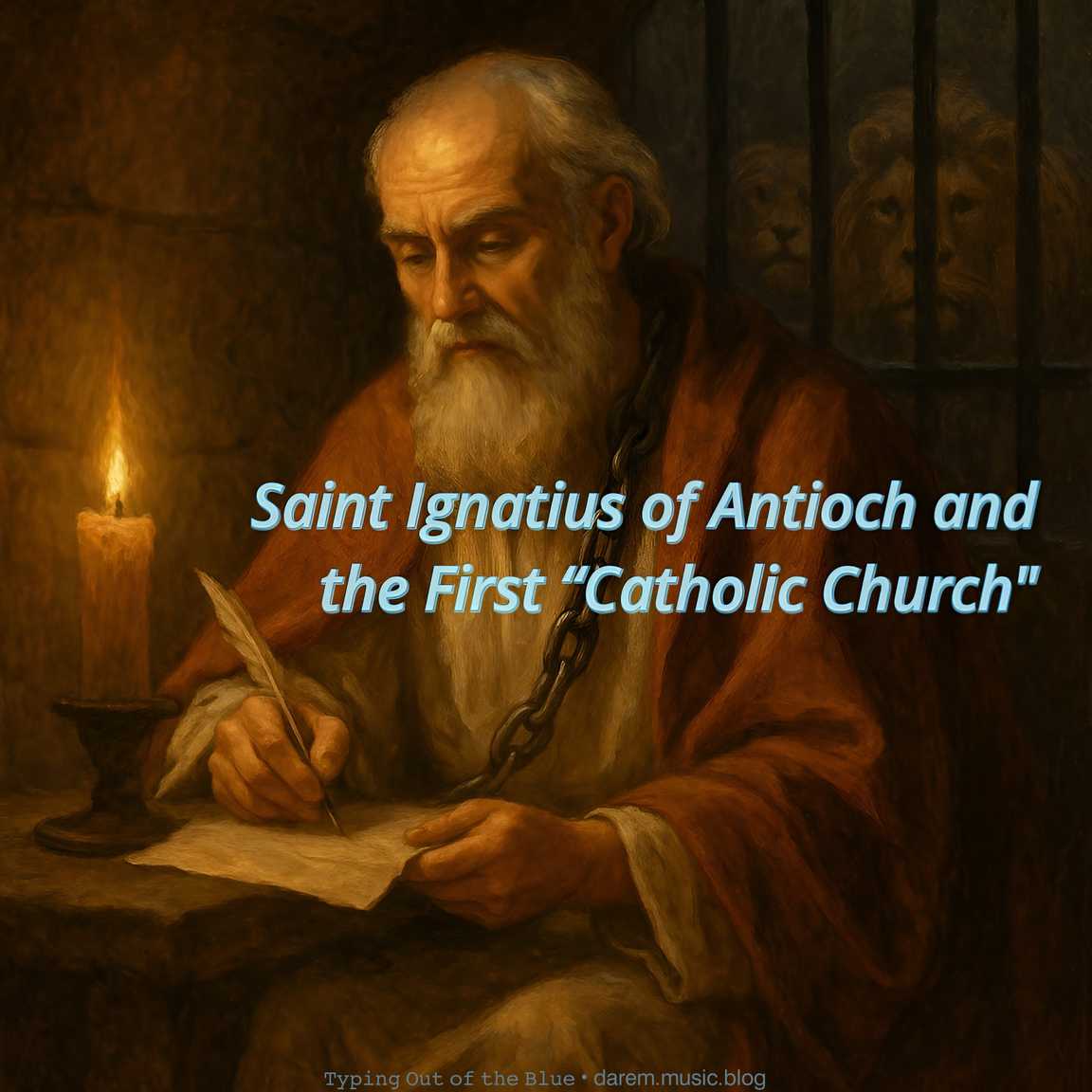
Saint Ignatius of Antioch and the First “Catholic Church”

He walked with an Apostle, led a Church, and died for a truth that never broke.

Bishop Ignatius of Antioch wasn’t just an early bishop—he was a disciple of Saint John the Apostle and later became the third bishop of Antioch, one of the earliest and strongest centers of Christian faith. He carried the teachings he heard straight from one who walked with Christ. When Ignatius later wrote the words “Wherever Jesus Christ is, there is the Catholic Church,” he wasn’t quoting Scripture—he was writing history.

That line came from his Letter to the Smyrnaeans, one of seven letters he wrote while being led in chains from Antioch to Rome around 107 AD. These weren’t Bible verses but real letters to the early Christian communities, filled with guidance, correction, and love.

Catholic” came from the Greek katholikos, meaning universal or according to the whole. For Bishop Ignatius, it meant the Church wasn’t just local—it was one living body under Christ. To be Catholic was to be connected: one faith, one Eucharist, one bishop, one love. He reminded believers not to follow breakaway teachers or private versions of truth. Faith, he said, stays whole only when it stays united.

Even as a prisoner, Bishop Ignatius kept teaching. He called the Eucharistthe medicine of immortality” and begged the Christians in Rome not to stop his martyrdom: “Let me be the wheat of God, ground by the teeth of wild beasts, that I may be found the pure bread of Christ.”

He faced death with peace, thrown to the lions in the Colosseum. His last echo—both in life and in faith—was that same truth he wrote from his chains: wherever Christ is truly present, there lives the Catholic Church.

⌨ ᴛʸᵖⁱⁿᵍ ᴏᵘᵗ ᵒᶠ ᵗʰᵉ ʙˡᵘᵉ ᵈᵃʳᵉᵐ ᵐᵘˢⁱᶜ ᵇˡᵒᵍ

Traces of courage, silence, and sacrifice—this is Saints.

Listen on Apple Music, Apple Music Classical, and YouTube Music
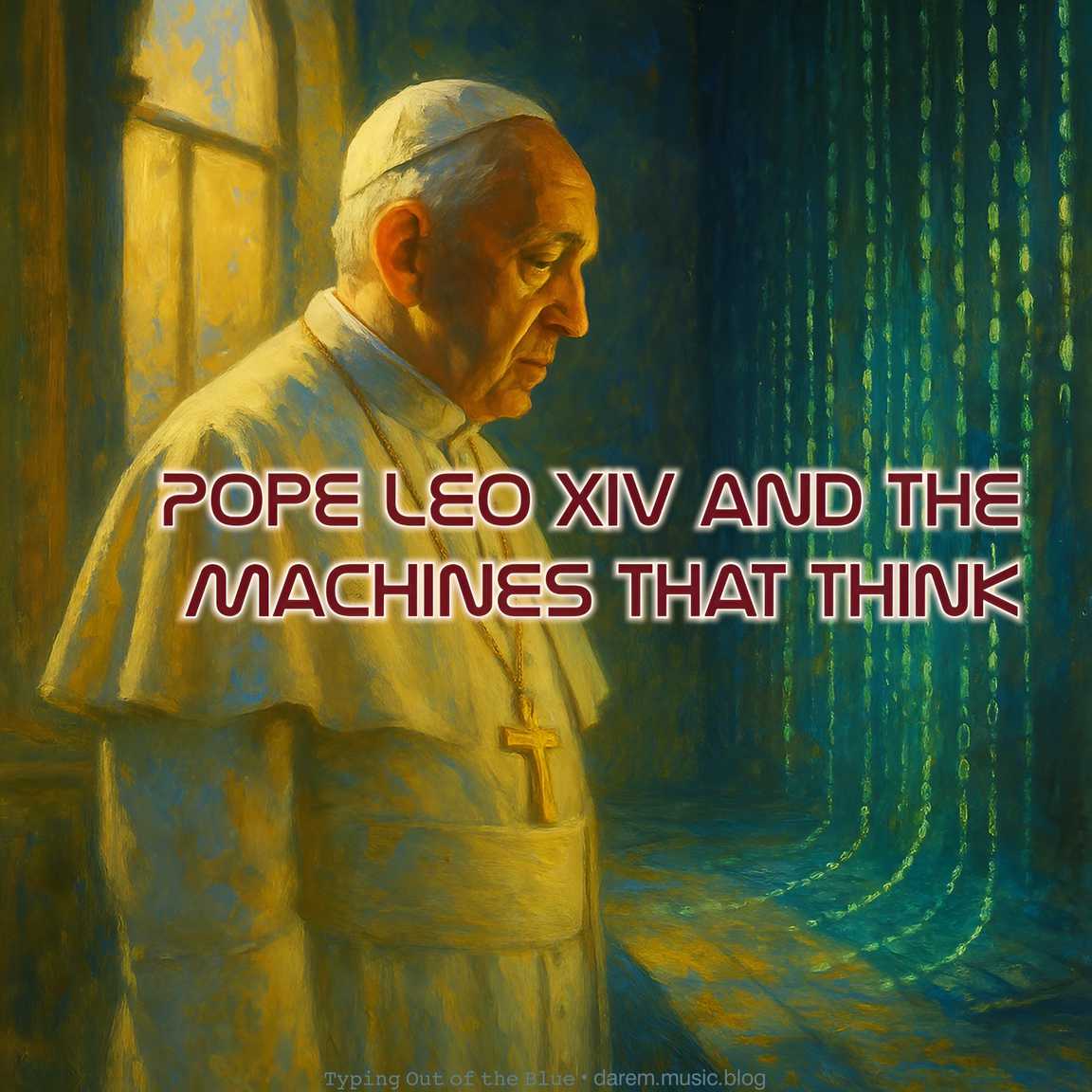
Pope Leo XIV and the Machines That Think

The Pope reminds us that progress without soul is empty, and technology without truth forgets what makes us human.

There’s something cinematic about a Pope stepping into the digital age and saying—“AI is one of humanity’s greatest challenges.” This is Pope Leo XIV, the man who took his name after Leo XIII, who once faced the storm of the Industrial Revolution. The first Leo stood before steam and steel—Pope Leo XIV now stands before screens and code. But unlike most leaders who either fear or worship technology, Pope Leo doesn’t pick a side. He speaks with calm fire. He says the question isn’t what AI can do—it’s who we are becoming as we build it.

For him, rules and ethics are not enough. You can teach an AI to “behave,” but that doesn’t explain what it means to be human. He calls for a strong understanding of our human dignity—our worth, our spirit, our soul. Because if we forget why we exist, no amount of programming can save us. Technology, he says, mirrors its maker. Every algorithm carries the fingerprints of the human heart behind it. So when we feed the machine with greed or pride—that’s what it learns to multiply.

Pope Leo sees AI as both a gift and a gamble—an amazing tool that can lift people up or slowly hollow them out. It can heal, teach, and connect. But it can also fake truth, copy faces, and replace meaning with noise. That’s why he warned journalists recently—don’t trade truth for clicks. In this age of deepfakes and digital confusion, he asks—who controls AI and for what purpose? Because when truth can be manufactured, what’s left to trust?

For Pope Leo, real intelligence isn’t about collecting endless data. It’s about the search for meaning, not just information. It’s wisdom wrapped in logic—where knowledge and compassion work together. He dreams of a world where faith, science, and technology don’t compete but collaborate. Where faith doesn’t reject machines, but reminds them who they serve. Where progress is measured not by speed—but by soul.

He invites believers, thinkers, and creators to join the conversation—to bridge the gap between the spiritual and the scientific. He wants the Church to walk with humanity in this new digital era, not behind it. He believes truth and love must evolve together—or both will fade.

Pope Leo XIV isn’t the enemy of innovation. He’s its conscience. He doesn’t tell us to turn off our machines—only to remember the face reflected in the screen. Because in the end, AI won’t decide what kind of world we live in—we will.

⌨ ᴛʸᵖⁱⁿᵍ ᴏᵘᵗ ᵒᶠ ᵗʰᵉ ʙˡᵘᵉ ᵈᵃʳᵉᵐ ᵐᵘˢⁱᶜ ᵇˡᵒᵍ