Pope Leo XIV’s Call to Pray—World Mission Sunday

Pope Leo XIV’s message.

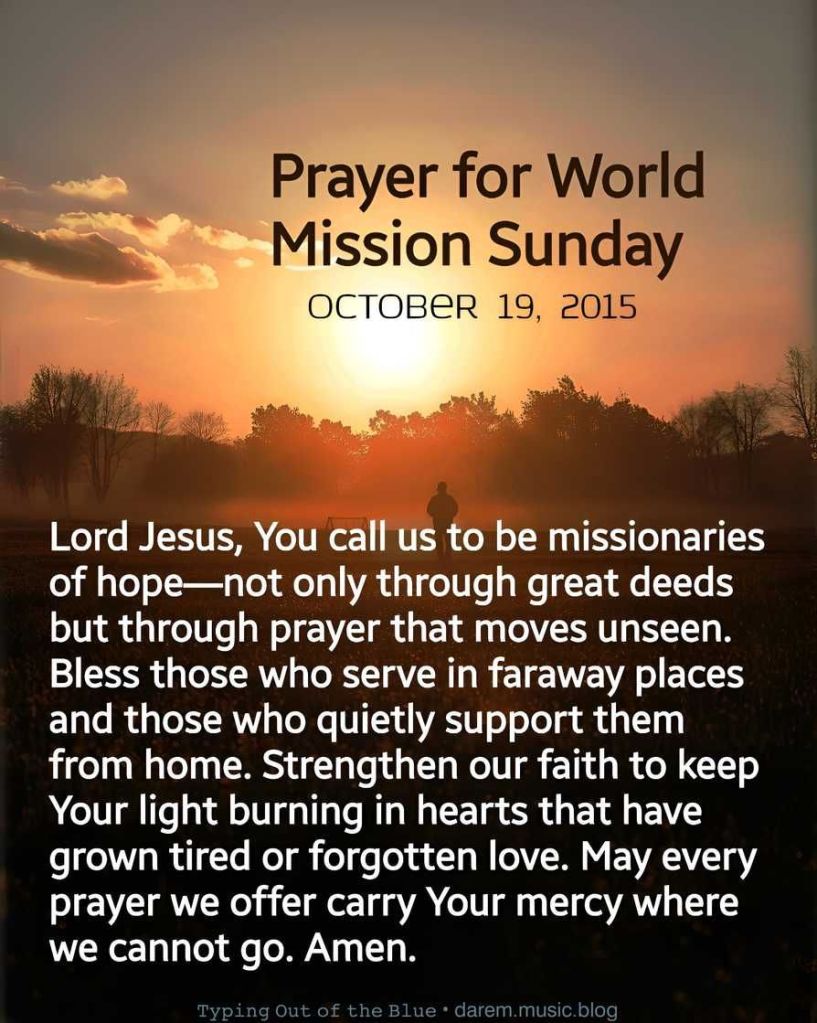
Pope Leo XIV shared a short message from the Vatican on October 13, inviting everyone to take part in World Mission Sunday on October 19, 2025. He spoke with the tone of someone who’s seen faith move even in the hardest places—asking not only for help but for prayer. He recalled his years in Peru, where kindness built hope more than walls ever could.

“I invite every parish community, every family, and every believer to take part in this World Mission Sunday. Your prayers and your support will help spread the Gospel, build new churches, and sustain pastoral, educational, and health programs in missionary territories.

I know, from my years of service in Peru, how much these efforts mean. The generosity shown on this day reaches far beyond what we see—it renews lives, strengthens communities, and brings the joy of Christ where it’s most needed.

The world today, wounded by war and injustice, thirsts for hope. Each of us is called to be a missionary of that hope: through faith, compassion, and daily gestures of love.

Let us pray for all missionaries—priests, religious, and lay people—who offer their lives so that others may encounter the Lord’s mercy. And let us remember: mission is not only a task for some, but a shared responsibility for all who believe in Christ.

Thank you for everything you will do to help me help missionaries throughout the world. God bless you all.”

The Pope’s message brings us back to what matters most—prayer. It’s where every mission begins, the breath that keeps faith alive when words fall short. He reminds believers that even from afar, a prayer can cross oceans, lift those who serve, and keep hope moving where it’s needed most.
⌨ ᴛʸᵖⁱⁿᵍ ᴏᵘᵗ ᵒᶠ ᵗʰᵉ ʙˡᵘᵉ ᵈᵃʳᵉᵐ ᵐᵘˢⁱᶜ ᵇˡᵒᵍ
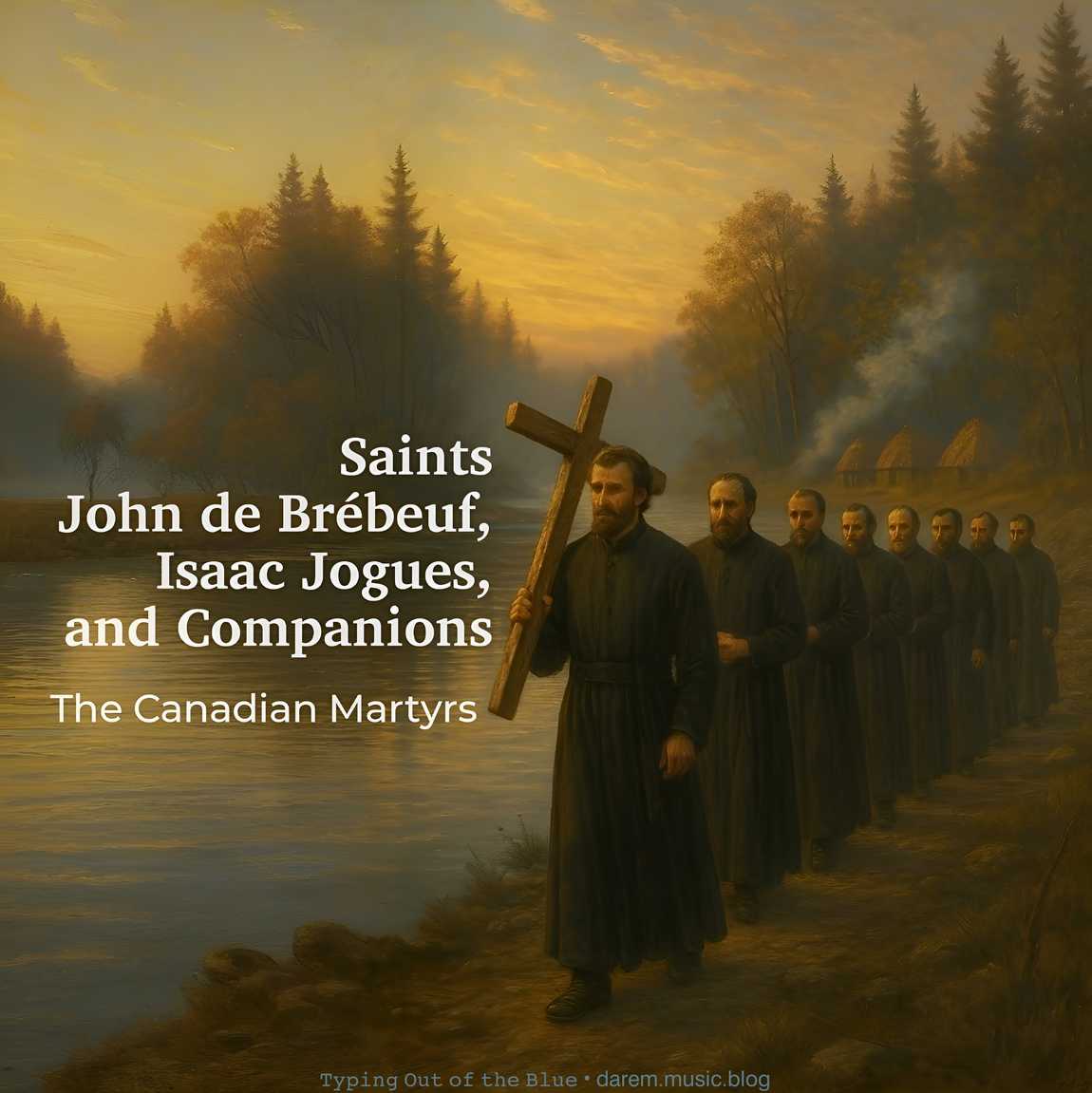
Saints John de Brébeuf, Isaac Jogues, and Companions—The Canadian Martyrs

Eight Jesuits crossed an ocean for love and faith—and found Heaven through fire in the wild lands of early Canada.

In the early 1600s, eight Jesuit missionaries left France for a land of cold rivers and endless forests—with only courage and the Cross. John de Brébeuf, Isaac Jogues, Gabriel Lalemant, Charles Garnier, Noël Chabanel, Antoine Daniel, René Goupil, and John de Lalande.

They lived among the Huron people, peaceful farmers who welcomed them as friends. The missionaries learned their language, helped the sick, and shared their food. Because of their long black cassocks, the people called them “black robes.”

But nearby lived the Iroquois tribes, strong warriors and old enemies of the Hurons. When war broke out, the Iroquois thought the black robes were spies. Then disease spread through villages, and some blamed the missionaries, thinking their prayers and crosses brought bad luck.

Isaac Jogues and René Goupil were captured by the Mohawk, part of the Iroquois. Goupil was killed for making the Sign of the Cross. Jogues escaped to France but returned—knowing he might die. When he came back with John de Lalande, both were killed, accused again of bringing sickness.

In the north, John de Brébeuf and Gabriel Lalemant were tortured and burned but never denied their faith. Antoine Daniel died protecting his people at the altar. Charles Garnier was shot while helping the wounded, and Noël Chabanel was murdered by a man he once trusted.

They never fought back. They forgave. Between 1642 and 1649, all eight gave their lives for love that refused to hate.

Now they are called the North American Martyrs, men who entered a land of fear and left it shining with peace.

⌨ ᴛʸᵖⁱⁿᵍ ᴏᵘᵗ ᵒᶠ ᵗʰᵉ ʙˡᵘᵉ ᵈᵃʳᵉᵐ ᵐᵘˢⁱᶜ ᵇˡᵒᵍ

Traces of courage, silence, and sacrifice—this is Saints.

Listen on Apple Music, Apple Music Classical, and YouTube Music