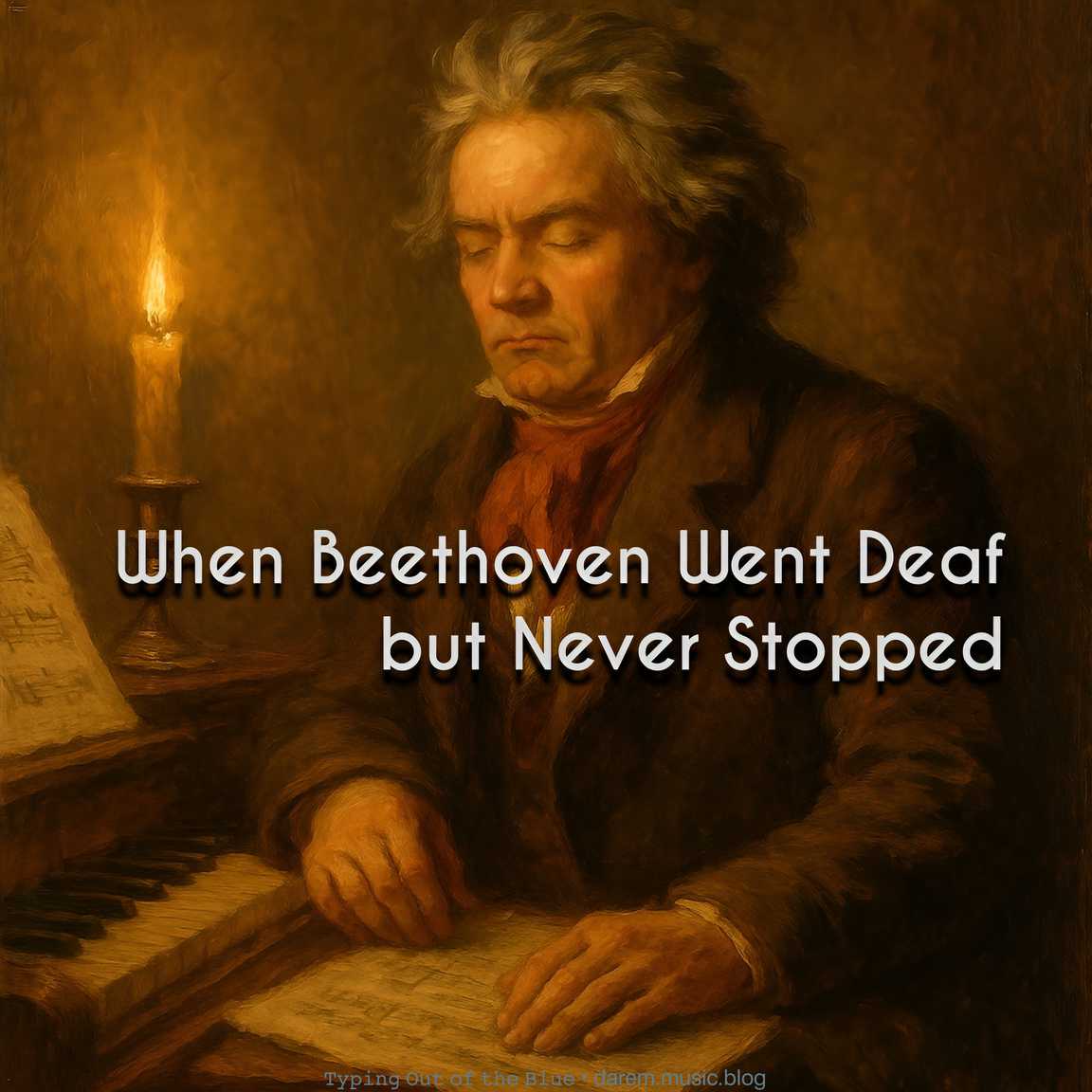
People often call Beethoven’s story a tragedy—but it’s really a story of courage. Born in Bonn, Germany, in 1770, he began losing his hearing in his late 20s while living in Vienna. By his 40s, he was almost completely deaf. For a musician, that sounds like the end. But for him, it was the start of something greater.
He couldn’t hear the piano, yet he kept composing. He would hold a stick between his teeth and press it to the piano to feel the vibration of each note. He no longer heard with his ears—but with his memory, his mind, and his heart.
That’s how he wrote Ode to Joy (An die Freude), the final movement of his Symphony No. 9 in D minor, Op. 12—one of the most powerful and emotional pieces in history. Completed in 1824, it was performed for the first time in Vienna, where Beethoven stood on stage unable to hear the applause.
You can even feel it live in this breathtaking performance.
Beethoven proved that silence can’t stop real passion. Even when the world goes quiet, true art finds a way to speak. And maybe that’s a lesson for us too—whatever struggles we face, we can still create, still move, still function. Beethoven showed that greatness isn’t about what we lose, but how we rise beyond it.

⌨ ᴛʸᵖⁱⁿᵍ ᴏᵘᵗ ᵒᶠ ᵗʰᵉ ʙˡᵘᵉ ᵈᵃʳᵉᵐ ᵐᵘˢⁱᶜ ᵇˡᵒᵍ