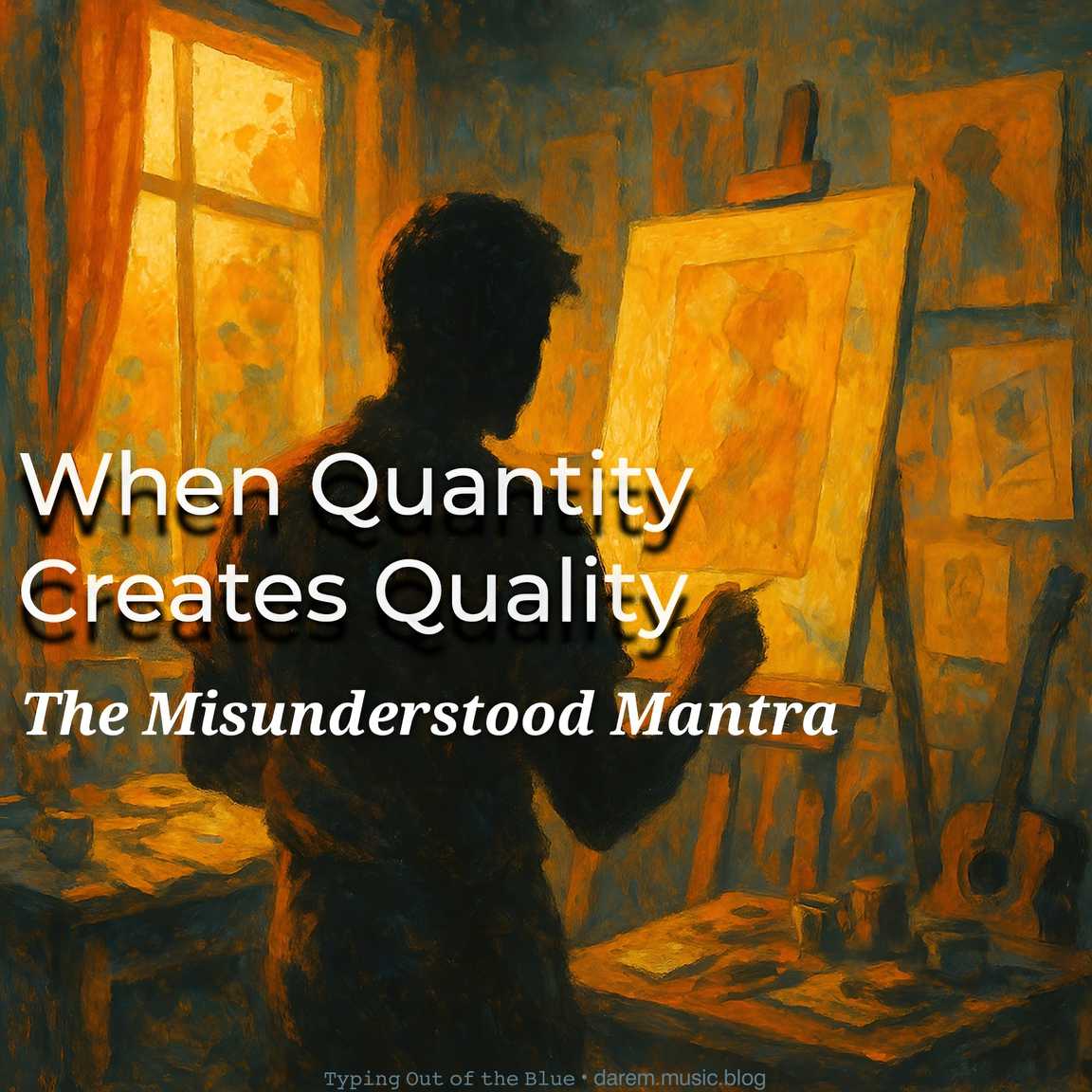
When Quantity Creates Quality

Art has no finish line—every work, even on scratch paper, carries the truth that feelings can’t be measured, only lived.

The Misunderstood Mantra

People love to say, “Quality over quantity.” It sounds wise, especially in business or offices where mistakes cost money. But in art, that saying can kill your growth.

Artists don’t find quality by waiting for inspiration—they find it by showing up, again and again. Quantity is the grind that reveals the gold. Every sketch, draft, riff, or post is part of the training. It’s not about perfection—it’s about becoming.

In factories, quantity means output. In art, it means expression. Because in art, every piece has something to do with feelings—and feelings aren’t meant to be polished. Even mistakes can become part of the beauty. There are no wrong notes when they come from truth.

Mainstream musicians, for example, write and record thousands of songs a year. But the music label decides which ones “feel commercial.” If nothing fits the market, those songs stay locked away. Some artists wait years without a release—not because they stopped creating, but because the system measures quality by sales, not soul.

That’s where independent artists stand different. They release when they’re ready, not when the boardroom approves. They create freely, without filters, without compromise.

But now, the problem isn’t just with the artists—it’s with us, the listeners, the art lovers. We stopped listening deeply. We started streaming whatever the algorithm served. The corporate world learned that, and turned art into product. The more people obey the charts, the more real art fades into silence.

Because when feelings are no longer the measure, and numbers take over, music loses its soul—and we lose a part of ours too.

So the next time someone tells you to slow down, tell them this:

“You can’t create perfection before creation itself. You can’t edit what doesn’t exist.”

In the end, artists just keep creating—because emotion has no finish line. The only limit of feeling is death. Every work, even one drawn on scratch paper, is still art. Because art isn’t about where it hangs—it’s about who felt enough to make it.

⌨ ᴛʸᵖⁱⁿᵍ ᴏᵘᵗ ᵒᶠ ᵗʰᵉ ʙˡᵘᵉ ᵈᵃʳᵉᵐ ᵐᵘˢⁱᶜ ᵇˡᵒᵍ
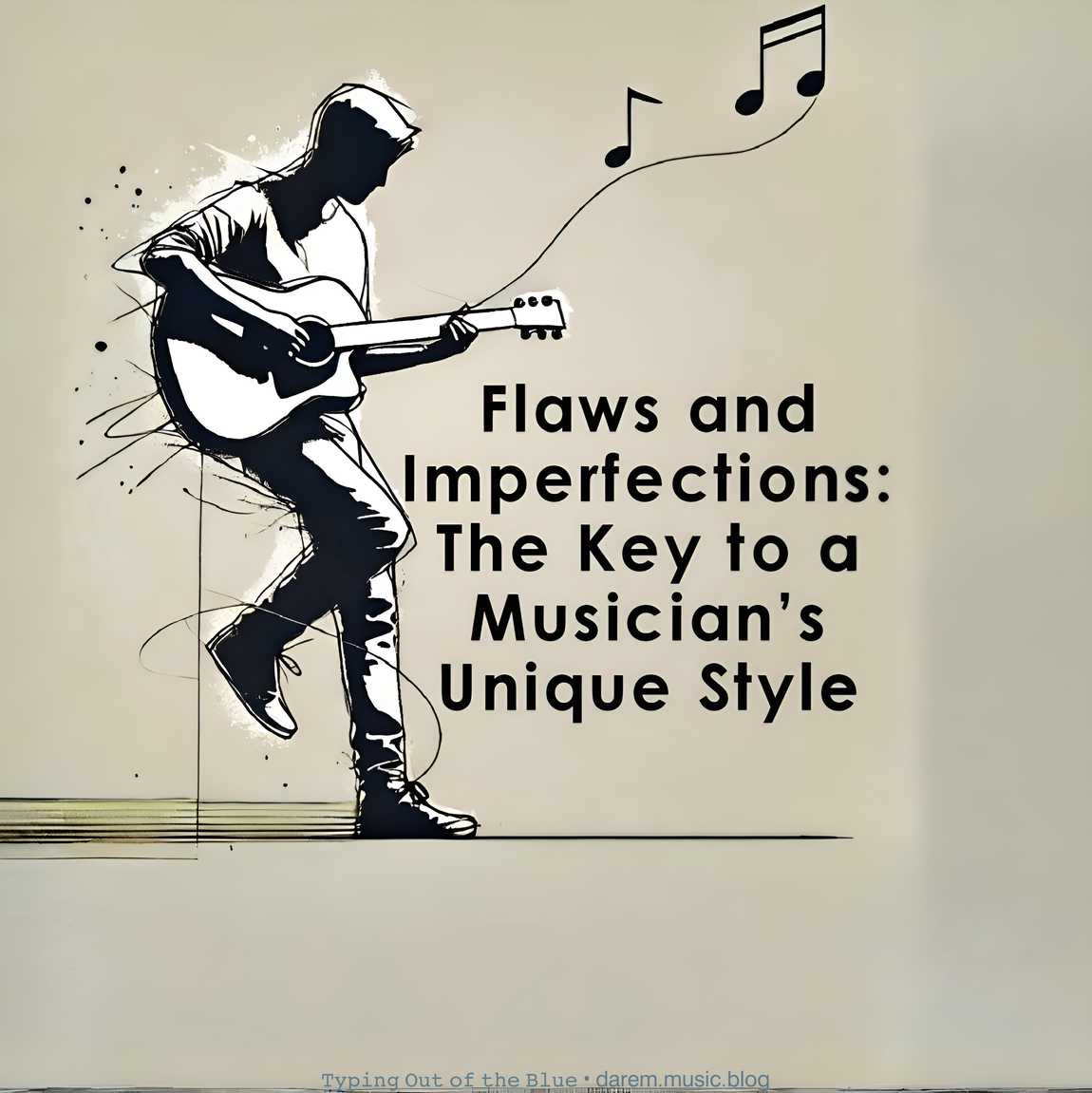
Flaws and Imperfections: The Key to a Musician’s Unique Style

Real mastery isn’t copying your idols—it’s discovering what makes your flaws sound like you. That’s your real music.

Every musician starts somewhere, and for many, that means imitating their idols. It’s natural to want to play like the greats—copying their techniques, tone, and phrasing. But here’s something many don’t realize early on: true style doesn’t come from perfecting someone else’s—it comes from embracing what makes you different.

Flaws, in this case, don’t mean mistakes in a negative sense. They’re the little things that make your playing unique—your timing, your touch, the way you naturally phrase notes, or even how you approach a melody. If Jimi Hendrix had stuck to traditional guitar techniques, would his sound have been as iconic? If Thelonious Monk had played the piano with perfect precision instead of his offbeat, angular style, would he have stood out? Probably not.

Not everyone can play like their idols, and that’s okay. Some things just don’t come naturally, no matter how much time you spend trying. Instead of forcing yourself to master something that isn’t your strength, why not focus on what you can do? A guitarist with one hand won’t play the same way as someone with two—but that limitation can create a completely unique sound. Do you think a two-handed guitarist could ever sound exactly like him? Probably not.

Aspiring musicians often think mastery means sounding exactly like their idols. But the moment you stop chasing perfection and start playing in a way that feels natural to you, something shifts. Music isn’t about flawless technique—it’s about expression. Those little quirks, those imperfections? They aren’t flaws. They’re what make your music yours.

And as the music plays on, a sense of freedom settles in—a Classical Haze, where tradition and individuality blend, creating something uniquely yours.

Listen on Apple Music, Apple Music Classical, and YouTube Music

⌨ ᴛʸᵖⁱⁿᵍ ᴏᵘᵗ ᵒᶠ ᵗʰᵉ ʙˡᵘᵉ ᵈᵃʳᵉᵐ ᵐᵘˢⁱᶜ ᵇˡᵒᵍ