Redirected by Spotify

When streams don’t support artists anymore, the real issue isn’t numbers. It’s where the value quietly ends up.

I already pulled all my music out of Spotify. So technically, I should not care anymore. I am no longer chasing streams, playlists, or numbers. I am out—free from the hustle and hassle.

But seeing how the system actually works—the unfairness, the strange logic, the quiet monkey business—I cannot stay silent. Being out does not mean being blind. This is why I still choose to speak, and why I believe Spotify deserves to be boycotted.

I did not leave Spotify with drama. No announcement. No rant. I just stopped.

Back then, I honestly thought the rule was harsher than it really was. I believed you had to hit 1,000 streams every single month. That would have been brutal. Anyone would call that unfair.

Later, I understood it better. It is not monthly. It is cumulative. A rolling twelve-month window. Hit 1,000 total streams anytime within a year, and the track becomes eligible.

Once that is clear, the rule feels manageable. One thousand streams is not a mountain. It is a few listens a day. If the music has direction and the artist actually moves—shares it, talks about it, shows up—it is doable.

So no, the rule is not unfair to artists who try.

What bothered me came after that.

If a track stays below 1,000 streams, the money from those listens does not wait. It does not pile up. It does not respect intent. It gets redirected. People listened to your music. The value was real. But the payout went somewhere else, to artists who were already above the line.

I agreed to that. Every artist did. We clicked yes because there was no other door. That makes it legal. It does not make it clean.

I come from a time when one album sold meant one artist supported. Even one buyer mattered. The exchange was simple and honest. Streaming changed that.

Now attention itself is currency. Even unpaid attention. Even tracks that earn nothing still feed the system—data, growth, market value. Your music may not pay you, but it still works for the platform. And the platform does not share your values. It shares its investors’ values.

That is where it started to feel wrong.

What pushed me to speak is deeper than streams or payouts. Spotify, directly or indirectly, helps fund Helsing (a European defense tech company developing AI systems for modern warfare). Once I saw that, the 1K debate stopped mattering.

Music is personal. Releasing it is a choice. I do not want my work contributing to something I fundamentally disagree with.

So this is not about numbers or payout formulas. It is about where the value generated by music ends up.

Boycotting Spotify, for me, is simply a line I chose to draw.

I would rather have fewer listeners and clean hands than wider reach.

That choice is not for everyone.

But it is mine.

🔲 UNINSTALL SPOTIFY.
🔲 BOYCOTT SPOTIFY.
🔲 CHOOSE PEACE.
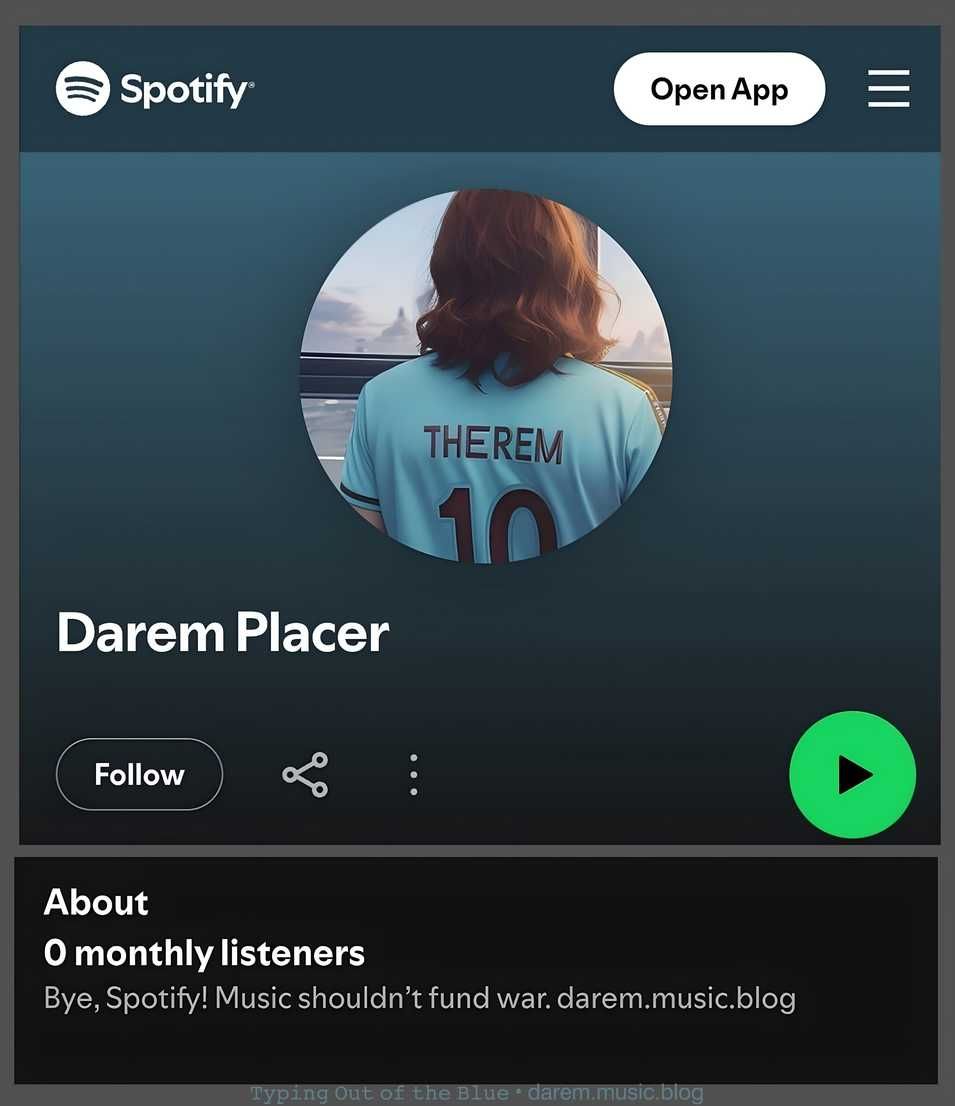
Spotify artist profile page showing Darem Placer with zero monthly listeners and a profile photo of a person wearing a jersey labeled THEREM number 10
No music. No listener. No war.

⌨ ᴛʸᵖⁱⁿᵍ ᴏᵘᵗ ᵒᶠ ᵗʰᵉ ʙˡᵘᵉ ᵈᵃʳᵉᵐ ᵐᵘˢⁱᶜ ᵇˡᵒᵍ

Digital Albums by Darem Placer on Bandcamp
daremplacer.bandcamp.com

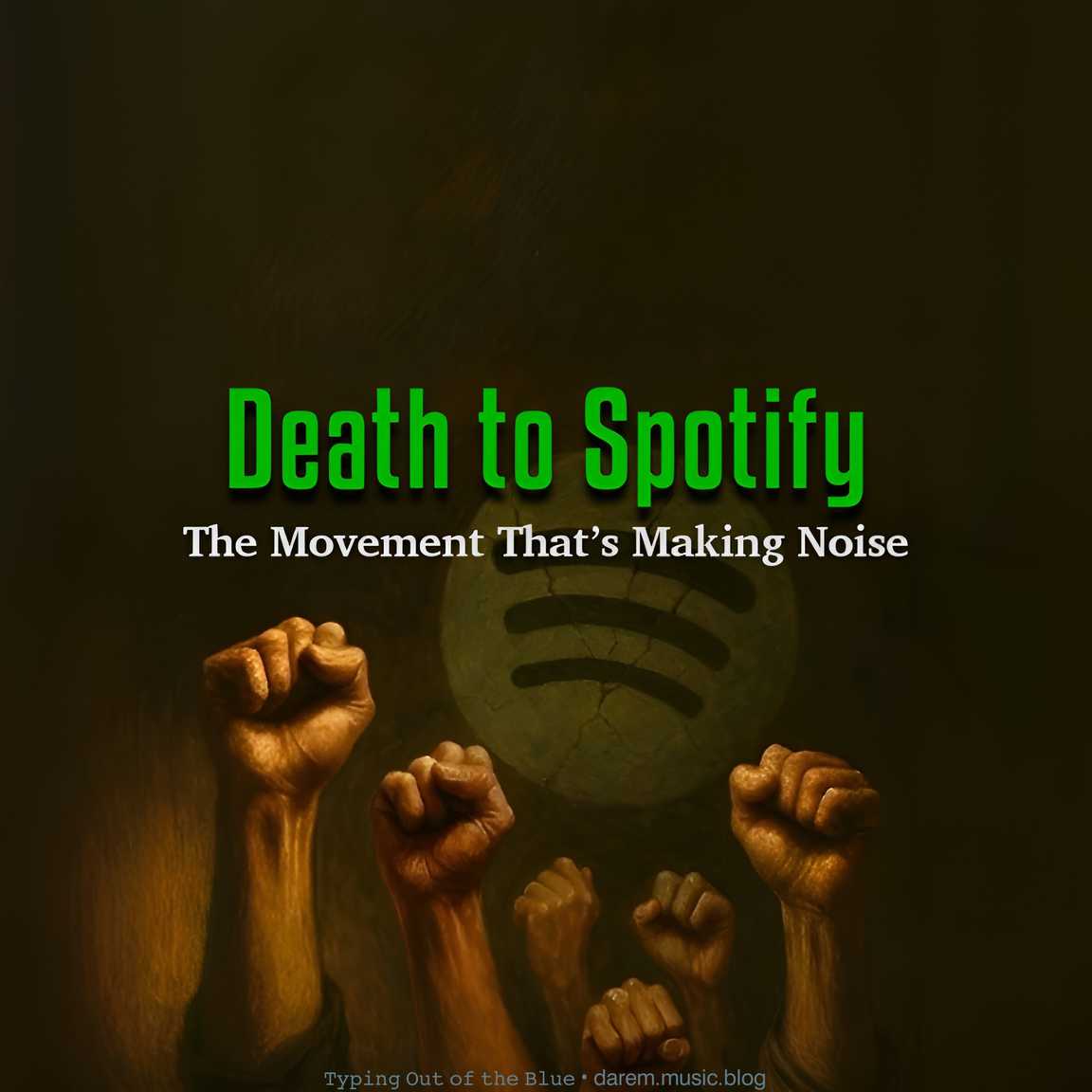
Death to Spotify: The Movement That’s Making Noise

A growing movement challenges the biggest music app on Earth—and calls on listeners to take music back.

There’s a new sound coming from Oakland—and it’s not another song. It’s a movement called “Death to Spotify.”

It started small: a few artists, DJs, and music lovers talking about life beyond the world’s biggest streaming app. Within weeks, the first gatherings sold out fast. The third event, held on September 30, 2025 at Bathers Library in Oakland, drew a full crowd, proving the movement was growing louder by the week.

Spotify just had its first profitable year—but it came with a catch. Songs with less than 1,000 streams no longer earn royalties. For many small artists, that means zero income. And when people learned that the company’s CEO also invested in military AI tech, frustration hit a deeper note.

The “Death to Spotify” gatherings talk about change:

• Supporting artists directly

• Building fairer platforms

• Taking music back from algorithms

We’re not anti-streaming—we’re anti-starvation,” said one indie label founder during the forum. That line became a kind of anthem in itself—a reminder that this isn’t about rejecting technology, but reclaiming dignity.

It’s not an easy fight. Listeners rely on Spotify daily. But this movement isn’t just about money—it’s about the loss of trust and the soul of music itself.

And behind that anger lies a chorus of deeper complaints:

• A payment system that only favors the top-streamed acts

• Controversial podcasts spreading misinformation

• Algorithms shaping art into predictable background noise

• Corporate control over data and creative space

• A moral clash between art and profit

After just three sessions, requests poured in from cities like Barcelona, Detroit, and Bangalore to host their own “Death to Spotify” talks. What began in a small Oakland room now hums like a global frequency—artists finding each other again, outside the algorithm.

Spotify insists it pays 70% of its revenue to rights holders. Yet the question echoes louder each day: If the artists keep struggling, who’s really winning?

Maybe what’s dying isn’t Spotify—it’s the illusion that convenience equals progress.

If you truly love music, pay attention to where your stream goes—and who it leaves behind.

Rising Above Limits • Darem Placer

Death to Spotify” isn’t the end of music—it’s the beginning of taking it back.

Boycott Spotify. Uninstall Spotify. Death to Spotify!

⌨ ᴛʸᵖⁱⁿᵍ ᴏᵘᵗ ᵒᶠ ᵗʰᵉ ʙˡᵘᵉ ᵈᵃʳᵉᵐ ᵐᵘˢⁱᶜ ᵇˡᵒᵍ
Listen on Apple Music, Apple Music Classical, and YouTube Music

Beyond the Clouds of Worries in the Moment includes Rising Above Limits