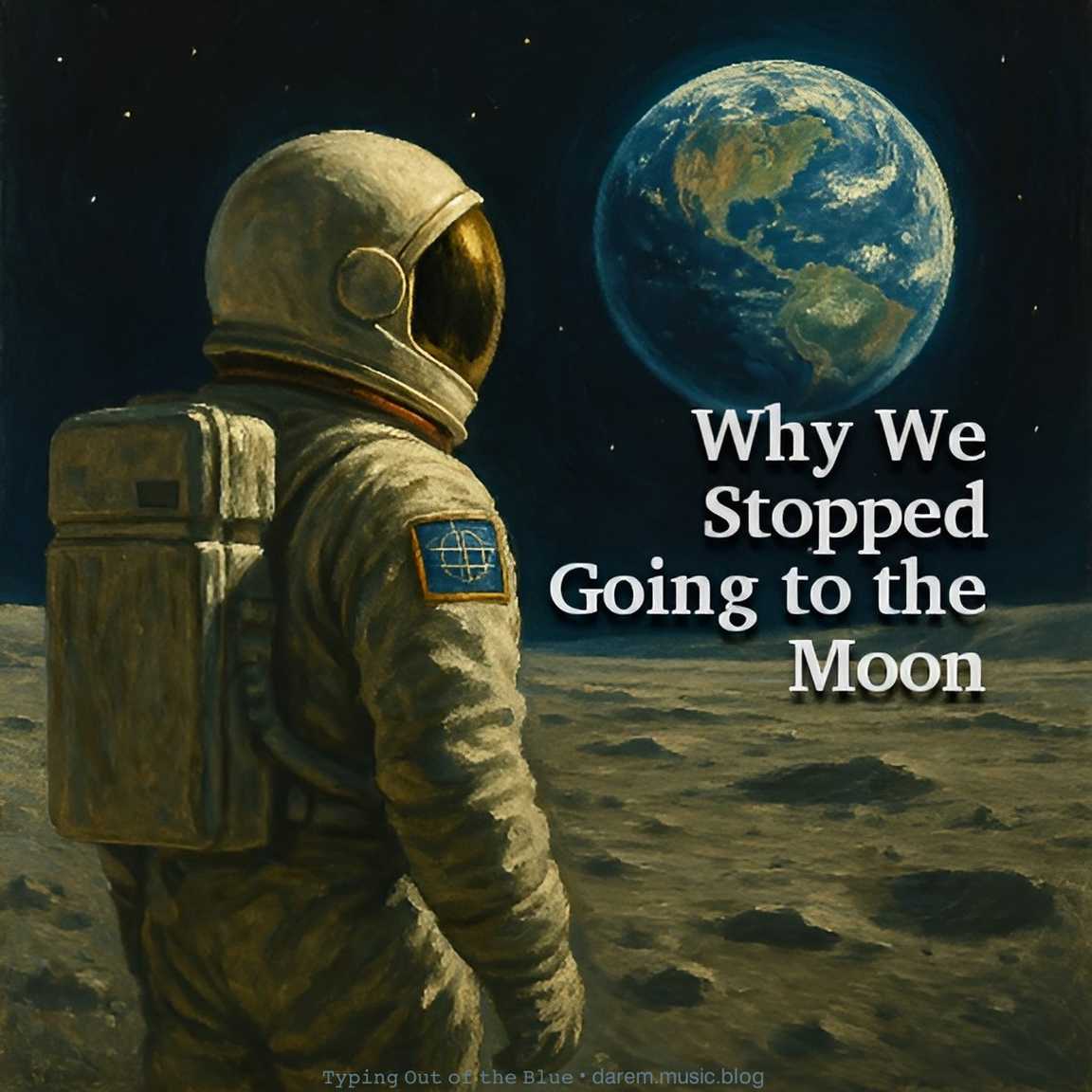
People keep asking, “If we really went to the Moon, why haven’t we gone back?”
Simple. After six successful missions from 1969 to 1972, the world just… moved on. The Apollo Program had already proven the point. America won the space race, the dream was achieved—and the bill was massive.
By the early ’70s, public excitement faded. The money went elsewhere—wars, politics, Earth problems. The Moon was no longer a mystery, just a very expensive destination.
And it’s not a friendly place either. No air, no atmosphere, scorching days, freezing nights, and radiation that can fry a human cell. So NASA shifted focus: from “touch the Moon” to “live in space.” Space stations became the new frontier.
Now, decades later, they’re finally heading back. NASA’s Artemis program is rebooting lunar missions right now.
• Artemis I: uncrewed test flight in 2022 (already done).
• Artemis II: astronauts will orbit the Moon—planned for 2026.
• Artemis III: humans will land again, likely around 2027–2028.
This time, the goal isn’t just to plant a flag—it’s to build a base and prepare for Mars.
Because the goal now isn’t to repeat history—it’s to rewrite it.
ᴛʸᵖⁱⁿᵍ ᴏᵘᵗ ᵒᶠ ᵗʰᵉ ʙˡᵘᵉ ᵈᵃʳᵉᵐ ᵐᵘˢⁱᶜ ᵇˡᵒᵍ