
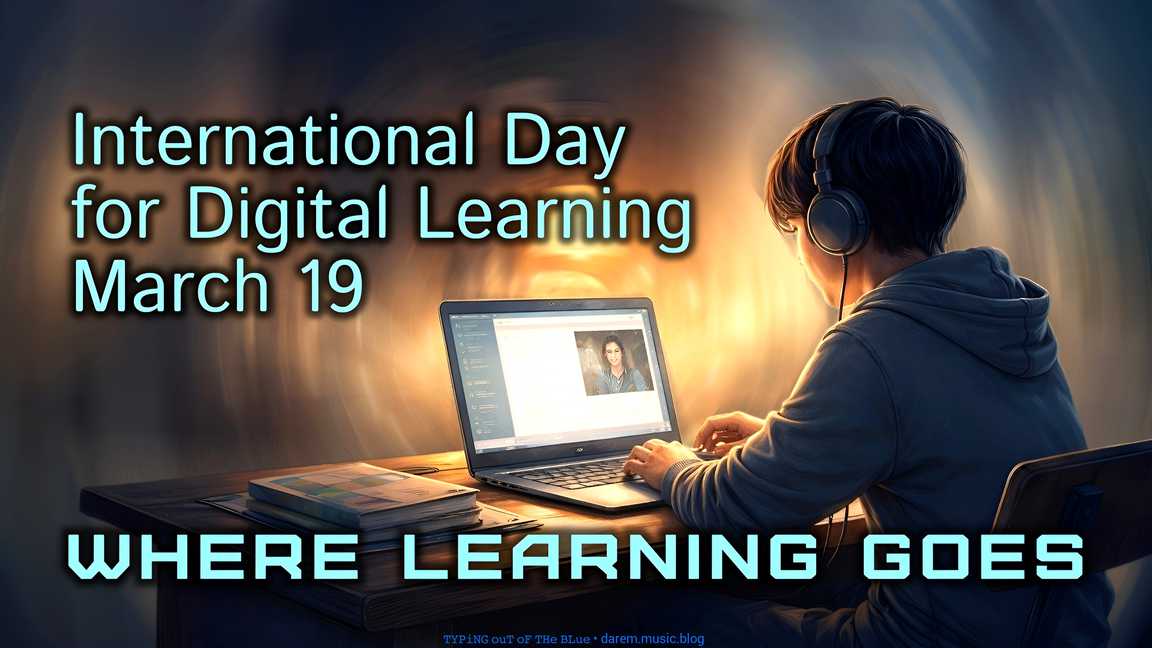
International Day for Digital Learning • March 19
The classroom is no longer just chalk. Sometimes it is a screen. Sometimes it is home. Sometimes it is just you, wearing earphones, in a quiet space.
That is the shift.
Learning has moved beyond walls. There is no need for a bell to begin. There is no need to move at the same pace as everyone else. You can pause. Replay. Skip. Explore.
But this is not just about gadgets. It is not about saying, “wow, there is a tablet.”
It is simpler than that.
It is about access.
• A student in a far province watching the same lesson as someone in the city
• A teacher recording a lesson so no one gets left behind
• Someone learning a new skill at midnight, no classroom needed
Digital learning makes knowledge less exclusive. It is no longer locked in a room or a schedule.
But there is a catch.
Not everyone has stable internet. Not everyone has devices. Sometimes, the signal is there—but the support system is not. So while access is growing wider, it also needs to become fair.
Otherwise, it is just a new kind of classroom—with some people still left outside.
That raises a question:
Are we using it to include more people—or just to make things look advanced?
Simple.
Learning should travel.
Not stay put.
And now, it can—through screens, through signals, and on time that you control. The only question is—who actually gets to move with it.
⌨ ᴛʸᵖⁱⁿᵍ ᴏᵘᵗ ᵒᶠ ᵗʰᵉ ʙˡᵘᵉ ᵈᵃʳᵉᵐ ᵐᵘˢⁱᶜ ᵇˡᵒᵍ
