Pope Saint Pius X is remembered as the “Pope of the Eucharist,” the one who opened the doors for children to receive First Communion early and brought the whole Church closer to Jesus. But behind the serious mission, there were moments that showed his simple, human, and yes—funny side.
Mistaken for an Ordinary Priest
He often wore just a plain black cassock instead of the full papal robes. One day, visitors walked in and asked, “Where’s the Pope?” With a gentle smile, he said, “Oh, he’s inside—but don’t worry, he’s very kind.”
They didn’t realize they were already speaking to the Pope himself. The look on their faces afterward? Priceless.
Not a Fan of Formalities
Tradition said: kiss the Pope’s ring. But Pius X didn’t like it. Whenever someone leaned down, he pulled his hand away and said, “Please, don’t. I’m not a prince—I’m a priest.”
What followed was usually an awkward pause. The visitor froze, not knowing whether to bow or shake hands. Vatican staff nervous in the background. And Pius X? Completely calm, as if nothing unusual had happened.
Forever Beppi
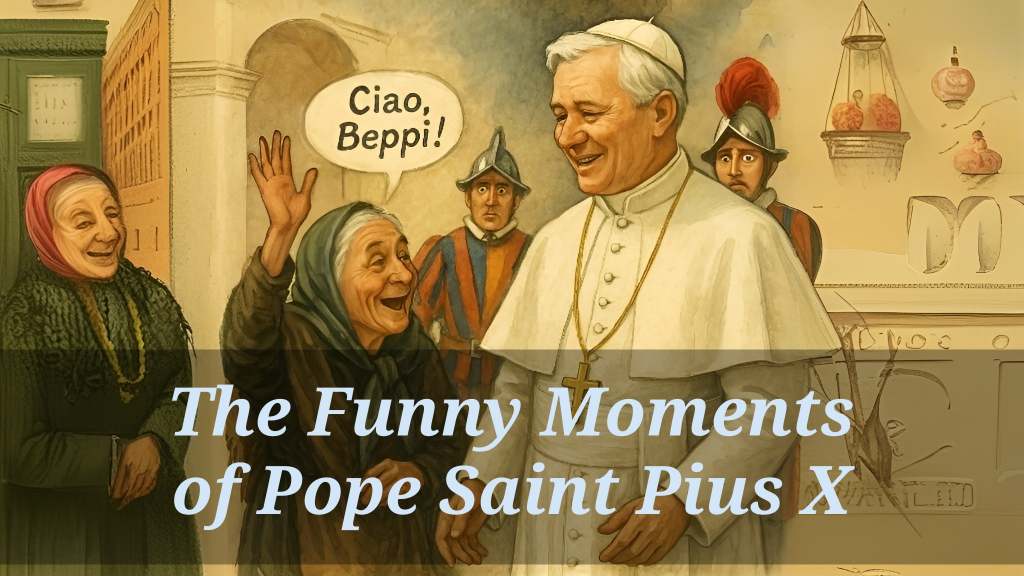
Back in his hometown, everyone knew him as “Beppi.” One day an old woman came to see him in the Vatican. While the world called him “Holy Father,” she cheerfully shouted, “Ciao, Beppi!”
The guards were horrified. But Pius X laughed and said, “She’s right. I am still Beppi.”
Why It Matters
The funny side of Pius X isn’t about cracking jokes—it’s about breaking down barriers. He was the Pope, but he never stopped being Beppi, the parish priest who stayed close to ordinary people.
That’s why every August 21, the Church doesn’t just honor a saintly Pope. We remember a man who showed that holiness can be simple, human, and even a little bit funny.
𝚃𝚢𝚙𝚒𝚗𝚐 𝙾𝚞𝚝 𝚘𝚏 𝚝𝚑𝚎 𝙱𝚕𝚞𝚎
𝚍𝚊𝚛𝚎𝚖𝚙𝚕𝚊𝚌𝚎𝚛.𝚌𝚘𝚖
The Funny Moments of Pope Saint Pius X
Discover the funny and human side of Pope Saint Pius X. From being mistaken as an ordinary priest to his dislike of formalities, these humble stories show why the Church remembers him every August 21.