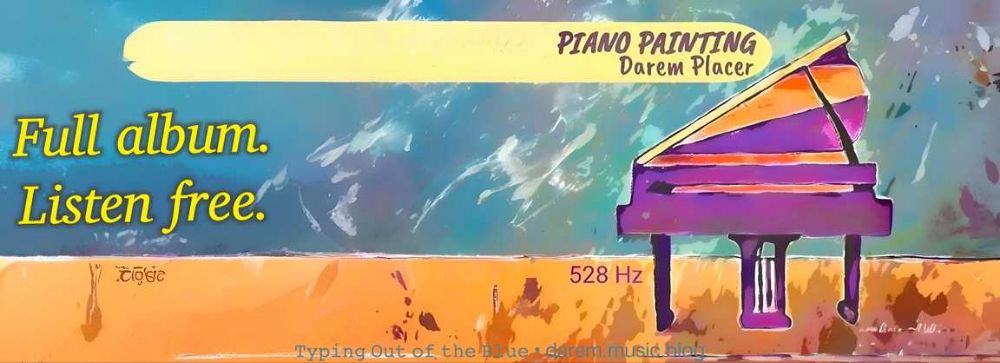
People usually celebrate art by showing it—paintings, photos, music, performances.
But maybe the more honest way to look at it is this: we still don’t agree on what art is.
Ask ten people what art is, you get ten different answers. Some say skill. Some say expression. Some say beauty. Some say meaning.
Now add AI into the picture. You type “make an art,” and something appears. So now the question becomes louder: is that art?
The truth is, it depends on who is looking.
We tried to break it down. Does a prompt make you an artist? Not always. Does giving instructions make you the artist? Sometimes. Is the one who executes just a tool? Not really. Is everyone in a collaboration an artist? Maybe.
Many answers feel right, and yet all of them feel incomplete.
Because art refuses to stay in one place. The moment you define it, someone breaks that definition. The moment you say “this is art,” someone else says “no, it’s not.”
Even the idea of being an “artist” is unstable. No certificate proves it. No title guarantees it. You can call yourself one, but it only becomes real when something you make starts to mean something—whether to others or even just to you.
And even that is not final, because someone else might see nothing in it.
So where does that leave us?
Maybe this: art is not something we settle. It’s something we keep encountering—different people, different eyes, different meanings.
AI didn’t break art. It just made the questions louder.
And maybe that’s the point of World Art Day. Not to define art, but to accept that it will never be fully defined.
Because the moment everyone agrees on what art is, it stops moving.
ᴛʸᵖⁱⁿᵍ ᴏᵘᵗ ᵒᶠ ᵗʰᵉ ʙˡᵘᵉ ᵈᵃʳᵉᵐ ᵐᵘˢⁱᶜ ᵇˡᵒᵍ