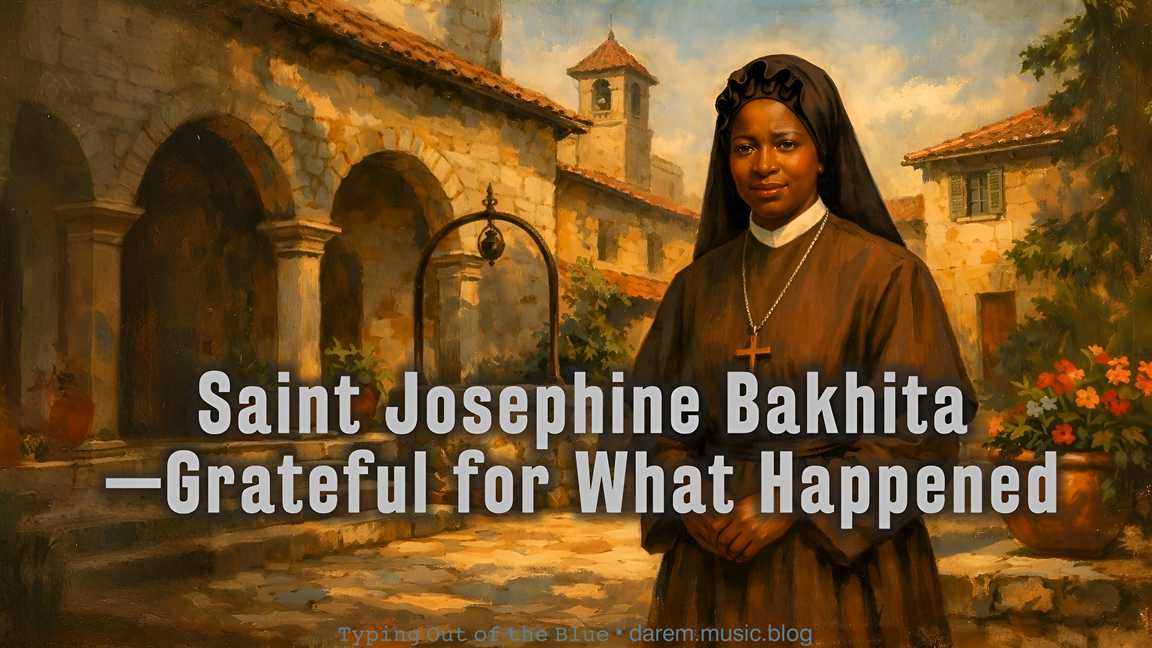
She was born in Sudan around 1869, in the Darfur region of Africa. While she was still a child, she was kidnapped, sold into slavery, beaten, renamed, and stripped of identity. Her past was brutal. But it did not break her.
She was eventually taken to Italy, where slavery was no longer legal. There, she was declared free by the courts. In that same place, she encountered Christ. Instead of choosing anger, she chose forgiveness.
Josephine Bakhita was a former slave who lived through the late 19th and early 20th centuries. She spent about 10 years in slavery, from childhood until her arrival in Europe. Her life unfolded between Africa and Italy, shaped by extreme cruelty and, later on, unexpected freedom.
She later became a Canossian sister and lived a simple life of service. People noticed how settled she was. Nothing in her felt bitter or resentful. What she had been through did not leak into how she treated others.
Her words later revealed how she understood her own past:
“If I were to meet the slave traders who kidnapped me, I would kneel and kiss their hands, for if that did not happen, I would not be a Christian today.”
Saint Josephine Bakhita’s message is simple and sharp. A painful past does not erase dignity. A wounded life can still become whole.
Today at work, in families, in friendships, online. Someone hurts us. Someone embarrasses us. Someone crosses a line. The easy move is to return it. A sharp reply. Silent treatment. A quiet grudge that stays. Another option exists. Not dramatic forgiveness. Just choosing not to add more damage. Letting a moment end instead of dragging it forward. In ordinary life, that choice already changes a lot.
Let’s keep learning the saints’ way—day by day.
⌨ ᴛʸᵖⁱⁿᵍ ᴏᵘᵗ ᵒᶠ ᵗʰᵉ ʙˡᵘᵉ ᵈᵃʳᵉᵐ ᵐᵘˢⁱᶜ ᵇˡᵒᵍ