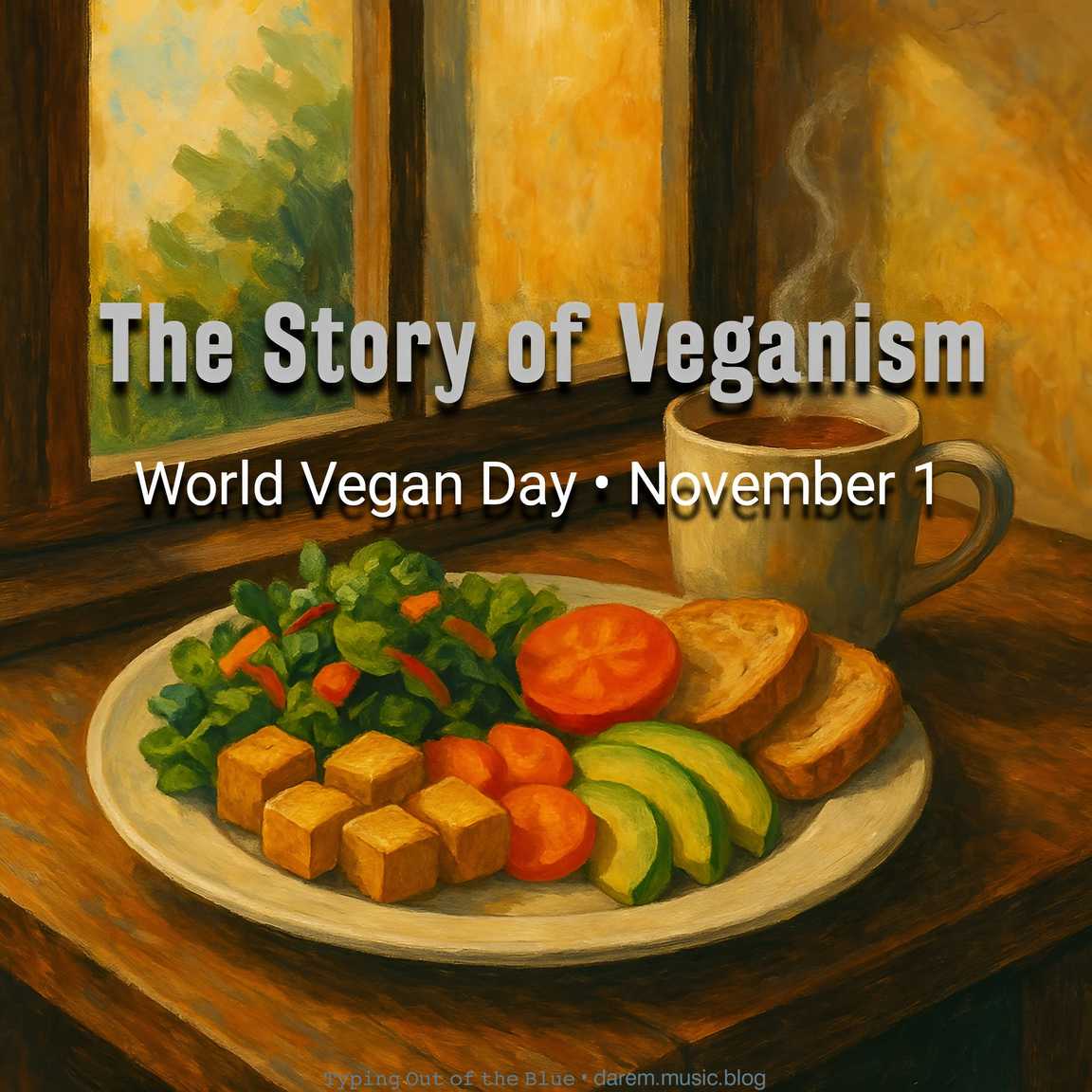
World Vegan Day • November 1
Long before hashtags and smoothie bowls, the idea of living without using animals wasn’t new. It had roots in ancient times—Greek philosophers, Indian monks, and Buddhist teachers already avoided meat. They believed compassion shouldn’t stop with humans.
But the word “vegan” came much later—1944, to be exact. In wartime England, a small group of vegetarians felt that even dairy and eggs still caused harm. They met in Leicester and formed The Vegan Society. Donald Watson, the founder, simply took the first and last letters of “vegetarian” to form “vegan.” He described it as “the beginning and end of vegetarian.” Smart move, right?
At first, it sounded extreme. No meat, no milk, no cheese, no leather. People thought it was impossible. But through time, science started backing it up—showing how plant-based diets can prevent diseases, reduce carbon footprints, and spare animals from suffering.
By 1994, Louise Wallis, then chair of The Vegan Society, marked the 50th anniversary by declaring November 1 as World Vegan Day. It was meant both as a celebration and an invitation—for anyone curious, anyone willing to try.
Today, veganism has grown from quiet cafés in London to major cities across Asia, Africa, and the Americas. You’ll find soy milk beside regular milk, vegan burgers in fast-food chains, and cruelty-free makeup on store shelves. The world started to listen—not because of trend, but because of truth.
Still, being vegan isn’t about perfection. It’s about awareness. It’s a quiet rebellion against cruelty and waste—a way of saying, “I care about what I consume, and who pays for it.”
Maybe that’s the heart of it—to live with less harm, one meal, one choice, one day at a time.
⌨ ᴛʸᵖⁱⁿᵍ ᴏᵘᵗ ᵒᶠ ᵗʰᵉ ʙˡᵘᵉ ᵈᵃʳᵉᵐ ᵐᵘˢⁱᶜ ᵇˡᵒᵍ
