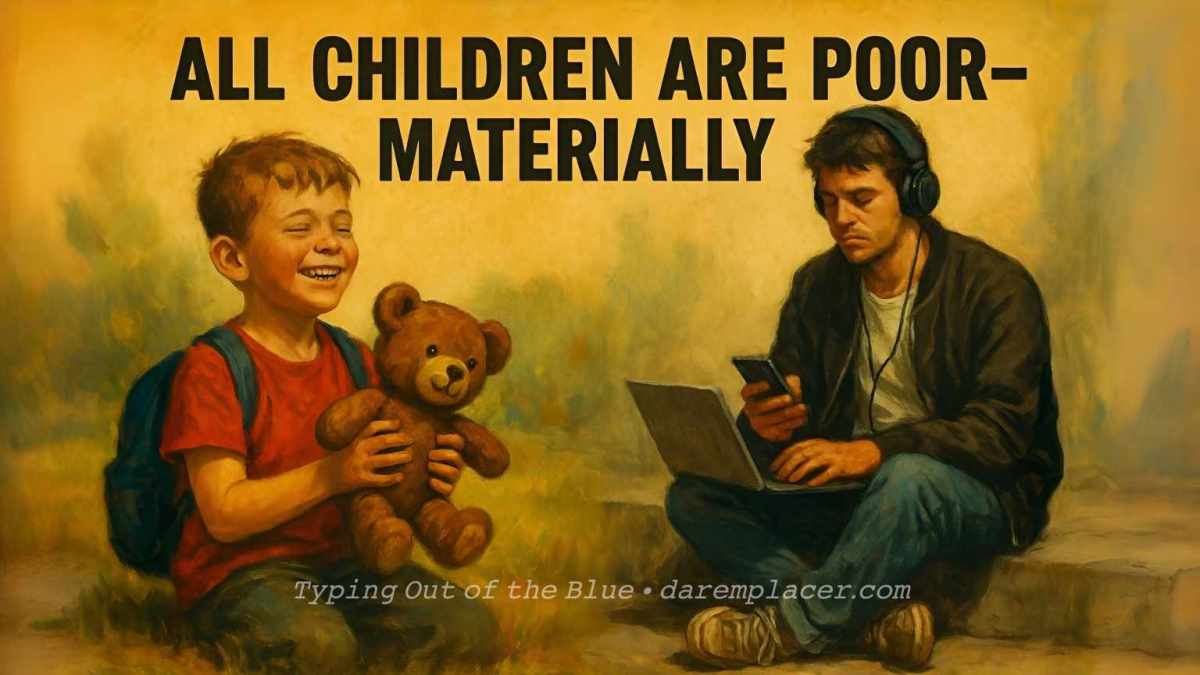
All children are poor—materially. They don’t own money, property, or even a wallet that’s truly theirs. The food they eat, the toys they play with, the clothes they wear—all come from their parents or guardians. And yet, they don’t see themselves as poor. Their real wealth is in play, in laughter, in imagination, and in the trust that someone will always take care of them.
Being surrounded by things, however, can create an illusion of richness. A spoiled child may think he’s rich because of gadgets and branded clothes, but everything is still borrowed. And that illusion doesn’t always fade with age. Imagine a 25-year-old bum with cool, expensive stuff and a steady flow of pocket money from his parents. Outwardly, he looks rich. In reality, he isn’t—because nothing comes from him. His wealth exists only as long as someone else provides it.
That’s very different from someone who stays at home with responsibility. A housewife, for example, may not bring in a salary, but she carries real work and purpose every single day. A bum doesn’t. One sustains a household, the other only drains it.
And here’s the weight of it: being poor in money isn’t necessarily “poorness.” Sometimes it’s the very condition that helps you see life differently. With little to hold on to, you notice what truly matters. But being rich in possessions while empty inside is the heavier kind of poverty. Because when life ends, wealth ends too. What remains is a soul that once believed it was rich but never really was.
Children carry the paradox well: poor in money, yet rich in spirit. Adults often reverse the roles, chasing things while losing themselves. Real wealth isn’t what you own—it’s who you are when everything else is gone.
𝚃𝚢𝚙𝚒𝚗𝚐 𝙾𝚞𝚝 𝚘𝚏 𝚝𝚑𝚎 𝙱𝚕𝚞𝚎
𝚍𝚊𝚛𝚎𝚖𝚙𝚕𝚊𝚌𝚎𝚛.𝚌𝚘𝚖
