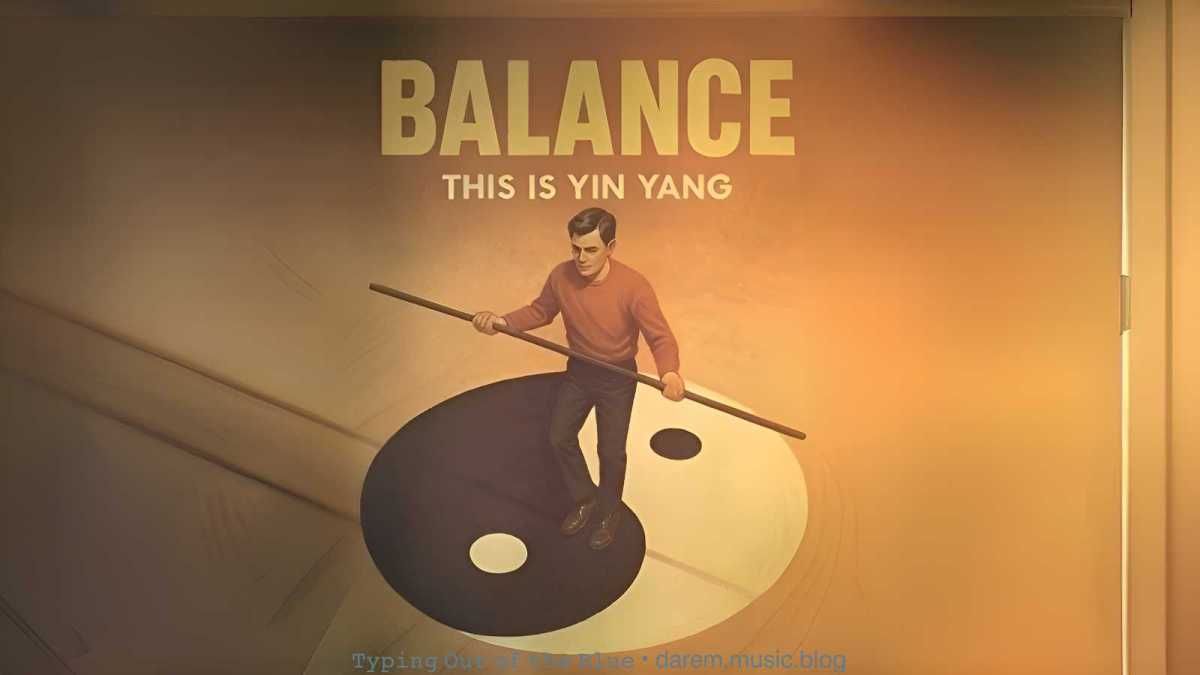
This is Yin Yang
The Yin Yang symbol comes from ancient Chinese philosophy, especially Taoism, which teaches about living in harmony with the natural flow of life. But over time, a lot of people misunderstood it.
A lot of people think Yin Yang means balancing good and evil. But that’s not it. Yin Yang isn’t about morals—it’s about rhythm.
Yin and Yang are opposites, but not enemies. Yin is calm, dark, quiet, cool—like night or rest. Yang is loud, bright, active, warm—like day or motion. Neither one is better. Neither one is bad. They both need each other to work.
When life gets too quiet or too still, Yang shows up to bring movement and energy. But when things get too loud or chaotic, Yin steps in to calm things down. It’s not about canceling anything—it’s about knowing what’s missing and adjusting.
The black and white dots in the symbol mean that each side holds a bit of the other. Even in peace, there’s movement. Even in action, there’s calm.
Nothing in life is 100% one thing.
The magic is in the mix.
Yin Yang isn’t about good vs evil. Darkness doesn’t mean evil. Light doesn’t always mean good. It’s not a battle—it’s the natural flow of life.
Sometimes you rest.
Sometimes you run.
Sometimes you listen.
Sometimes you lead.
Balance isn’t about being neutral—it’s knowing what’s needed now.
Yin Yang is knowing when to speak and when to stay quiet.
When to rise and when to let go.
It’s not about being perfect—just in tune.
Note: Yin Yang is a philosophical concept from ancient Chinese thought. This article explores its idea of balance as a metaphor for rhythm in life. As Christians, we reflect on such ideas with care, always grounding ourselves in Christ, who brings true harmony and truth.
ᴛʸᵖⁱⁿᵍ ᴏᵘᵗ ᵒᶠ ᵗʰᵉ ʙˡᵘᵉ ᵈᵃʳᵉᵐ ᵐᵘˢⁱᶜ ᵇˡᵒᵍ
Listen to Acoustic Thinking on Apple Music and Apple Music Classical