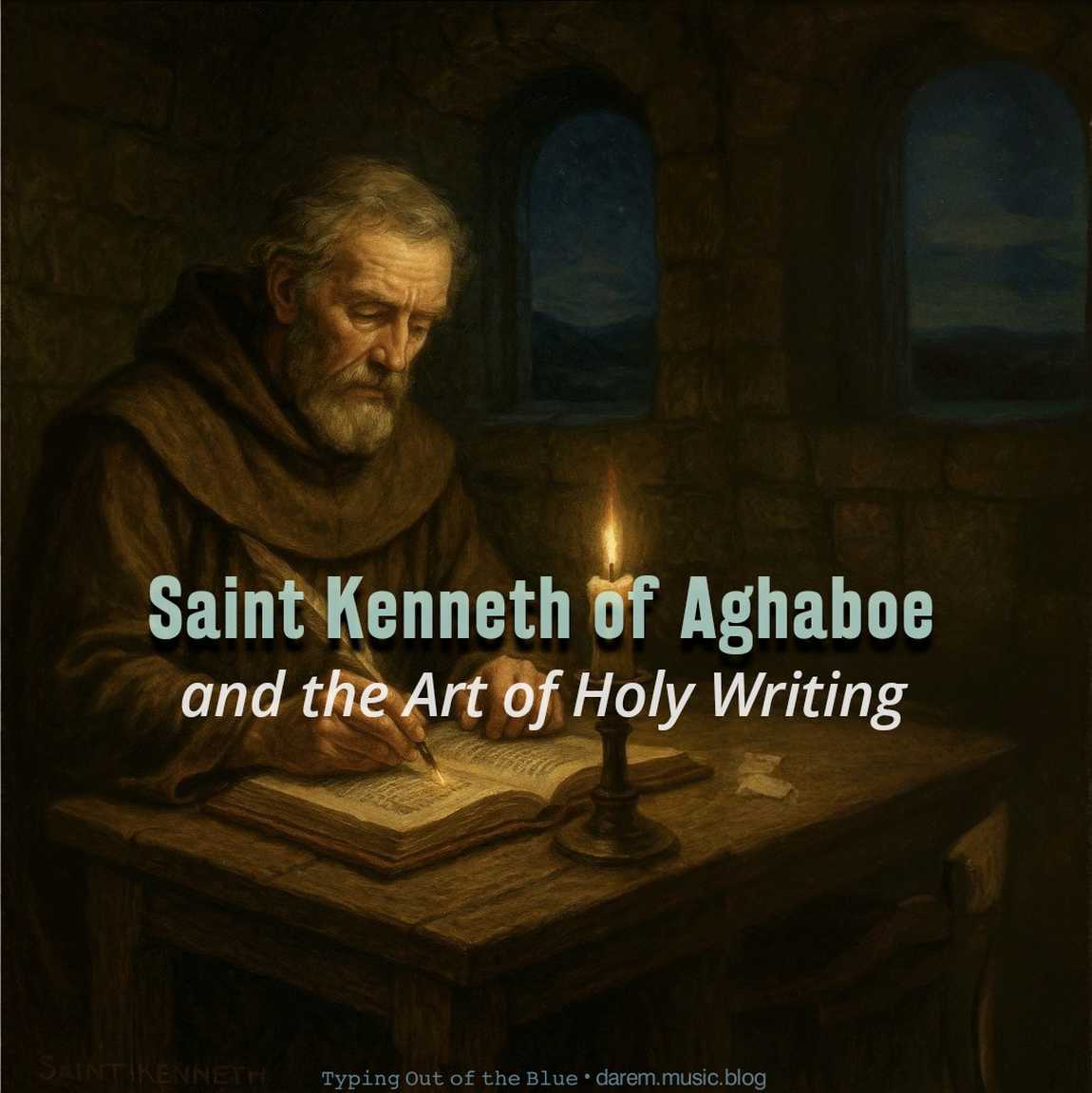
Saint Kenneth of Aghaboe and the Art of Holy Writing

In candlelight and silence, a monk’s pen kept faith alive—each word a prayer, each page a light that never faded.

In the quiet light of old monasteries, words were not just read—they were born again through hands like those of Saint Kenneth of Aghaboe.

He lived in the 6th century, when books were rare and paper was precious. Each page was made of parchment, and every letter was written by candlelight. Father Kenneth was one of the few who mastered the art of copying sacred texts—not for fame, but for faith.

To him, writing was prayer in motion.

Each stroke of ink was a whisper to God.

Each page was a bridge between heaven and earth.

He and his fellow monks would spend long hours bent over Scripture—repeating the same holy words until they lived inside their hearts. They copied the Gospels, psalms, and teachings of the saints. And when a book was finished, it was not sold. It was shared—sent to another monastery, another place of silence and hope.

As a priest, Father Kenneth also preached to those who could not read, bringing the Word alive not through pages but through presence. He carried light both in ink and in voice.

Through his steady hands, the Word of God reached new lands.

Through his calm patience, wisdom was preserved when the world outside was full of wars and forgetting.

That’s how Saint Kenneth became more than a monk—he became a keeper of light, ensuring that even one small candle of knowledge would never die out.

⌨ ᴛʸᵖⁱⁿᵍ ᴏᵘᵗ ᵒᶠ ᵗʰᵉ ʙˡᵘᵉ ᵈᵃʳᵉᵐ ᵐᵘˢⁱᶜ ᵇˡᵒᵍ
Traces of courage, silence, and sacrifice—this is Saints.

Listen on Apple Music, Apple Music Classical, and YouTube Music
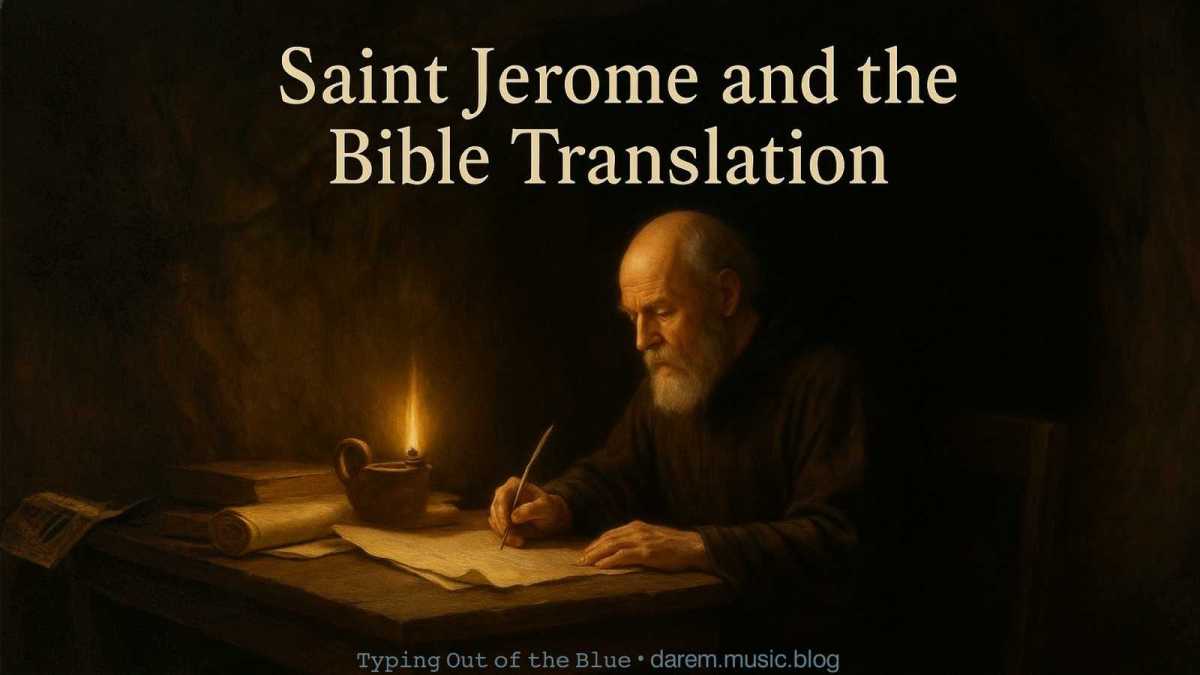
Saint Jerome and the Bible Translation

How one priest in Bethlehem shaped the Bible into clarity—turning scattered texts into a message that still speaks today.

In the 300s, the Bible in Latin was scattered. Different translations floated around, sometimes contradicting each other. That’s when Pope Damasus asked Father Jerome to fix it.

He didn’t just tidy things up—he went deep. First, he checked the New Testament against the original Greek. Then he took on the Old Testament by studying Hebrew directly from Jewish rabbis in Bethlehem. It wasn’t common for Christians to do that. For him, accuracy mattered more than tradition.

He worked for decades in Bethlehem, near the grotto of Christ’s birth. By lamplight, surrounded by scrolls, he wrestled with words, deciding which Latin phrase could carry the full weight of the original. Sometimes he was criticized for going “too far back” to the Hebrew, but his goal was clear: stay faithful to the source.

The result was the Vulgate (Latin for “common version”)—a Bible that became the standard for over a thousand years. Even when councils debated Scripture centuries later, Jerome’s version stood strong. The Council of Trent (1545–1563), a major gathering that defined Catholic teaching and reforms, confirmed the Vulgate as the official Bible. His line still echoes today: “Ignorance of Scripture is ignorance of Christ.”

Because of his work, the Word of God reached hearts with clarity. That priest in Bethlehem is now honored as Saint Jerome, Doctor of the Church, whose life reminds us that truth is best served when it is faithfully passed on.

ᴛʸᵖⁱⁿᵍ ᴏᵘᵗ ᵒᶠ ᵗʰᵉ ʙˡᵘᵉ ᵈᵃʳᵉᵐ ᵐᵘˢⁱᶜ ᵇˡᵒᵍ

Traces of courage, silence, and sacrifice—this is Saints.

Listen on Apple Music, Apple Music Classical, and YouTube Music