80s Bullies vs Today’s Bullies: Who’s Scarier?

The way bullies work changed with technology—and the impact hits differently for today’s generation.

80s bullies were loud and direct. If they didn’t like you, they showed it to your face. No fake names, no hiding. It was physical, raw, and stressful—but once it ended, it ended. No screenshots. No replay. You could walk home and leave the moment behind.

Today’s bullies are different. They don’t always shout. Sometimes you don’t even know who they are. They strike through posts, comments, group chats, and anonymous accounts. And the damage stays. One post can spread, get screenshotted, and live online long after the moment is over.

80s bullies hurt your body.
Today’s bullies hit your mind.

And mental hits last longer.

Back then, you escaped by walking away from the person.
Now, you escape by leaving the internet—but everything is still waiting when you return.

Before: one bully.
Now: a whole crowd with keyboards.

Before: physical pain.
Now: public humiliation.

So yes—today’s bullies are scarier.
Not because they’re stronger, but because technology makes their cruelty louder, faster, and harder to escape.

But youths today also have tools the 80s never had:

• Block
• Mute
• Report
• Screenshot proof
• Real friends who can defend you
• A society that actually calls out bullying now

The bullies evolved—but so did your power to shut them down.
Forgiving the Tortured Torturer’s Torturer • Darem Placer

Listen on Apple Music and Apple Music Classical
Without Without includes Forgiving the Tortured Torturer’s Torturer

ᴛʸᵖⁱⁿᵍ ᴏᵘᵗ ᵒᶠ ᵗʰᵉ ʙˡᵘᵉ ᵈᵃʳᵉᵐ ᵐᵘˢⁱᶜ ᵇˡᵒᵍ
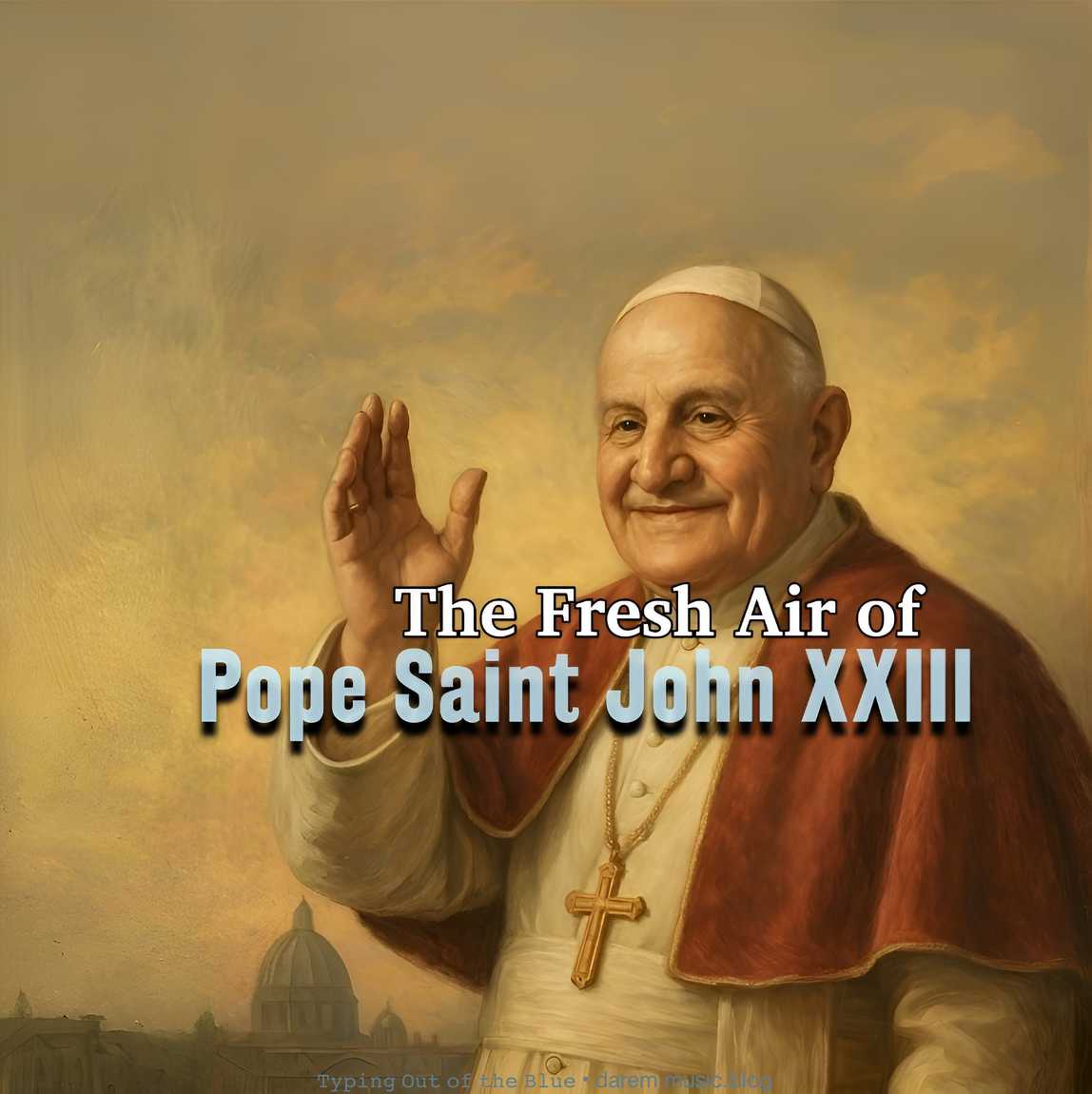
The Fresh Air of Pope Saint John XXIII

He opened the Church’s windows and let the Spirit move again—faith breathing fresh air after years of silence.

Before Pope John XXIII came along, the Church felt… sealed. Like a room that hadn’t been opened for years. The air was heavy with old rules, Latin prayers only few could follow, and a sense of distance between the altar and the people. Faith was sacred, yes—but sometimes too serious, too far from everyday life.

Then came Angelo Roncalli, a simple man with a big heart and an even bigger smile. When he became pope in 1958, people thought he’d just keep things calm. Instead, he opened the windows—literally and spiritually. He said it was time to “let in some fresh air.”

That fresh air became the Second Vatican Council (1962–1965), and suddenly, things began to move.

Mass was finally spoken in languages people could understand—so prayers sounded like home again. Priests faced the people, not the wall. The Church began talking to the world instead of talking about it. Love became the language, not fear. And holiness didn’t stay in the hands of priests—it was shared with everyone.

The Church started to breathe again.

It became warmer, simpler, more alive. That “fresh air” wasn’t rebellion—it was renewal. A reminder that faith isn’t supposed to be locked inside a museum. It’s meant to live, to move, to grow with time.

U Need Fresh Air • Darem Placer
Without Without includes U Need Fresh Air

Listen on Apple Music and Apple Music Classical

⌨ ᴛʸᵖⁱⁿᵍ ᴏᵘᵗ ᵒᶠ ᵗʰᵉ ʙˡᵘᵉ ᵈᵃʳᵉᵐ ᵐᵘˢⁱᶜ ᵇˡᵒᵍ