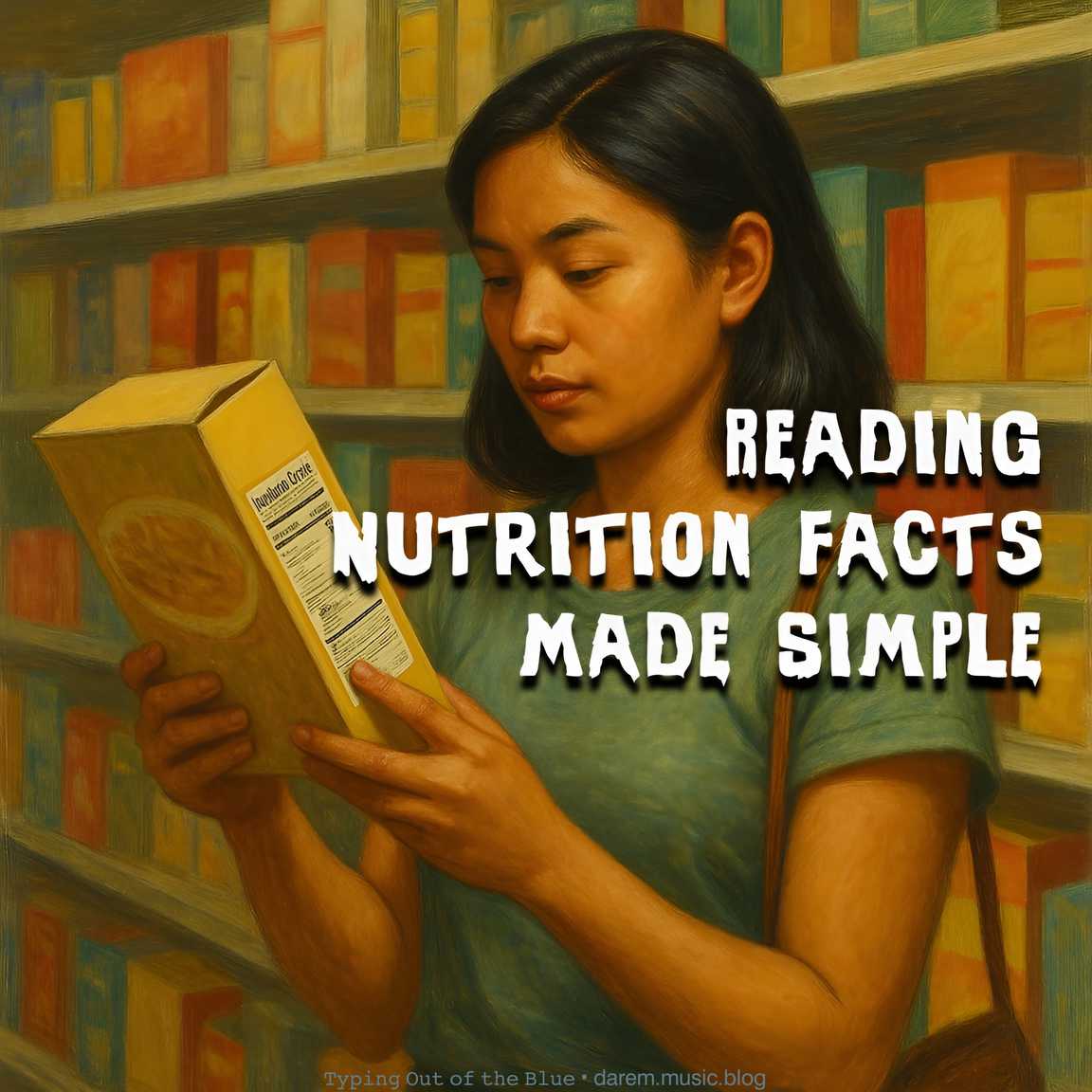
We see Nutrition Facts on every pack, yet most people never learned how to read them. The labels look technical, the numbers feel tiny, and the front of the packaging always sounds more confident than the truth. But the real guide is simple. If you know what to check, you can understand a product in seconds before buying it.
Here’s the clean, practical way to read Nutrition Facts—made for everyday shoppers.
1. Serving Size
Start here.
This line controls everything on the label.
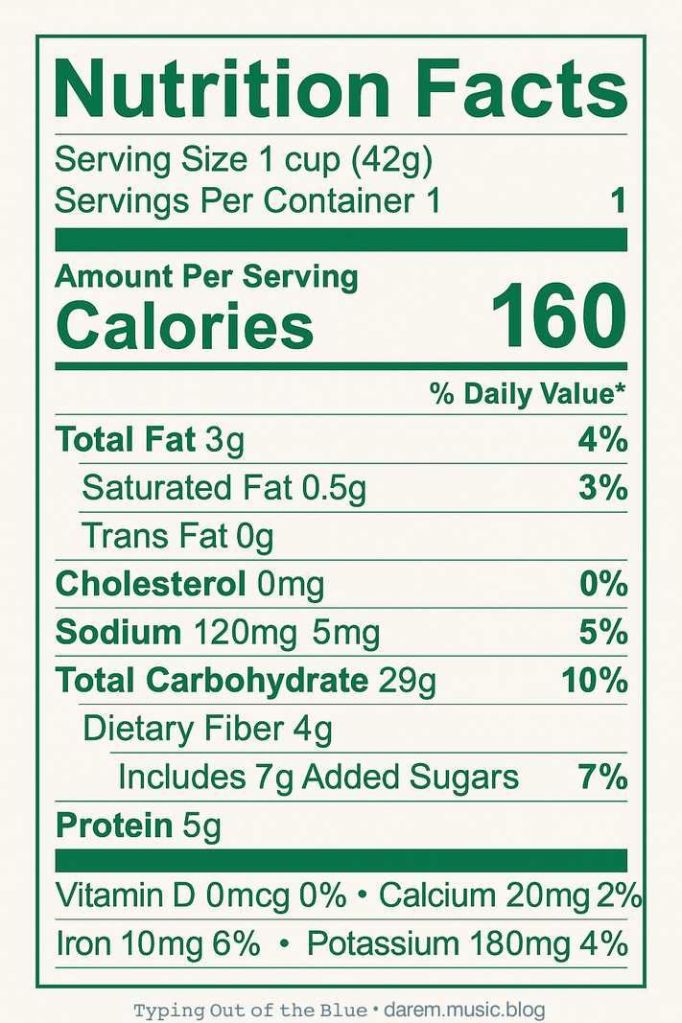
If the serving size says “2 cookies” and the pack has eight, every number on the label applies only to two. Eat the whole pack and you multiply everything by four. Many products look “light” only because the serving size is unrealistically small.
If you skip this line, the rest of the label becomes meaningless.
2. Calories
Calories show how much energy you’re taking in.
They’re not good or bad—just numbers that need honesty.
Ask yourself:
• Is the calorie count worth it?
• Is one serving realistic, or will you finish the whole pack?
• Is this snack filling or just empty energy?
Calories matter most when you’re not aware of them.
3. Sodium
This is the quiet danger in modern processed food.
High sodium can push blood pressure up, even in young people.
Quick read:
• Under 10% Daily Value = light
• Over 20% DV = heavy
Instant noodles, canned soups, flavored chips, and ready-to-eat meals often sit in the heavy zone. Check this if the food is part of your routine.
4. Sugar & Added Sugar
Total sugar includes everything.
Added sugar is the one that tells the real story.
Added sugar is the extra sweetness manufacturers add for taste—sweetness without nutrition. Drinks, cereals, flavored yogurt, and “healthy-looking” bars often hide high added sugar.
If added sugar is high, it’s not something to treat as a daily habit.
5. Saturated Fat & Trans Fat
These fats affect the heart most.
Easy rule:
• Low saturated fat is safer
• Any amount of trans fat is a clear warning
If these fats take up too much space on the label, leave the product on the shelf.
6. Fiber
Fiber doesn’t shout, but it helps more than people realize.
A snack with fiber keeps you full longer and helps your body handle sugar better. Products with zero fiber plus high sugar and fat are usually engineered to keep you reaching for more.
Choosing something with even a little fiber is already a better move.
7. Protein
Protein supports fullness and recovery.
You don’t need a lot in snacks, but having some is often a sign of a more balanced product.
8. Ingredients List
This is the honest part of the package.
The first three ingredients make up most of the product.
If they’re sugar, syrup, refined flour, or oil, the product is likely more hype than health.
Quick checks:
• Shorter ingredient lists are usually cleaner
• Long lists with chemicals mean heavier processing
• Words like “whole grain” or “natural” mean nothing unless the ingredients match
The front of the pack is marketing. The ingredients list is the truth.
The Fast Rule Before You Buy
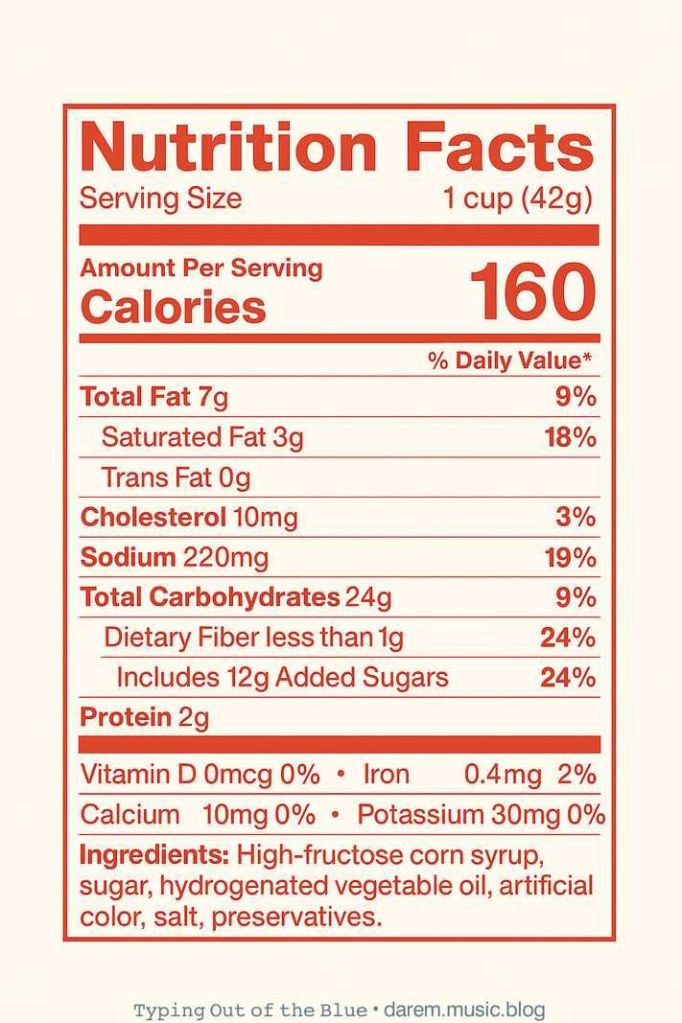
Check these seven things:
• Serving size
• Calories
• Sodium
• Added sugar
• Saturated fat
• Fiber
• First three ingredients
If three or more look high or questionable, skip it.
If the numbers look clean, it’s a safer choice.
Just read the label for a few seconds, see what it really says, and choose what’s better for you.
All this label talk—and then I Ate a Glummy Bear with 7% sadness. 🍬🐻😁

⌨ ᴛʸᵖⁱⁿᵍ ᴏᵘᵗ ᵒᶠ ᵗʰᵉ ʙˡᵘᵉ ᵈᵃʳᵉᵐ ᵐᵘˢⁱᶜ ᵇˡᵒᵍ

