Reading Nutrition Facts Made Simple

A simple way to read Nutrition Facts so you can choose better food without getting lost in the numbers.

We see Nutrition Facts on every pack, yet most people never learned how to read them. The labels look technical, the numbers feel tiny, and the front of the packaging always sounds more confident than the truth. But the real guide is simple. If you know what to check, you can understand a product in seconds before buying it.

Here’s the clean, practical way to read Nutrition Facts—made for everyday shoppers.

1. Serving Size

Start here.
This line controls everything on the label.

If the serving size says “2 cookies” and the pack has eight, every number on the label applies only to two. Eat the whole pack and you multiply everything by four. Many products look “light” only because the serving size is unrealistically small.

If you skip this line, the rest of the label becomes meaningless.

2. Calories

Calories show how much energy you’re taking in.

They’re not good or bad—just numbers that need honesty.

Ask yourself:
• Is the calorie count worth it?
• Is one serving realistic, or will you finish the whole pack?
• Is this snack filling or just empty energy?

Calories matter most when you’re not aware of them.

3. Sodium

This is the quiet danger in modern processed food.

High sodium can push blood pressure up, even in young people.

Quick read:
• Under 10% Daily Value = light
• Over 20% DV = heavy

Instant noodles, canned soups, flavored chips, and ready-to-eat meals often sit in the heavy zone. Check this if the food is part of your routine.
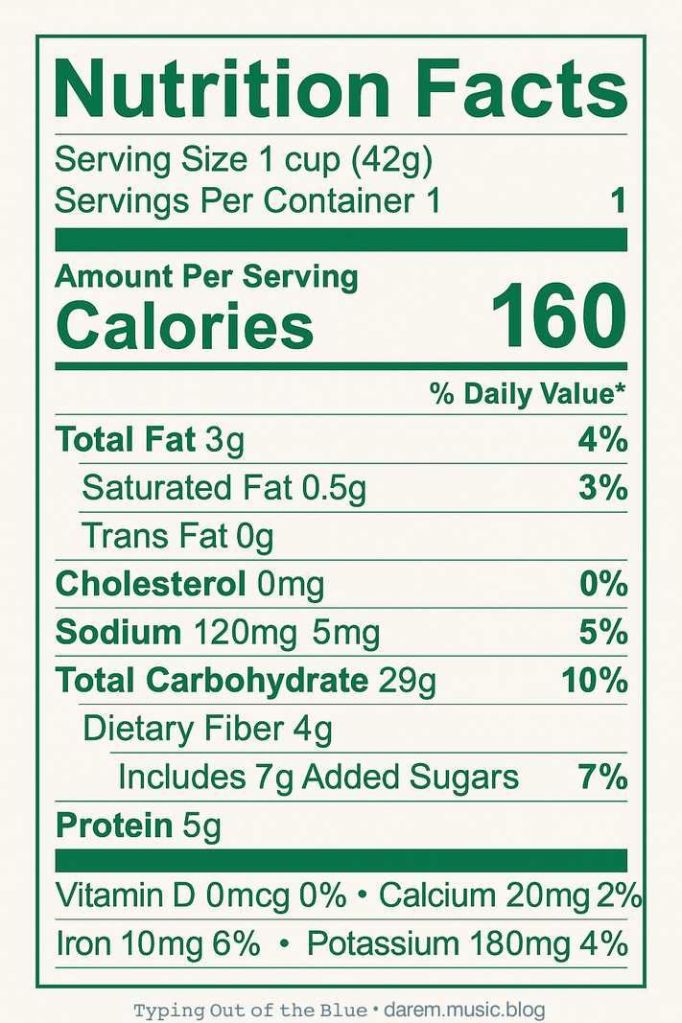
Balanced numbers and recognizable ingredients—this is what a good label looks like.

4. Sugar & Added Sugar

Total sugar includes everything.
Added sugar is the one that tells the real story.

Added sugar is the extra sweetness manufacturers add for taste—sweetness without nutrition. Drinks, cereals, flavored yogurt, and “healthy-looking” bars often hide high added sugar.

If added sugar is high, it’s not something to treat as a daily habit.

5. Saturated Fat & Trans Fat

These fats affect the heart most.

Easy rule:
• Low saturated fat is safer
• Any amount of trans fat is a clear warning

If these fats take up too much space on the label, leave the product on the shelf.

6. Fiber

Fiber doesn’t shout, but it helps more than people realize.

A snack with fiber keeps you full longer and helps your body handle sugar better. Products with zero fiber plus high sugar and fat are usually engineered to keep you reaching for more.

Choosing something with even a little fiber is already a better move.

7. Protein

Protein supports fullness and recovery.
You don’t need a lot in snacks, but having some is often a sign of a more balanced product.

8. Ingredients List

This is the honest part of the package.
The first three ingredients make up most of the product.

If they’re sugar, syrup, refined flour, or oil, the product is likely more hype than health.

Quick checks:
• Shorter ingredient lists are usually cleaner
• Long lists with chemicals mean heavier processing
• Words like “whole grain” or “natural” mean nothing unless the ingredients match

The front of the pack is marketing. The ingredients list is the truth.
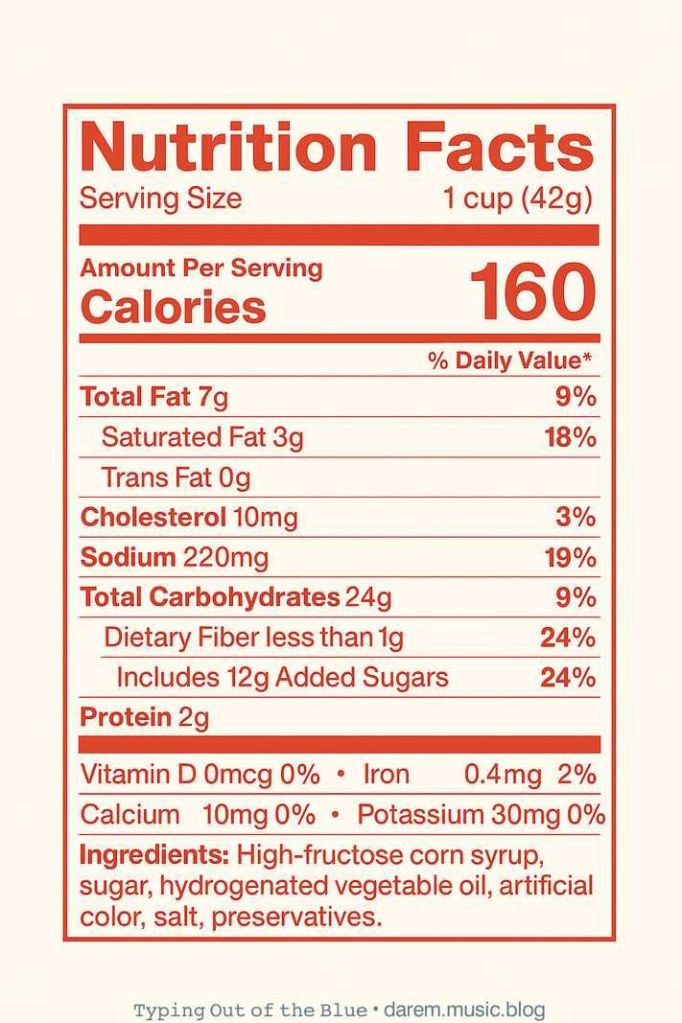
This is where the danger hides: high numbers and a long list of artificial ingredients.

The Fast Rule Before You Buy

Check these seven things:
• Serving size
• Calories
• Sodium
• Added sugar
• Saturated fat
• Fiber
• First three ingredients

If three or more look high or questionable, skip it.

If the numbers look clean, it’s a safer choice.

Just read the label for a few seconds, see what it really says, and choose what’s better for you.

All this label talk—and then I Ate a Glummy Bear with 7% sadness. 🍬🐻😁

I Ate a Glummy Bear • Darem Placer
Joyless includes I Ate a Glummy Bear. Soon on Bandcamp.

⌨ ᴛʸᵖⁱⁿᵍ ᴏᵘᵗ ᵒᶠ ᵗʰᵉ ʙˡᵘᵉ ᵈᵃʳᵉᵐ ᵐᵘˢⁱᶜ ᵇˡᵒᵍ

What to Do When We’ve Had Too Much

When we overdo salt, sugar, or fat, the body fights to recover. Here’s how to help it bounce back and reset naturally.

Sometimes we only realize we’ve gone overboard when it’s too late—too much salt, too many sweets, too many fried snacks.

But the body’s a fighter. It just needs us to help it bounce back.

This might be a long read, but better that than a short life. Let’s walk through what happens when we’ve had too much of the usual culprits—and how to help the body recover.

🧂 Sodium

World Health Organization (WHO)’s daily safe limit = 2,000 mg sodium (about 1 teaspoon of salt).

When we cross that line, we often feel bloated, thirsty, or need to urinate more than usual.

What to do when excess:

Drink water throughout the day—around 8 to 10 glasses total helps the kidneys flush sodium out.

• Eat potassium-rich food like bananas, spinach, tomatoes, and coconut water.

• Avoid processed food, instant noodles, and chips for at least a day.

• Move a little—sweating also helps remove extra salt.

Note: MSG isn’t as dangerous as once believed, but when mixed with high-salt food, it still adds to the sodium load. Use it lightly.

🍬 Sugar

WHO’s daily safe limit = no more than 25 g added sugar (around 6 teaspoon).

When we overdo sweets, sugar stays in the blood, making us tired or dizzy later.

What to do when excess:

• Drink water steadily during the day—helps dilute and balance sugar levels.

• Walk or move—light activity helps cells use up the extra sugar.

• Eat high-fiber food (like oats or apples) next meal to slow sugar absorption.

• Rest properly—sleep resets hormones that control sugar.

Note: Artificial sweeteners may seem safer, but too much can still confuse the body’s sugar response—moderation still wins.

🍞 Refined Carbs

White rice, white bread, and instant noodles spike blood sugar fast but leave us hungry again too soon.

What to do when excess:

• Add fiber-rich food to your next meal—like brown rice, oats, or vegetables.

• Stay hydrated throughout the day to help digestion.

• Take a short walk after eating—it helps use up excess glucose.

• Switch to whole grains when you can.

Note: There’s no official “safe amount,” but experts suggest keeping refined carbs as occasional food, not a daily habit. Most of your carbs should come from whole grains, fruits, and vegetables.

🥚 Cholesterol

Our body actually needs cholesterol—it helps build cells and make hormones.

The liver even makes its own. But too much of the wrong kind can clog blood flow.

Safe limit = about 300 mg a day (roughly the amount in two eggs).

What to do when excess:

• Eat more fiber—like oats, fruits, and vegetables—to help flush out excess cholesterol.

• Stay active—movement raises the good kind (HDL) that cleans up the bad.

• Choose grilled or steamed meals instead of fried.

• Avoid trans fats—they raise bad cholesterol fast.

• Drink enough water through the day to support your liver, which manages cholesterol levels.

Note: Cholesterol itself isn’t evil—it only becomes a problem when we pair it with too much saturated fat and no exercise.

🍟 Trans Fat

WHO says the limit should be less than 1 % of total daily calories (roughly 2 g, or less than half a teaspoon, per day).

Found in old-style margarine, fried fast food, and baked goods, trans fat blocks good cholesterol and clogs arteries.

What to do when excess:

Avoid deep-fried and processed food for the next few days.

• Add omega-3s—fish, nuts, or chia seeds help repair cells.

• Drink water throughout the day—fats break down better when the body’s fluids are balanced.

• If you’ve been eating lots of fried food, pair it with veggies or fruits high in antioxidants.

Note: Most modern margarines like Star Margarine are now labeled 0 g trans fat—but always check the label to be sure.

🧈 Saturated Fat

WHO recommends less than 10 % of daily calories from saturated fat (around 20 g, or 2 tablespoons of butter or oil per day).

This type of fat hides in butter, fatty meat, cheese, and some instant meals. It raises cholesterol when eaten too often, but small amounts are fine if balanced with vegetables and exercise.

What to do when excess:

Choose lighter meals for the next day—grilled or steamed instead of fried.

• Eat fruits and vegetables to help digest and neutralize excess fat.

• Drink water with lemon or warm tea during the day to support digestion.

🌭 Processed Meat

Hotdogs, bacon, ham, and sausages contain nitrates and preservatives that can irritate the stomach and strain the liver.

What to do when excess:

Drink plenty of water throughout the day to help flush chemicals out.

• Eat fresh vegetables rich in antioxidants—like tomatoes, lettuce, and cucumber.

• Avoid processed meats for the next few days and go for natural protein instead, like eggs or fish.

• If it’s a habit, limit to occasional servings only.

Note: There’s no safe level confirmed for processed meat. The less we eat, the better for our health. If ever, enjoy it rarely and always balance with fresh vegetables or fruits.

Caffeine

Safe limit for most adults = 400 mg per day (around 4 cups of brewed coffee).

When we cross that line, our heart races, and we get jittery or lose sleep.

What to do when excess:

Drink water slowly throughout the day—it helps balance fluids.

• Eat a light snack or banana to reduce caffeine’s acidic effect.

• Rest your nervous system—go caffeine-free for a day or two.

🍺 Alcohol

WHO says moderation means no more than 2 drinks a day for men and 1 for women—and not every day.

One drink equals a glass of beer, wine, or a shot of liquor. Too much alcohol stresses the liver, dehydrates the body, and weakens focus and sleep.

What to do when excess:

Drink plenty of water throughout the day—alcohol drains your body’s fluids fast.

• Eat something light but steady, like soup or fruits, to help balance electrolytes.

• Get enough rest—your liver works overtime clearing out alcohol, so give it recovery time.

• Avoid painkillers like paracetamol right after drinking—they add more load to your liver.

• If you’ve been drinking heavily, stay alcohol-free for a few days to let your system reset.

Note: Alcohol in small amounts can relax the body, but regular or heavy drinking slowly damages the organs that keep us alive.

Our body isn’t fragile—it’s designed to recover.

But every system needs breathing space.

What we eat today builds tomorrow’s energy, focus, and calm.

So if we slip once in a while, let’s make it up with care, not guilt.

The goal isn’t to avoid everything—it’s to stay aware enough to know when we’ve had enough.

This article shares general health information for awareness only. It isn’t meant as medical advice. For personal guidance, consult a health professional.

⌨ ᴛʸᵖⁱⁿᵍ ᴏᵘᵗ ᵒᶠ ᵗʰᵉ ʙˡᵘᵉ ᵈᵃʳᵉᵐ ᵐᵘˢⁱᶜ ᵇˡᵒᵍ