Jolly Old Saint Nicholas—The Story

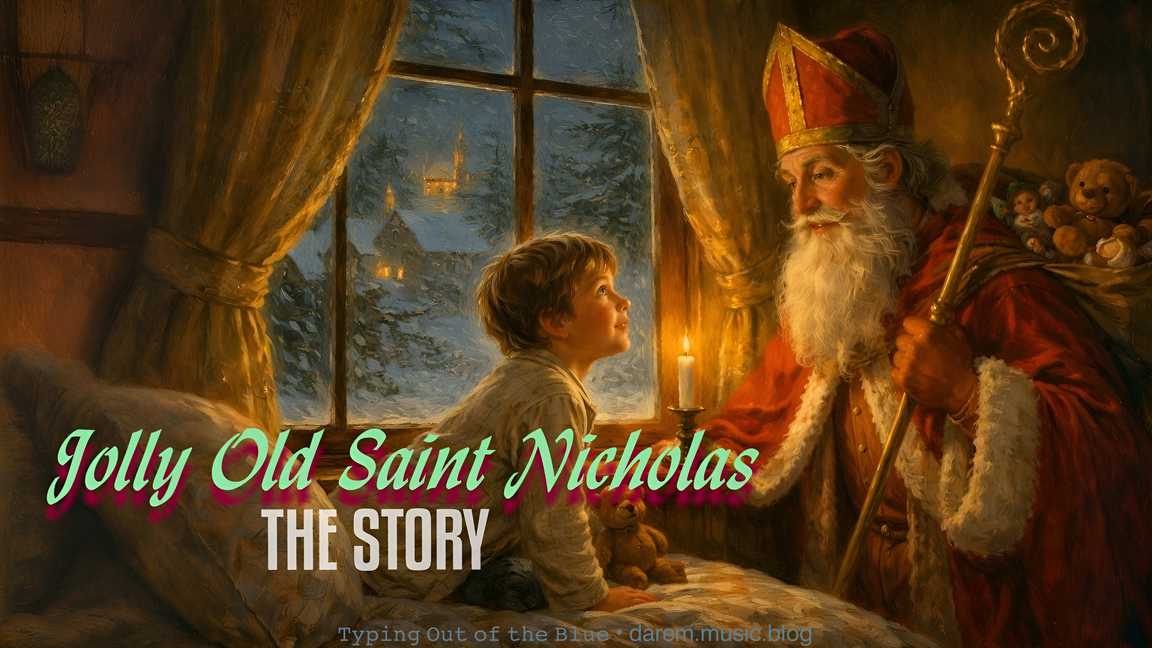
A child whispers a wish to Saint Nicholas, hoping kindness finds its way back on Christmas Eve.

A child waited quietly for Saint Nicholas, listening to the soft sounds of the night. He leaned closer to the window, hoping to catch the first sign that the old gift-giver was near.

He whispered into the air, almost like Saint Nicholas could hear him already. He told him he didn’t want something that would impress anyone else. He only wanted a simple gift—something small but chosen just for him.

He thought about the others in the house.

One child wanted a storybook.
Another wished for a pair of skates.
Someone else hoped for a small toy that made noise.

The boy smiled as he imagined Saint Nicholas reading all these wishes and sorting them in his mind. He trusted that the old man remembered everything, even the smallest request.

The room grew quiet. The child lay down, knowing he needed to fall asleep before Saint Nicholas arrived. He closed his eyes with a light, hopeful feeling, certain that by morning, the gift meant for him would be waiting.

Jolly Old Saint Nicholas

Its wording has been attributed to Benjamin Hanby, Emily Huntington Miller, and John Piersol McCaskey. It is believed to have been written in the mid to late 19th century.

⌨ ᴛʸᵖⁱⁿᵍ ᴏᵘᵗ ᵒᶠ ᵗʰᵉ ʙˡᵘᵉ ᵈᵃʳᵉᵐ ᵐᵘˢⁱᶜ ᵇˡᵒᵍ

Merely Christmas • Darem Placer
Out this season on Bandcamp.

Saint Nicholas and How He Turned Into Santa

A bishop shaped the roots of Santa through simple acts, lasting stories, and a tradition that grew across the world.

Saint Nicholas lived in the early 300s in Myra, a port city in southern Turkey. He served as a bishop, and people around him saw a leader who carried faith, strength, and generosity in a natural way.

Picture a friend who helps right away. That was Nicholas. A family reached a hard stretch, and he placed gifts in their home during the night. A person faced heavy pressure, and he stepped in with steady courage. He gave with intention, and people felt the impact. His actions stayed in memory, and stories about him moved from place to place. He offered material gifts—coins, food, simple essentials—and each one carried deeper value because it helped people rise again with real hope.

As these stories traveled across Europe, each culture shaped his name in its own style. In the Netherlands, he became Sinterklaas (their form of “Saint Nicholas”). Dutch settlers then sailed to New York and brought the name with them. English speakers formed a new version from it, and Santa Claus emerged (the English form of “Sinterklaas”).

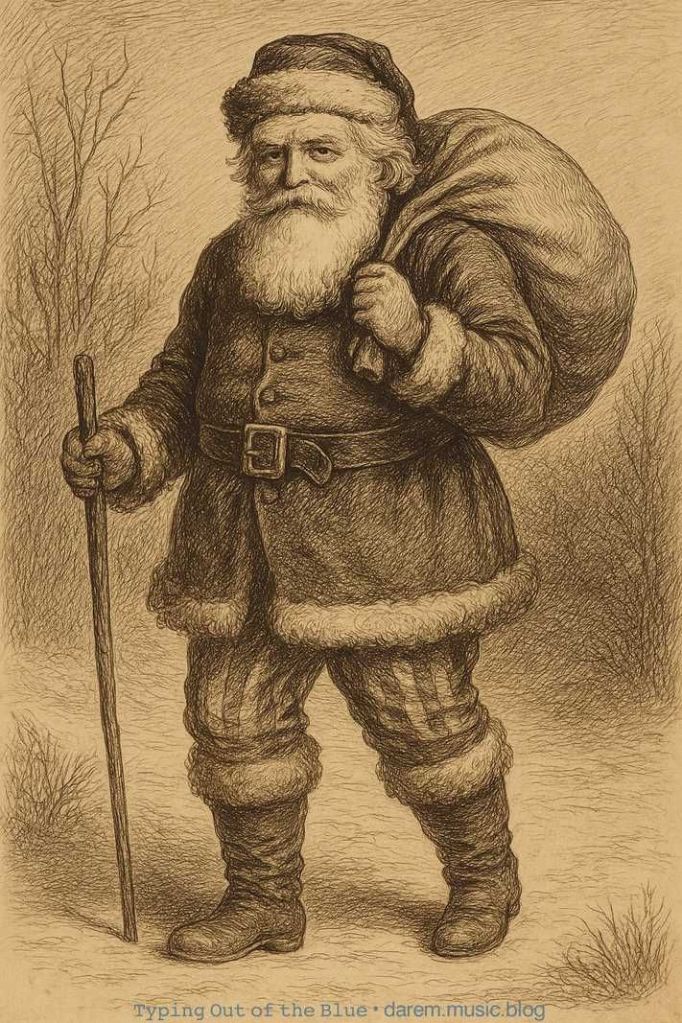
Santa as drawn in the 1860s, during the years when his modern form started to take shape.

By the 1800s, artists and writers shaped Santa’s look, and many illustrators used red because the color stood out on printed pages and matched old European images of Nicholas in red bishop robes. The shade carried well across holidays and became the familiar image the world now knows.

Santa grew from that one man—Nicholas, the figure behind the Christmas carol Jolly Old Saint Nicholas, a bishop whose day-to-day kindness shaped a tradition that reached the entire world.

Jolly Old Saint Nicholas • Darem Placer
Merely Christmas includes Jolly Old Saint Nicholas. Out this season on Bandcamp.

⌨ ᴛʸᵖⁱⁿᵍ ᴏᵘᵗ ᵒᶠ ᵗʰᵉ ʙˡᵘᵉ ᵈᵃʳᵉᵐ ᵐᵘˢⁱᶜ ᵇˡᵒᵍ