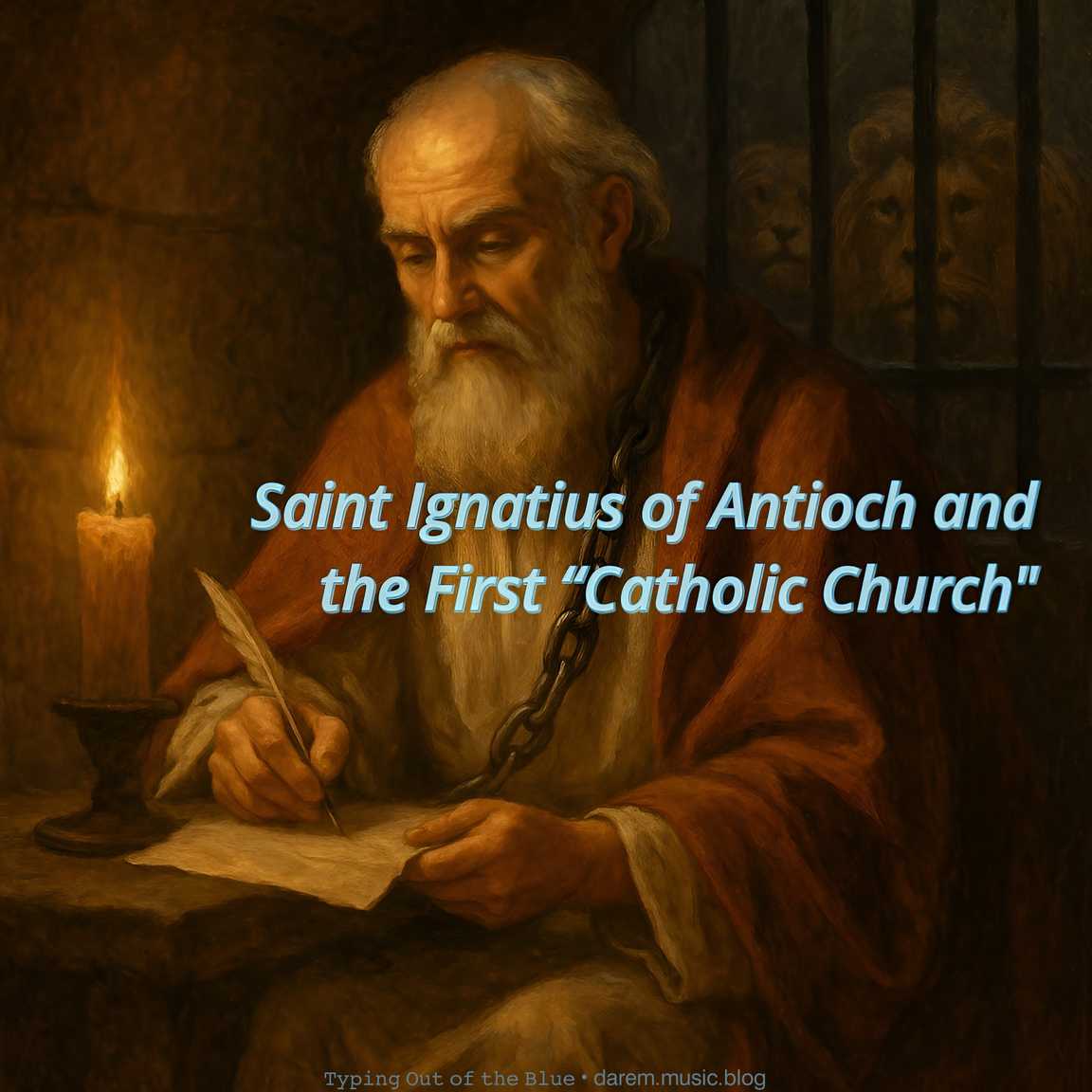
Bishop Ignatius of Antioch wasn’t just an early bishop—he was a disciple of Saint John the Apostle and later became the third bishop of Antioch, one of the earliest and strongest centers of Christian faith. He carried the teachings he heard straight from one who walked with Christ. When Ignatius later wrote the words “Wherever Jesus Christ is, there is the Catholic Church,” he wasn’t quoting Scripture—he was writing history.
That line came from his Letter to the Smyrnaeans, one of seven letters he wrote while being led in chains from Antioch to Rome around 107 AD. These weren’t Bible verses but real letters to the early Christian communities, filled with guidance, correction, and love.
“Catholic” came from the Greek katholikos, meaning universal or according to the whole. For Bishop Ignatius, it meant the Church wasn’t just local—it was one living body under Christ. To be Catholic was to be connected: one faith, one Eucharist, one bishop, one love. He reminded believers not to follow breakaway teachers or private versions of truth. Faith, he said, stays whole only when it stays united.
Even as a prisoner, Bishop Ignatius kept teaching. He called the Eucharist “the medicine of immortality” and begged the Christians in Rome not to stop his martyrdom: “Let me be the wheat of God, ground by the teeth of wild beasts, that I may be found the pure bread of Christ.”
He faced death with peace, thrown to the lions in the Colosseum. His last echo—both in life and in faith—was that same truth he wrote from his chains: wherever Christ is truly present, there lives the Catholic Church.
⌨ ᴛʸᵖⁱⁿᵍ ᴏᵘᵗ ᵒᶠ ᵗʰᵉ ʙˡᵘᵉ ᵈᵃʳᵉᵐ ᵐᵘˢⁱᶜ ᵇˡᵒᵍ

Listen on Apple Music, Apple Music Classical, and YouTube Music
