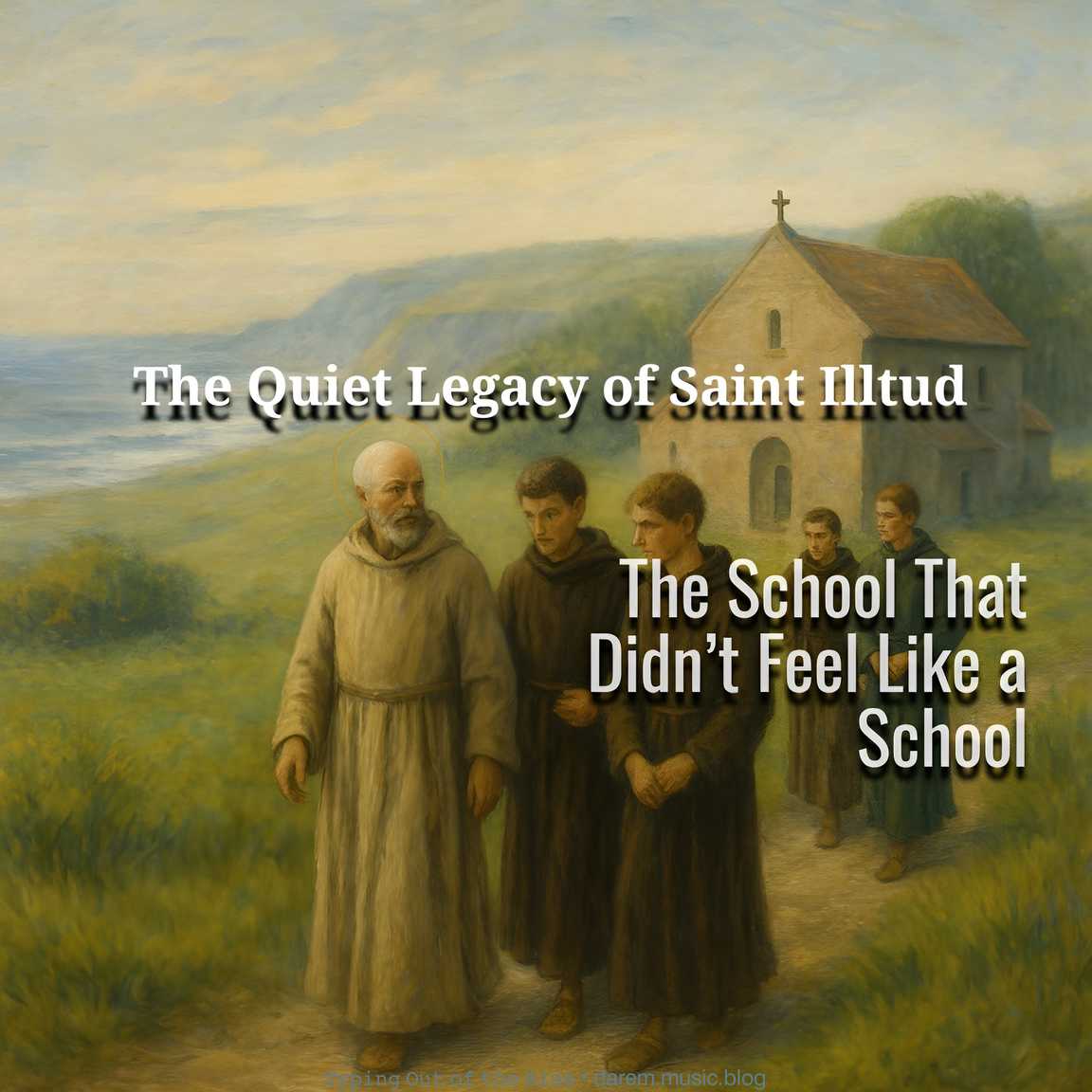
The Quiet Legacy of Saint Illtud
It was around the year 500 AD, in a quiet coastal valley of southern Wales, a place now called Llantwit Major. The sea could be heard from the fields, and the mornings smelled of grass and salt. Life was simple. People worked the land, repaired their homes, and prayed in small stone chapels that faced the wind.
Illtud lived there, away from cities and noise. He only wanted a peaceful life—to pray, work, and help whoever came his way. But then one young man stayed to learn from him. Then another came. Soon, a few more arrived and never left. He didn’t plan to start a school, but the place slowly turned into a monastery—a quiet community that began to look more and more like a school.
It didn’t feel like a real school. There were no lessons to recite, no grades, and no competition. They learned through daily life—working on the land, praying at sunrise, sharing food, and talking when something was worth saying. Saint Illtud didn’t try to impress anyone. He just lived calmly, and they learned by watching him.
Some of his students would later become known across Britain. One of them was Saint David, who became the patron saint of Wales. Another was Saint Samson of Dol, who crossed the sea and became a missionary bishop in Brittany. There was also Saint Gildas, who wrote about Britain after the Romans and helped people remember their own story. But during those early days, they were just young men learning how to live right.
Saint Illtud’s way was simple: don’t talk too much about wisdom—live it until people feel it. That was his way, and that was his school in Llanilltud Fawr.
⌨ ᴛʸᵖⁱⁿᵍ ᴏᵘᵗ ᵒᶠ ᵗʰᵉ ʙˡᵘᵉ ᵈᵃʳᵉᵐ ᵐᵘˢⁱᶜ ᵇˡᵒᵍ
Listen on Apple Music, Apple Music Classical, and YouTube Music
