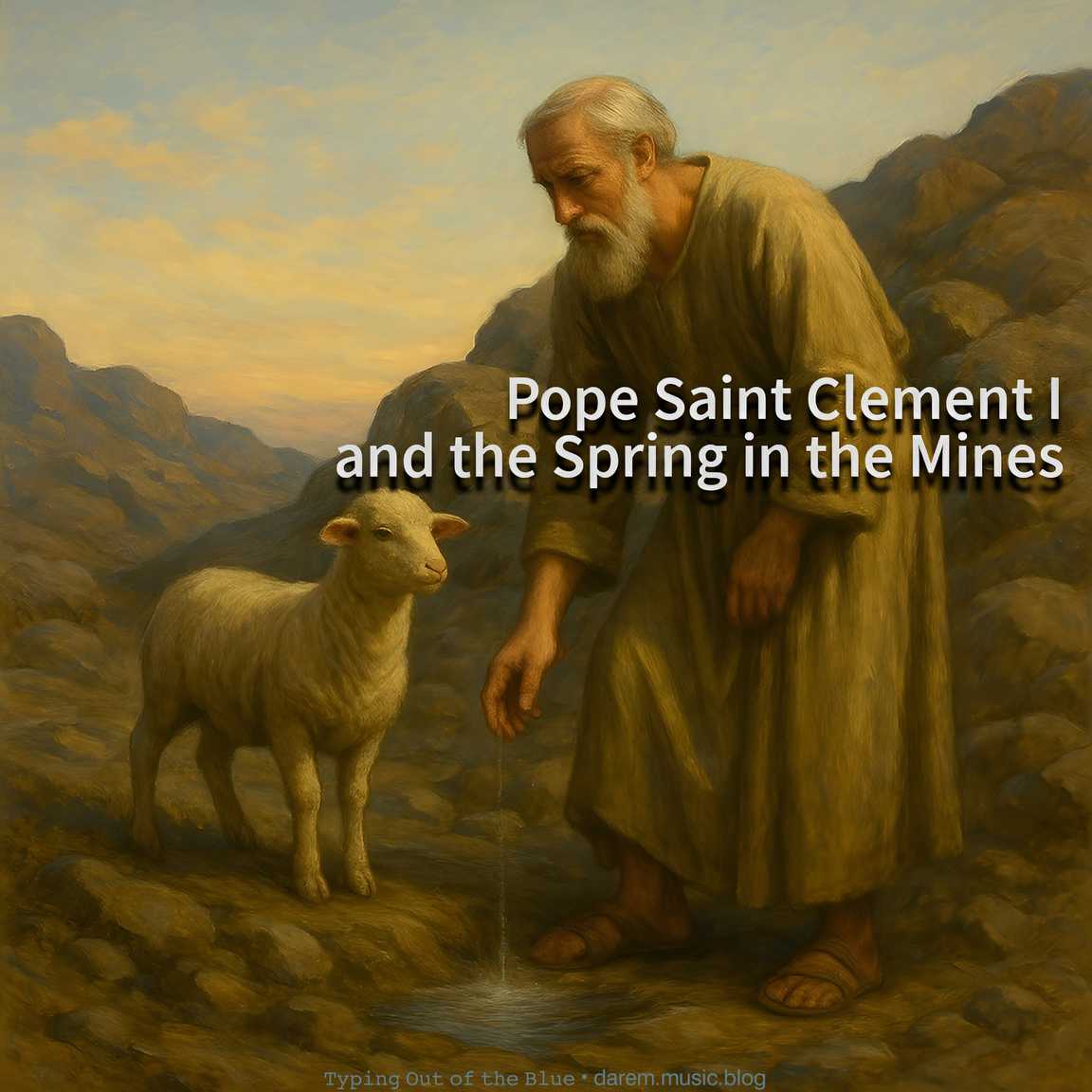
Around the end of the 1st century, Bishop Clement of Rome was exiled by the Roman Empire to forced labor in Chersonesus, Crimea. The mines were harsh—dry ground, long hours, and prisoners who were already losing strength. Food was little. Clean water was almost none.
Early Christian tradition—stories kept and shared by the first believers—preserved one event from this time. It isn’t from the Bible, but it remained part of the Church’s memory for many generations.
When Bishop Clement arrived, he saw how weak the prisoners were. Many were sick because they had almost no water. He stayed beside them, listened to their struggles, and looked for any small way to help.
One day, he noticed something unusual: a lamb standing alone on a rocky hill where no animals lived. The sight pulled him closer. When he reached the spot, he saw that the soil under the lamb was a little wet.
He touched the ground. The story says water began to rise—clear and strong, enough for the whole camp. The prisoners drank, washed their faces, and felt new strength. Even some guards changed the way they looked at the men under them.
Believers kept this story because it showed who Clement was. In a place ruled by hardship, he stayed close to suffering people and helped them live with dignity. Whether someone reads this as miracle or as a tradition shaped through time, it reflects his steady and compassionate character.
This same Bishop Clement is now honored as Pope Saint Clement I, remembered for a life that lifted others even in the hardest places.
⌨ ᴛʸᵖⁱⁿᵍ ᴏᵘᵗ ᵒᶠ ᵗʰᵉ ʙˡᵘᵉ ᵈᵃʳᵉᵐ ᵐᵘˢⁱᶜ ᵇˡᵒᵍ

Listen on Apple Music, Apple Music Classical, and YouTube Music
