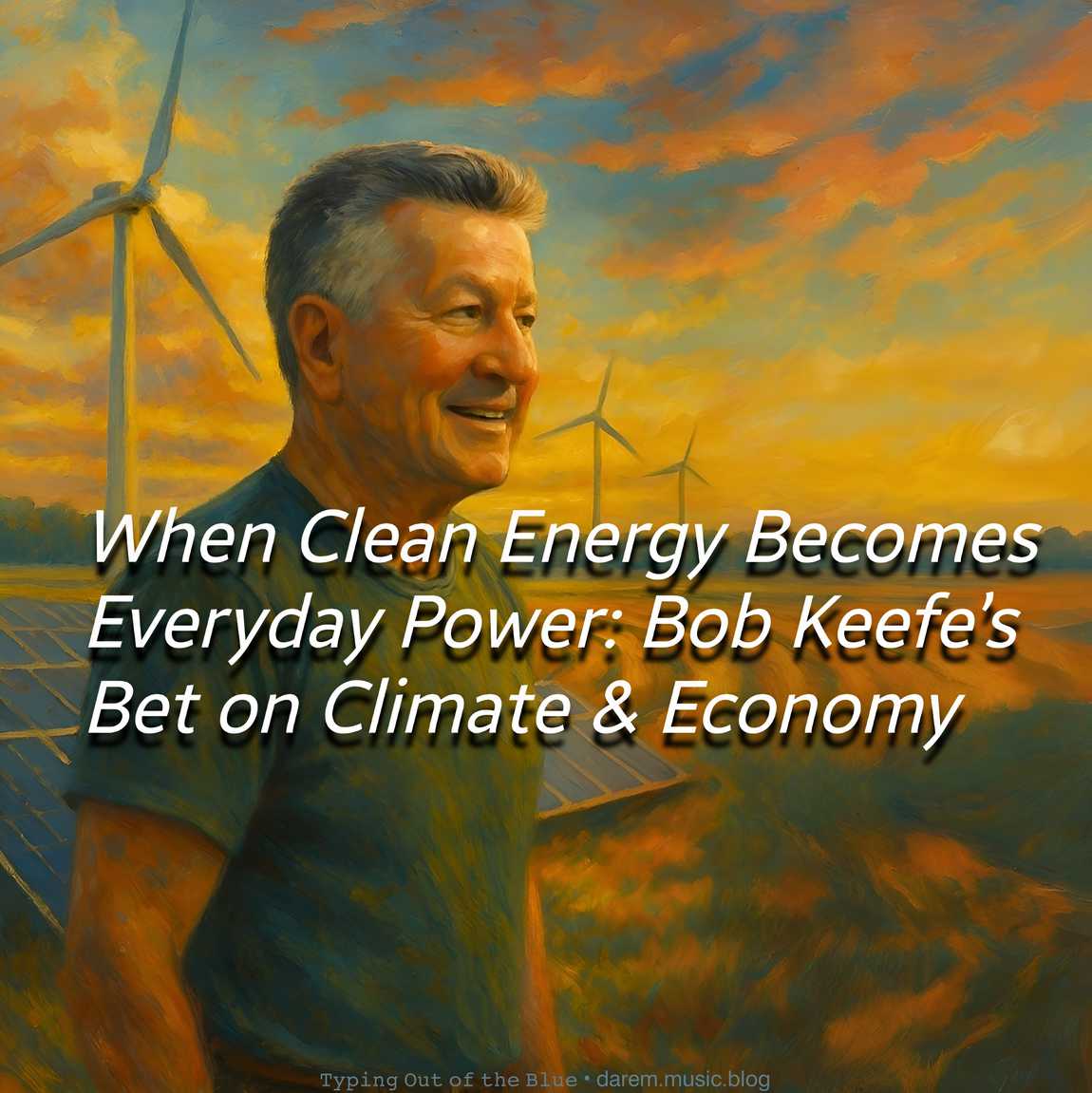
🌍 Climate change used to sound like something distant—melting glaciers, rising seas, polar bears. But Bob Keefe, Executive Director of E2 (Environmental Entrepreneurs), wants people to see it differently. For him, it’s not just a science story. It’s an everyday story. One that affects electricity bills, food prices, jobs, and entire communities.
⚡ Keefe calls this the turning point: the moment when people start realizing that climate isn’t just about protecting nature—it’s about protecting their wallets. When storms destroy crops or wildfires wipe out homes, everyone pays. When heat waves drive up air-conditioning use, the cost of power rises. Climate is no longer an environmental issue alone; it’s an economic reality.
💡 His group, E2, works with entrepreneurs and investors who believe that the best climate solutions are also business solutions. He points to the clean-energy boom in the United States: factories reopening, electric-vehicle plants spreading across the Midwest, solar jobs rising faster than coal jobs disappear. These changes show that sustainability can create prosperity—not replace it.
🏭 What’s striking, Keefe says, is that much of this growth is happening in conservative states once seen as resistant to green policy. Red states are quietly becoming clean-energy leaders, driven by job creation and local opportunity rather than politics. That’s the kind of shift that makes real change stick—it’s harder to argue against clean air when it’s feeding your family.
🔥 Still, the costs of inaction are growing. Insurance rates are spiking as disasters intensify. Billions are lost yearly to floods, droughts, and fires. Keefe believes these economic hits will keep reshaping how people view climate change—less about ideology, more about impact. The planet’s condition is now part of every family’s monthly budget.
🌎 And while the United States is investing heavily in clean energy, Keefe reminds world leaders that responsibility can’t stop there. “Washington is not America, and America is not the world,” he said in his TIME interview. His point is clear: if one nation slows down, others must keep moving.
💬 With a touch of humor, he added, “What’s happening in America will pass—maybe like a gallstone—but it will pass.” The message? Progress doesn’t wait for politics. It’s up to the rest of the world to keep the momentum, to build a cleaner economy and a better environment for all.
✨ His message is simple yet powerful: if climate action feels far away, follow the money. It’s already at your doorstep—your job, your grocery, your light switch. What used to be a debate about science is now a daily transaction. Clean energy isn’t just moral—it’s practical. It’s how everyday people can regain control of their future.
Based on a TIME interview with Bob Keefe—TIME 100 Climate 2025.
⌨ ᴛʸᵖⁱⁿᵍ ᴏᵘᵗ ᵒᶠ ᵗʰᵉ ʙˡᵘᵉ ᵈᵃʳᵉᵐ ᵐᵘˢⁱᶜ ᵇˡᵒᵍ
👉 Download Sky-Low on Bandcamp
💿 Just type 0 if you want to download the album for free.