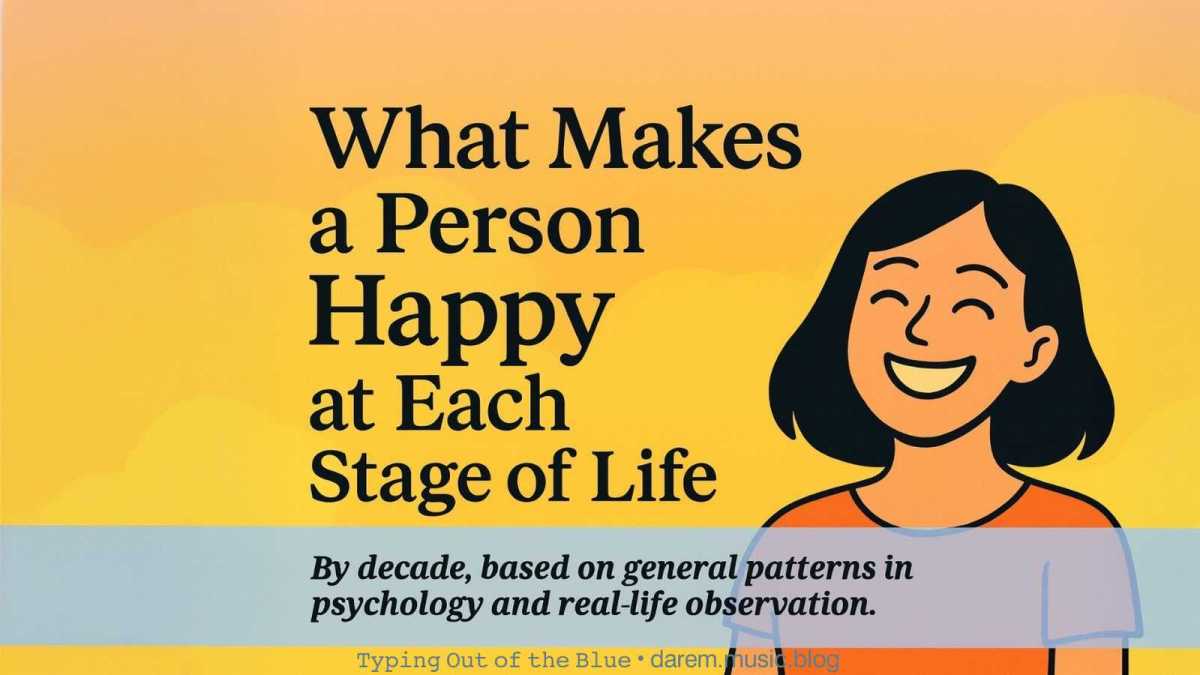
By decade, based on general patterns in psychology and real-life observation.
Happiness isn’t one-size-fits-all. It shifts as we grow—and there’s no single path to feeling fulfilled, whether we’re surrounded or solo.
0–9: Innocence and Play
• Feeling safe and loved
• Time to play and explore
• Being noticed and encouraged
10–19: Discovery and Belonging
• Friendships where they feel accepted
• Exploring identity and interests
• Support from adults they trust
20–29: Exploration and Firsts
• Trying out paths—career, dreams, passions
• Building real connections, romantic or not
• Growing into independence—alone, with friends, or with a partner
30–39: Building and Belonging
• Creating stability in work, home, or personal goals
• Finding joy in the life they chose—traditional or not
• Feeling part of a circle that brings meaning
40–49: Depth and Direction
• Letting go of what no longer matters
• Mentoring others, deepening ties
• Meaningful days through purpose, people, or peace
50–59: Reconnection and Clarity
• Reclaiming passions or discovering new ones
• Being close to people who matter—family or chosen circle
• A rhythm of life that feels real and intentional
60–69: Freedom and Fulfillment
• Time to focus on what brings joy
• Doing things without pressure—travel, hobbies, service
• Whether with others or on their own, they enjoy what they’ve earned
70–79: Presence and Ease
• Simpler routines, deeper connections
• Joy in everyday moments and quiet bonds
• Feeling remembered and included
80–89: Reflection and Warmth
• Looking back on a life with meaning
• Being cared for and appreciated
• Gentle days filled with memories, laughter, or calm
90–100: Peace and Legacy
• Letting go with a full heart
• Knowing they loved and were loved
• Peace in presence, whether from others or from within
Across all stages:
• Love matters—romantic or platonic
• Connection matters—deep or simple
• Meaning matters—however you live
What If You’re Not “On Track” for Your Age?
Maybe you’re:
• 40 but still figuring things out
• 25 but feel way older than your peers
• 70 and just starting to feel alive
• 50 and not as “settled” as people expect
It’s okay. Life isn’t a straight timeline—it’s more like a playlist.
Some skip tracks. Some replay the same song. Others remix the whole album.
There’s no one way to grow.
What really matters is:
• That you’re growing (even slowly)
• That you’re connected to someone or something real
• That you have hope or curiosity about what’s next
Because those three—growth, connection, and hope—are what actually power happiness. Not your age. Not your resume.
ᴛʸᵖⁱⁿᵍ ᴏᵘᵗ ᵒᶠ ᵗʰᵉ ʙˡᵘᵉ ᵈᵃʳᵉᵐ ᵐᵘˢⁱᶜ ᵇˡᵒᵍ