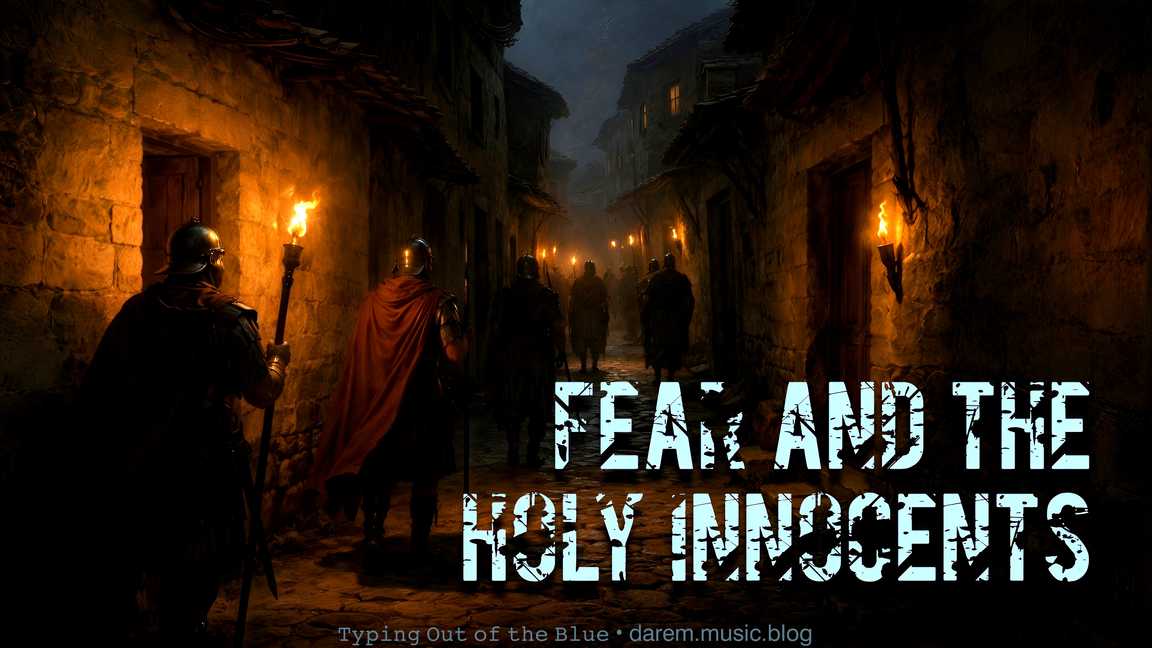
Soldiers went from house to house. Doors were opened by force. Inside were families still half-asleep, still holding newborns who had barely lived long enough to be named. Baby boys were taken and killed where they were found. This was not war. This was enforcement.
The order came from Herod the Great, ruler of Judea. He had heard reports of a child born in Bethlehem, spoken of as a future king. A rumor reached him. A title. A possibility. That was enough.
Herod commanded that all baby boys in and around Bethlehem, two years old and below, be killed. These children would later be called the Holy Innocents. They were not targets because of anything they had done, but because of what someone feared they might become.
What makes the order harder to accept is how unnecessary it was. Herod was already an old man, around sixty nine years old. His health was failing. His reign was nearing its end. Time itself was already removing him from power.
A newborn posed no real threat. A baby would need years to grow, years to learn, years before power could even become a question. By then, Herod would have been gone. The violence did not come from strategy. It came from fear.
Herod was not protecting his throne from a child. He was protecting his sense of control. Fear does not wait for reason. It does not calculate outcomes. Once fear takes the lead, it looks for something to crush, simply to feel secure again.
That fear cost lives. Families lost children. Homes were left empty. History remembers the event not as strength, but as panic made lethal.
Power always ends. Control never lasts. But the damage done in the attempt to hold onto them remains.
And that is the pattern repeated through history. When fear leads, innocence pays the price.
⌨ ᴛʸᵖⁱⁿᵍ ᴏᵘᵗ ᵒᶠ ᵗʰᵉ ʙˡᵘᵉ ᵈᵃʳᵉᵐ ᵐᵘˢⁱᶜ ᵇˡᵒᵍ