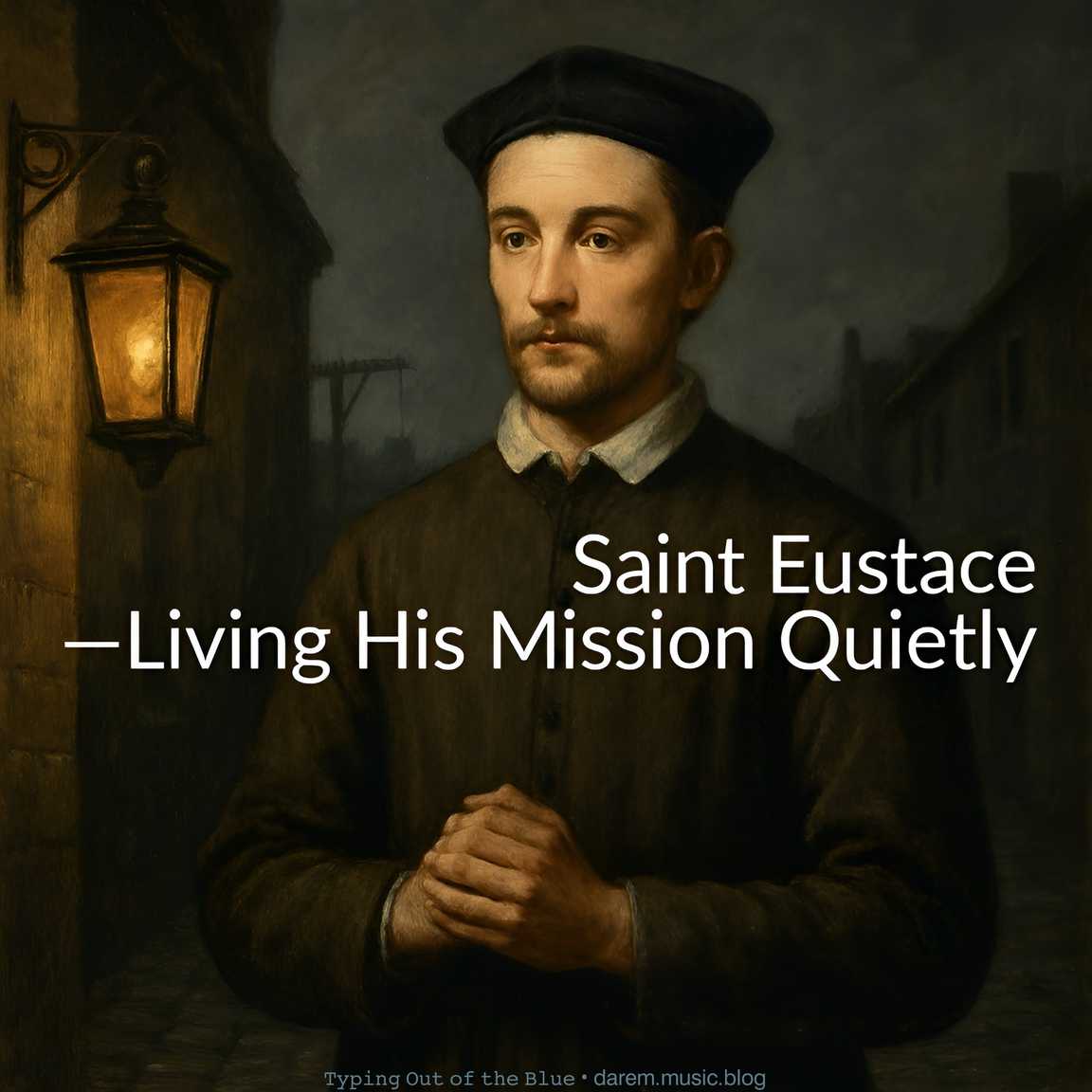
England, late 1500s—Catholics were watched closely, and priests lived with the risk of arrest every day. In this setting, Eustace White made a decision that changed his whole life. When he converted, his father rejected him, and he had to leave home. He held on to his choice and later trained as a priest abroad.
When he returned to England, he worked quietly, moving from house to house to serve Catholics who could not worship openly. His days were simple—short visits, hidden gatherings, and steady service to families who were afraid of being discovered.
In 1591, someone reported him to the authorities. He was arrested and taken to prison, where he was tortured. Witnesses said he stayed calm. He managed to write a letter to his mother, asking her to forgive those who had harmed him.
He was taken to Tyburn in London during the same year—an execution site already known for many deaths under the laws of that era. People present noted that he faced the moment peacefully.
Saint Eustace White lived without drama or anger. His life showed quiet endurance in a difficult time.
⌨ ᴛʸᵖⁱⁿᵍ ᴏᵘᵗ ᵒᶠ ᵗʰᵉ ʙˡᵘᵉ ᵈᵃʳᵉᵐ ᵐᵘˢⁱᶜ ᵇˡᵒᵍ

Out this season on Bandcamp.