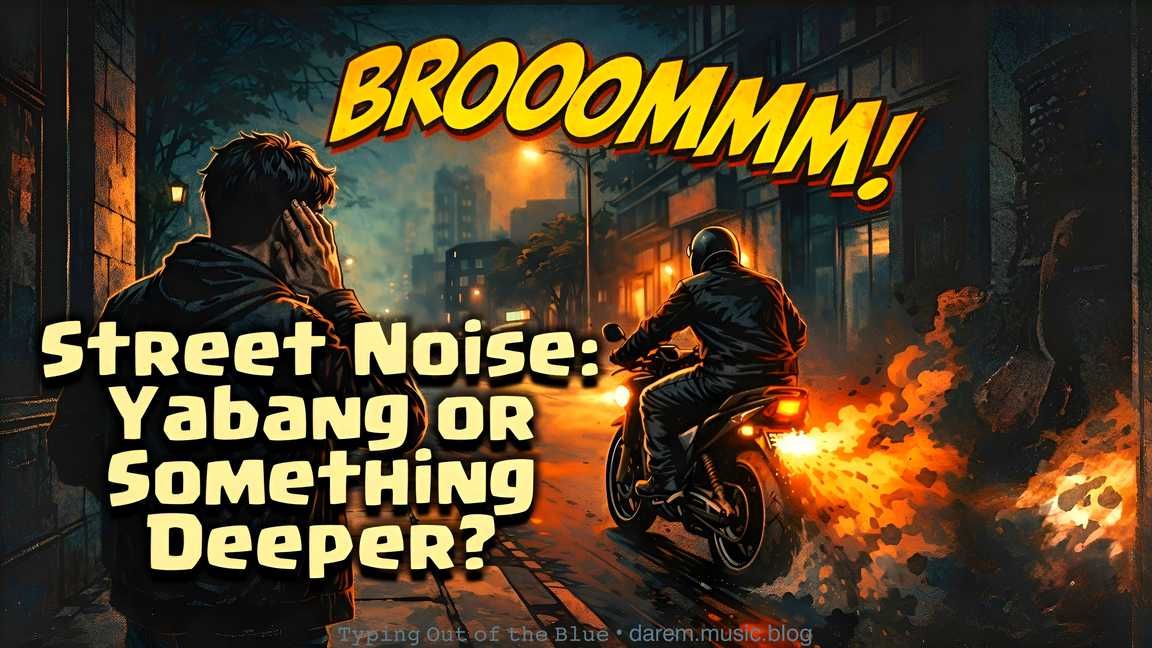
Street Noise: Yabang or Something Deeper?

Most people see loud vehicles as showing off. A few look deeper—and find psychology behind the noise.

When a loud motorcycle or car passes by, most people have the same reaction: “That’s just showing off.” Attention-seeking, trying to look cool, no respect for others. And honestly, that reaction is valid, because that’s exactly what people experience.

On the street, the logic is simple. Quiet means respect. Loud means disturbance. End of discussion. That’s why most people don’t even ask why. They don’t need to. It’s already annoying.

But a small group of people—very few—still ask the question why. Not to excuse the behavior, but to understand it. That’s where psychology comes in.

From a psychological view, loudness isn’t judged first as arrogance. It’s seen as behavior. The questions become: What is the person seeking through noise? Sensation, control, emotional release, identity, belonging, or simple desensitization—being so used to noise that its impact on others is no longer noticed.

In psychology, noise is treated as a symptom, not immediately as a personality flaw. But let’s be clear—this doesn’t make the disturbance disappear. For the people affected, sleep is broken, focus is interrupted, and rest is stolen. All of that is real.

So two worlds collide. On the street, the judgment is simple: that’s just showing off. In psychology, the view is different: there’s something behind that behavior. Both perspectives make sense. They just use different lenses.

The problem is that once noise hits, there’s no room for encounter anymore. No listening happens. The body goes into defense mode—covering ears, irritation, tension. That’s where the conversation ends.

So this remains true. Most people see loud vehicles as arrogance. Only a few try to understand the psychology behind them—not because they are kinder, but because they are more curious. And in the end, no matter the explanation, noise is still noise. On the street, impact matters more than intention.

A human-centered study on street noise, behavior, and urban identity.
The Psychology of Street Noise

⌨ ᴛʸᵖⁱⁿᵍ ᴏᵘᵗ ᵒᶠ ᵗʰᵉ ʙˡᵘᵉ ᵈᵃʳᵉᵐ ᵐᵘˢⁱᶜ ᵇˡᵒᵍ
Digital Albums by Darem Placer on Bandcamp
Listen. Buy. Download.

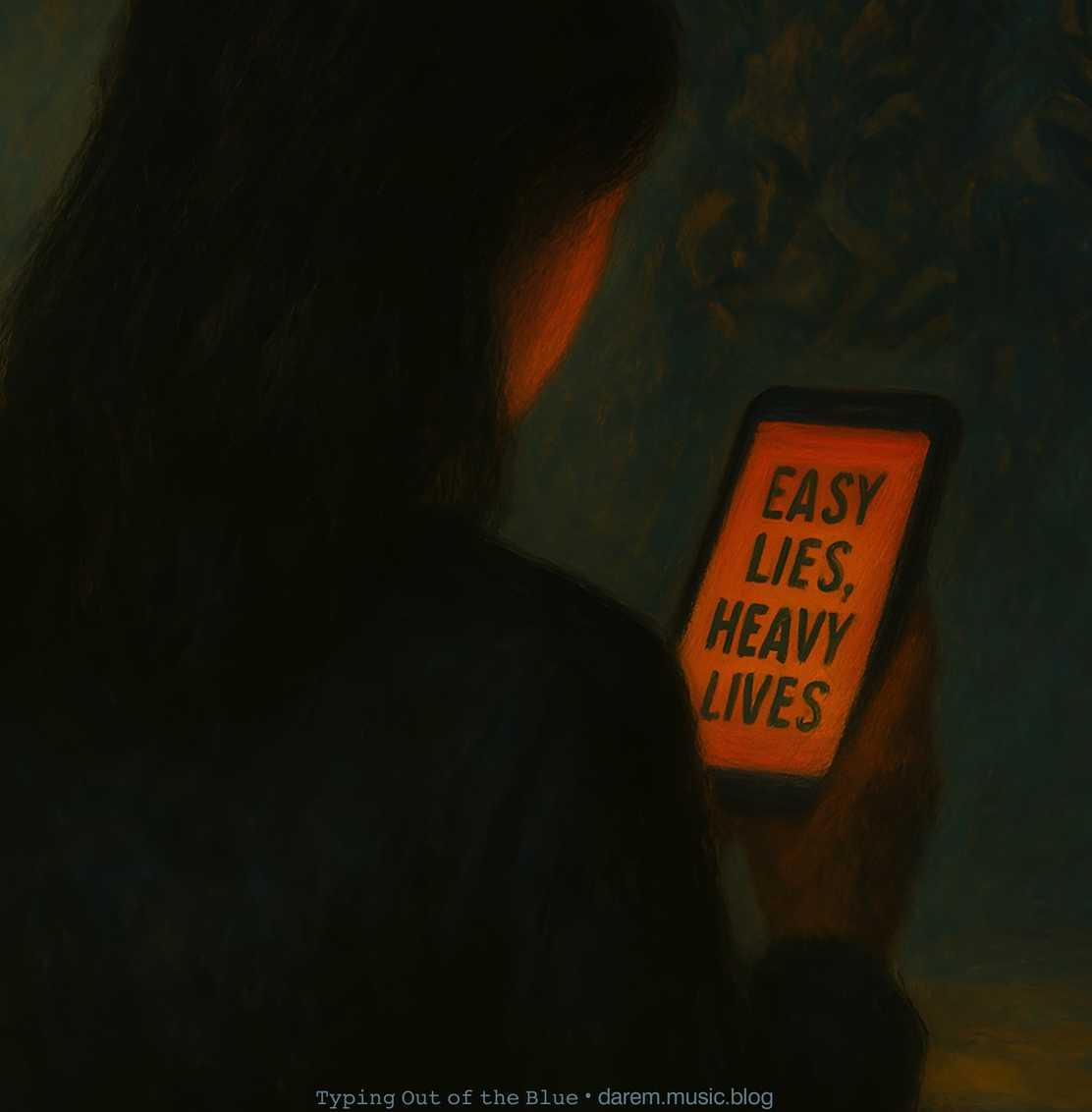
Easy Lies, Heavy Lives

Easy lies travel fast. Quiet truth doesn’t. This piece looks at why people follow noise and ignore the peace right in front of them.

It’s unbelievably easy to create fake news now. One quick tap and a lie travels faster than truth ever could. Many content creators aren’t chasing honesty anymore—they’re chasing monetization. The faker the post, the faster the reactions, shares, and comments. And that means income. The only real thing in all of it is their love for easy money.

And people today are treated as naturally gullible. Scroll, believe, share—repeat. No pause, no checking, no thinking.

But when the post is spiritual? When it’s something genuinely good? People see it as “nothing new.” Share a Bible passage and they say, “I already know that. Any twist? Anything different?” And if there’s none, they scroll away without a second look.

Yet bring out a page filled with dark, unsettling art—edgy, loud, almost satanic—and they follow instantly. It feels different. It feels louder than the world they’re trying to escape. But they don’t realize—it only adds more noise to their life.

Here’s the strange part: when we pray in the dark, or simply close our eyes, there’s peace. But when we do bad things, our life becomes dark—and we forget it’s the same darkness. The same blackness that frightens us is also the blackness of calm when our eyes are closed.

Same color. Different meaning.

So when those heavy moments come—pray.

Sometimes the darkness isn’t a threat—it’s a quiet doorway back to clarity, if we let it be.

And maybe that’s the real point: if content creators stopped feeding people with manufactured lies—and if people learned to pause, pray, and think before reacting—fake news wouldn’t spread this fast in the first place.

If noise begins with one bright lie, peace can also begin with a Nonpareil Drop of RGB.

Nonpareil Drop of RGB • Darem Placer
Piano Painting includes Nonpareil Drop of RGB. Soon on Bandcamp.

⌨ ᴛʸᵖⁱⁿᵍ ᴏᵘᵗ ᵒᶠ ᵗʰᵉ ʙˡᵘᵉ ᵈᵃʳᵉᵐ ᵐᵘˢⁱᶜ ᵇˡᵒᵍ