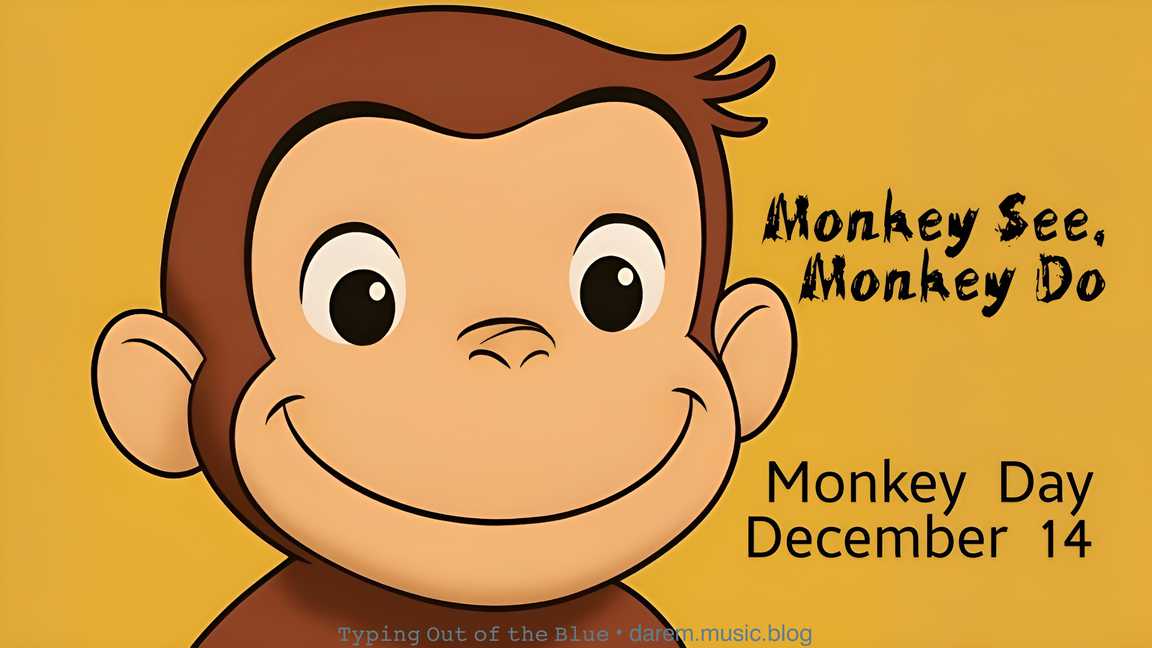
Monkey Day • December 14
It started as a joke in 2000, when a student casually wrote “Monkey Day” on a calendar. The name stuck, and over time, people began using the day to talk about monkeys and other primates.
But the day itself is not a joke.
Monkeys play real roles in nature. Many help forests grow by spreading seeds. They live in social groups, communicate with each other, and show problem-solving skills that continue to interest scientists. In many places, their presence helps keep ecosystems balanced.
They are known for learning by watching others—often summed up as monkey see, monkey do. What sounds playful carries a deeper meaning. When humans disturb habitats, exploit wildlife, or act carelessly, monkeys adapt by copying what they see. If what we show them is harm, harm is what they learn.

So no—monkeys do not just monkey around.
They reflect the world we create around them.
And that makes Monkey Day less about jokes, and more about responsibility.
⌨ ᴛʸᵖⁱⁿᵍ ᴏᵘᵗ ᵒᶠ ᵗʰᵉ ʙˡᵘᵉ ᵈᵃʳᵉᵐ ᵐᵘˢⁱᶜ ᵇˡᵒᵍ

Out this season on Bandcamp.

