A quiet man from Mexico carried roses in his simple cloak and changed history in a single moment.
Juan Diego was an ordinary man from Mexico. He wasn’t famous, he wasn’t rich, and he didn’t have any big position. He just lived quietly, walked long distances, and tried to follow God in the simplest way he knew.
In December 1531, something special happened while he was walking on Tepeyac Hill. Juan Diego said the Virgin Mary appeared to him and spoke with kindness, calling him her dear son. She asked him to tell the bishop to build a church on that hill.
The bishop wanted a sign, so Juan Diego went back. Mary told him to pick some roses that were growing on the hill—even though it was winter and roses shouldn’t grow at all. He gathered them in his tilma, a simple cloth he wore over his shoulders.
When he opened the tilma in front of the bishop, the roses fell to the floor, and an image of Mary appeared on the cloth. That same tilma is still in Mexico today.
Juan Diego didn’t treat the event like something for attention. After the church was built, he chose to live near Tepeyac and helped people who came to pray there. He stayed humble until he died in 1548.
Centuries later, the Church looked at the records, the testimonies, and the long history of devotion connected to him. In 2002, he was officially declared a saint.
Saint Juan Diego’s life feels simple on the outside, but that’s what makes it strong. A quiet man, walking his usual path, and suddenly trusted with something that would shape the faith of millions. It shows how great things can begin in quiet places, and how God often works through people who never try to shine.
How diploma culture distorts respect and ambition—and why skill should matter more than titles.
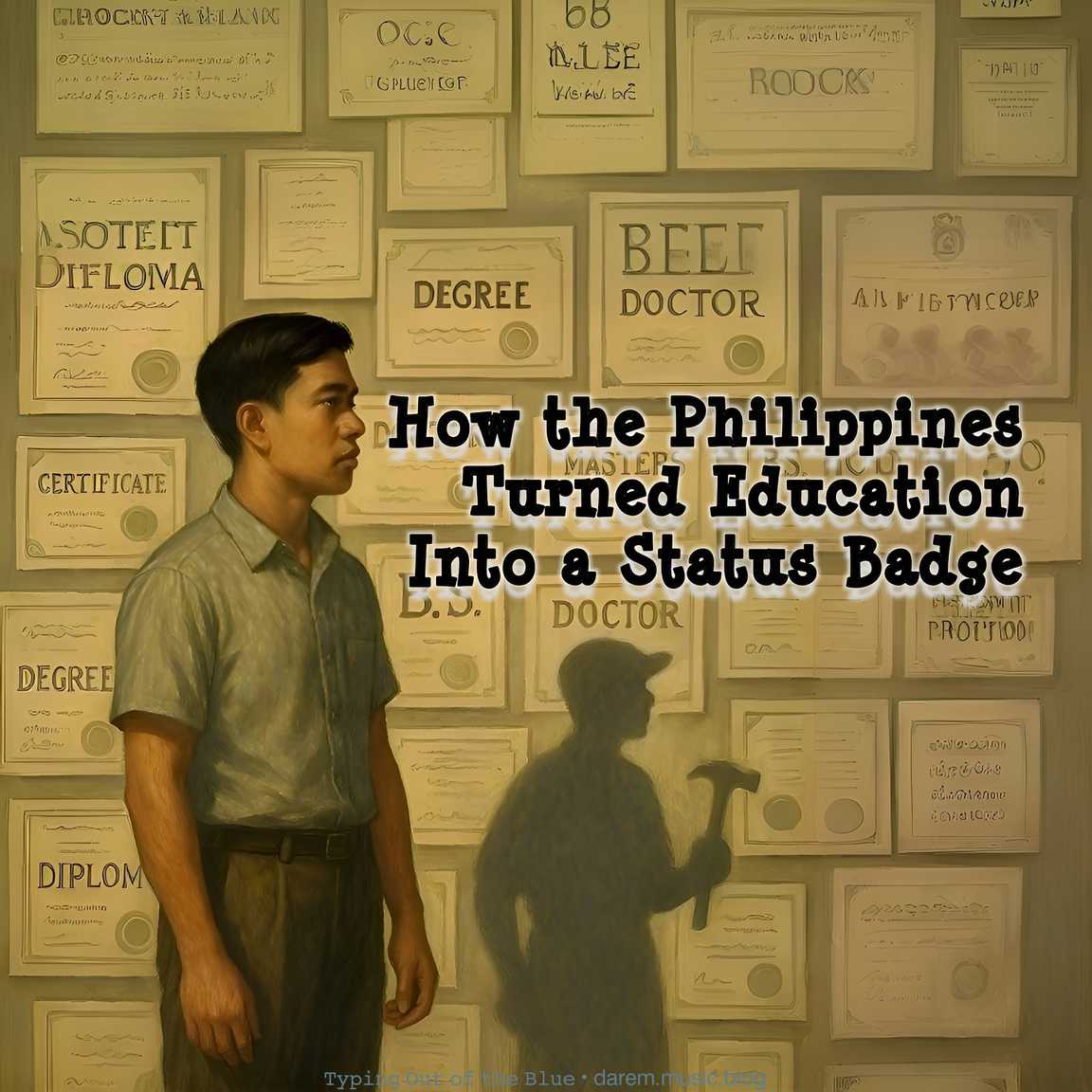
In this country, people talk about education as if it’s a measurement of a person’s worth. A diploma can change how others treat you, no matter how skilled or talented you already are. Titles get celebrated, labels get admired, and entire careers get judged based on one line beside your name. This mindset shapes our culture—from how we view certain courses, to why people chase degrees late in life, to the way we decide who deserves respect.
Five realities about how Filipino society treats education
1. In the Philippines, a degree is a social badge.
Not because of your actual skill. Not because of your contribution. But because it’s a “symbol” of respect.
That’s why even at 64 or 72, once you finally have a diploma, people suddenly treat you differently—even if nothing has changed in your talent.
2. Late graduates flex for validation because society gives more respect to degree holders.
Here’s the sad truth: the Philippines still lives with a degree hierarchy mindset.
• “He’s an engineer—wow.” • “She’s a teacher—solid.” • “Music? Oh… just a hobby.” • “No degree? Hmm.”
Even if you’re more capable than many professionals in the field, society still lets the diploma decide your level of respect.
• “Businessman,” even if it’s just a small sari-sari store • “Engineer,” even if the person is doing basic factory work • “Architect,” even if they’re actually just a draftsman • “Musician? Just that?” even if your mind is world-class in composition
Our society is obsessed with titles, not actual competence.
4. Late graduates do it to close an unfinished chapter AND to finally earn social respect.
Honestly, more than a “dream,” it’s about:
• finishing something that’s been hanging for years • proving to their family that they can • earning the validation they never received • escaping the “uneducated” stereotype • feeling worthy in a society that measures value through diplomas
If this country didn’t judge people based on education, most of the late-graduation hype would disappear.
5. Your course being looked down on? Classic Filipino ignorance.
“Music LANG?”
As if everyone can analyze harmony, improvise voicings, compose original pieces, arrange instruments, or understand theory.
Music only? Yet they can’t even create two bars that make sense.
People downgrade what they don’t understand.
Music is one of the most mentally demanding fields—but because it’s not corporate and not STEM, it gets treated like a hobby.
But once you say: “BS Accounting” “BS Nursing” “Computer Science”
Boom—instant respect, even if the person has zero passion or actual skill.
How This Mindset Damages Real Learning
When society rewards diplomas more than actual ability, people learn to chase the easiest way to get a credential instead of mastering their craft. The goal stops being competence and becomes compliance. Students pick courses they can finish quickly, not courses that challenge them or develop their strengths. The paper becomes the finish line, not the growth.
This same mindset fuels the rise of “fast-track” master’s and doctorate programs—weekend classes, compressed requirements, thesis-light pathways that turn higher studies into a checklist instead of a serious pursuit of knowledge. Many people don’t take these programs to become better at their field. They take them because the system demands it.
You see this clearly in the education sector. Public school promotions rely heavily on certificates, seminars, and degrees. A teacher with natural skill, strong classroom presence, and real impact on students can be outranked by someone with more documents but less talent. The system trains teachers to collect credentials, not to improve their teaching.
When promotions, respect, and opportunities are based on labels instead of performance, people stop aiming for excellence. They aim for the shortest, most convenient path to a title. And the country ends up with professionals who have academic markings but lack depth—because they chased the reward the system advertised.
A diploma can open doors, but only skill keeps you inside. The country forgets that too easily. Until we value what people can actually do, we’ll stay stuck in a cycle where titles rise while real ability stays flat.