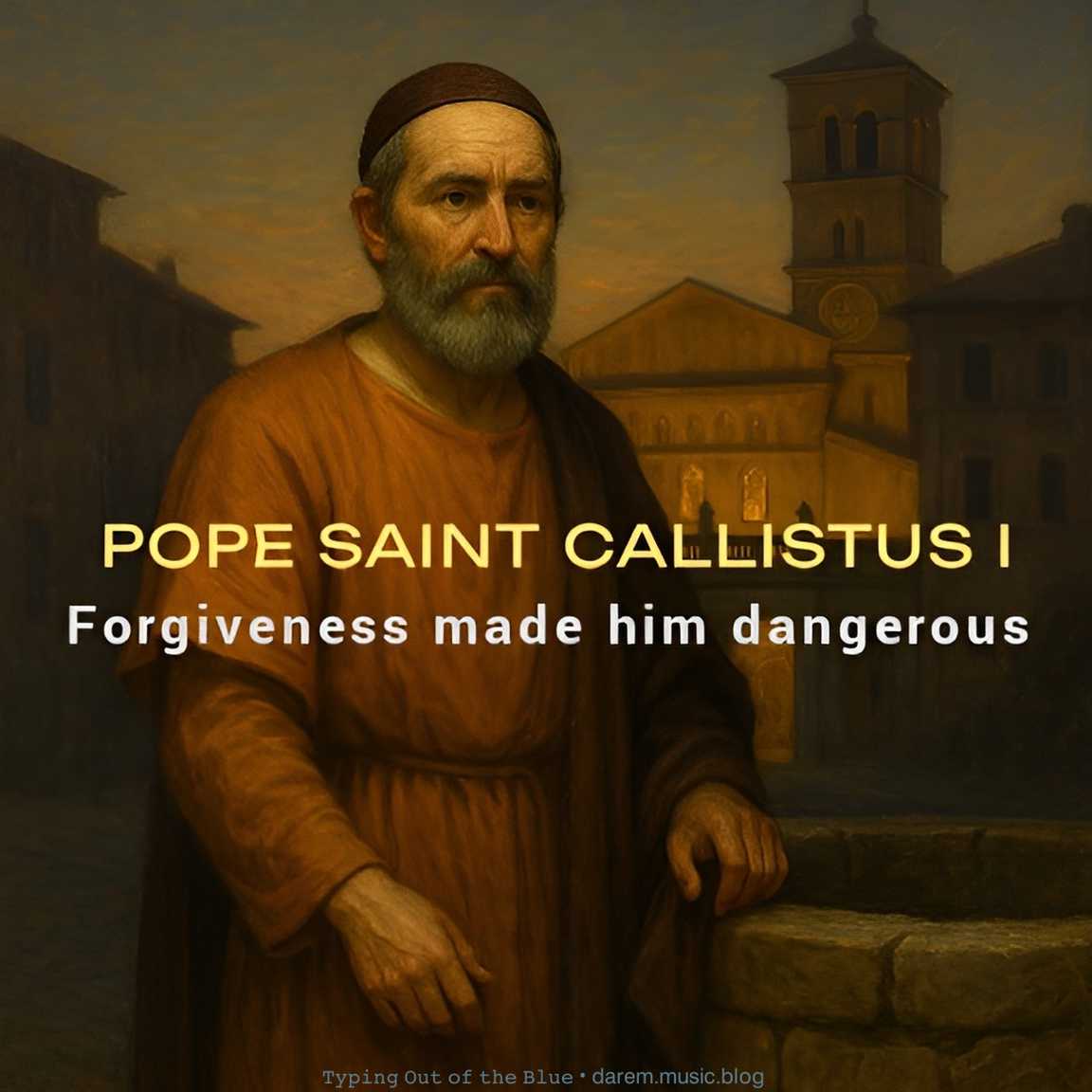
Pope Saint Callistus I

From the mines to the papacy, Pope Saint Callistus I showed that mercy, not fear, is the strongest power of all.

Forgiveness made him dangerous

In the early 200s, when the Roman Empire still ruled with iron and fear, Pope Callistus began as a slave—one of those stories you wouldn’t expect to end with a crown. He once worked with money meant for Christians, lost it, got punished, and ended up working hard in the mines. From the pit to the Pope’s chair—yeah, life has a wild sense of irony.

When freedom finally found him, he didn’t seek revenge; he built tombs. The Catacombs of St. Callistus became his mission, a quiet place for souls. That’s where mercy started to breathe again.

As Pope, he fought not with swords but with scandal—the scandal of forgiveness. A wise priest named Hippolytus stood against him, saying he was too soft for letting even murderers and adulterers return to the Church. But Pope Callistus stood firm: the Church wasn’t a museum of saints—it was a hospital for sinners. That truth divided many, but it shaped mercy forever.

He died a martyr around 222 AD—thrown into a well, fitting for a man who once rose from the depths. His name now lives in Santa Maria in Trastevere, one of the oldest churches in Rome, found in a quiet old street where the story of mercy still lives.

Some saints ruled by fear. Pope Saint Callistus I ruled by forgiveness. And that made him dangerous—in the holiest way possible.

⌨ ᴛʸᵖⁱⁿᵍ ᴏᵘᵗ ᵒᶠ ᵗʰᵉ ʙˡᵘᵉ ᵈᵃʳᵉᵐ ᵐᵘˢⁱᶜ ᵇˡᵒᵍ

Traces of courage, silence, and sacrifice—this is Saints.

Listen on Apple Music, Apple Music Classical, and YouTube Music
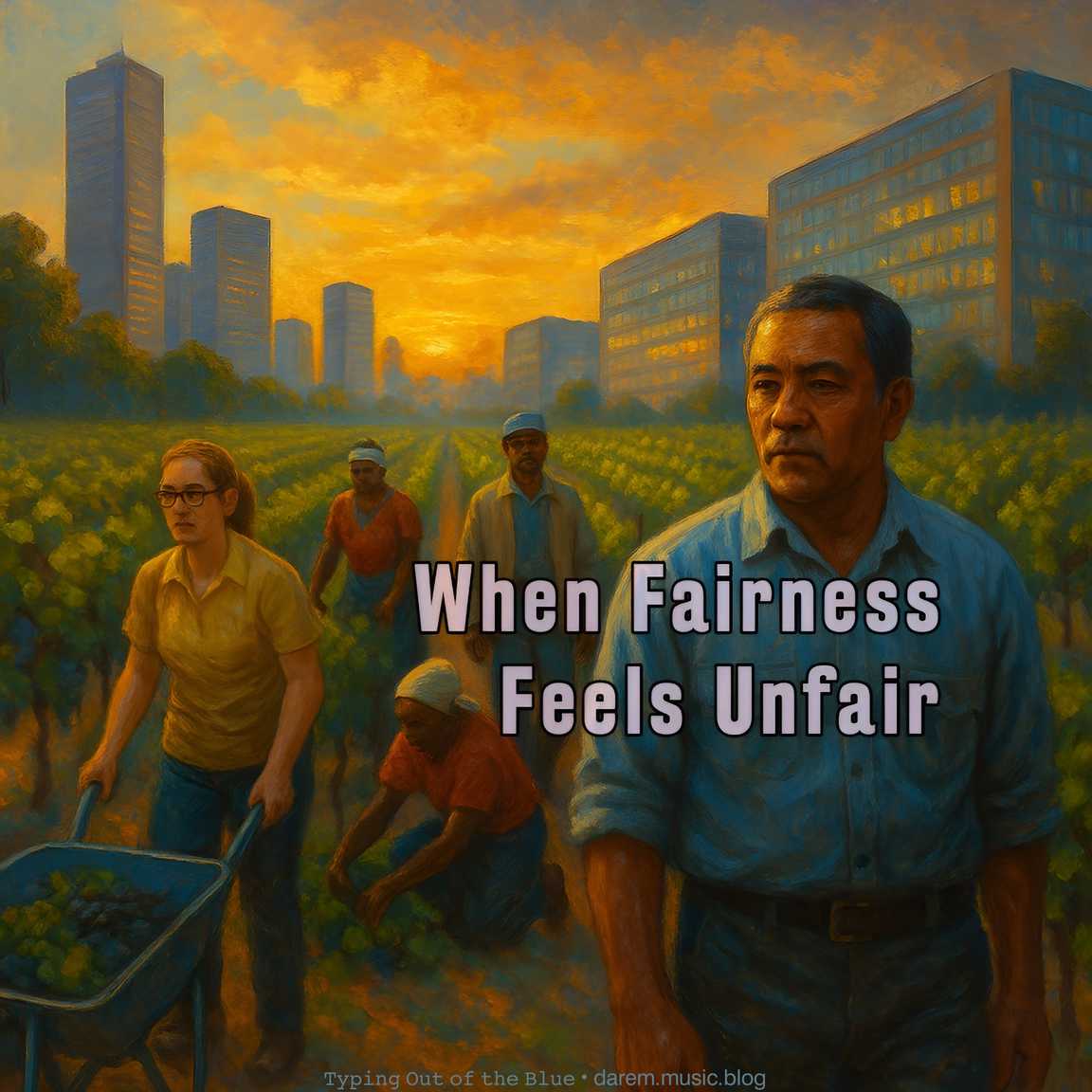
When Fairness Feels Unfair

When fairness starts to feel forced, maybe the problem isn’t justice—it’s who’s defining it.

You ever notice how some people seem to get the same reward even when they do less? In school. At work. In life. You give your whole day, someone else shows up late—and somehow, you both end up equal.

It feels wrong, right? But it’s not new. Jesus once told that exact story—the parable of the workers in the vineyard. The early workers complained, “Unfair! We worked longer.” But the owner said, “Didn’t I pay you what we agreed on?”

It makes you think—maybe God’s fairness isn’t about equal hours, but equal love. Still, when people use that story to excuse unfair systems, they miss the whole point. Because the owner in the parable kept his promise. There was honesty. There was mercy. In real life, some “vineyard owners” break both—they call it fairness, but it’s just control wearing kindness as a mask.

So maybe the lesson isn’t about who deserves more. It’s about keeping your word. And remembering that mercy without truth isn’t grace—it’s just noise.

Sometimes the holiest thing you can do is stay silent—not out of fear, but because you’ve seen how people twist fairness into favor.

⌨ ᴛʸᵖⁱⁿᵍ ᴏᵘᵗ ᵒᶠ ᵗʰᵉ ʙˡᵘᵉ ᵈᵃʳᵉᵐ ᵐᵘˢⁱᶜ ᵇˡᵒᵍ