80s Bullies vs Today’s Bullies: Who’s Scarier?

The way bullies work changed with technology—and the impact hits differently for today’s generation.

80s bullies were loud and direct. If they didn’t like you, they showed it to your face. No fake names, no hiding. It was physical, raw, and stressful—but once it ended, it ended. No screenshots. No replay. You could walk home and leave the moment behind.

Today’s bullies are different. They don’t always shout. Sometimes you don’t even know who they are. They strike through posts, comments, group chats, and anonymous accounts. And the damage stays. One post can spread, get screenshotted, and live online long after the moment is over.

80s bullies hurt your body.
Today’s bullies hit your mind.

And mental hits last longer.

Back then, you escaped by walking away from the person.
Now, you escape by leaving the internet—but everything is still waiting when you return.

Before: one bully.
Now: a whole crowd with keyboards.

Before: physical pain.
Now: public humiliation.

So yes—today’s bullies are scarier.
Not because they’re stronger, but because technology makes their cruelty louder, faster, and harder to escape.

But youths today also have tools the 80s never had:

• Block
• Mute
• Report
• Screenshot proof
• Real friends who can defend you
• A society that actually calls out bullying now

The bullies evolved—but so did your power to shut them down.

Forgiving the Tortured Torturer’s Torturer • Darem Placer

Listen on Apple Music and Apple Music Classical
Without Without includes Forgiving the Tortured Torturer’s Torturer

ᴛʸᵖⁱⁿᵍ ᴏᵘᵗ ᵒᶠ ᵗʰᵉ ʙˡᵘᵉ ᵈᵃʳᵉᵐ ᵐᵘˢⁱᶜ ᵇˡᵒᵍ
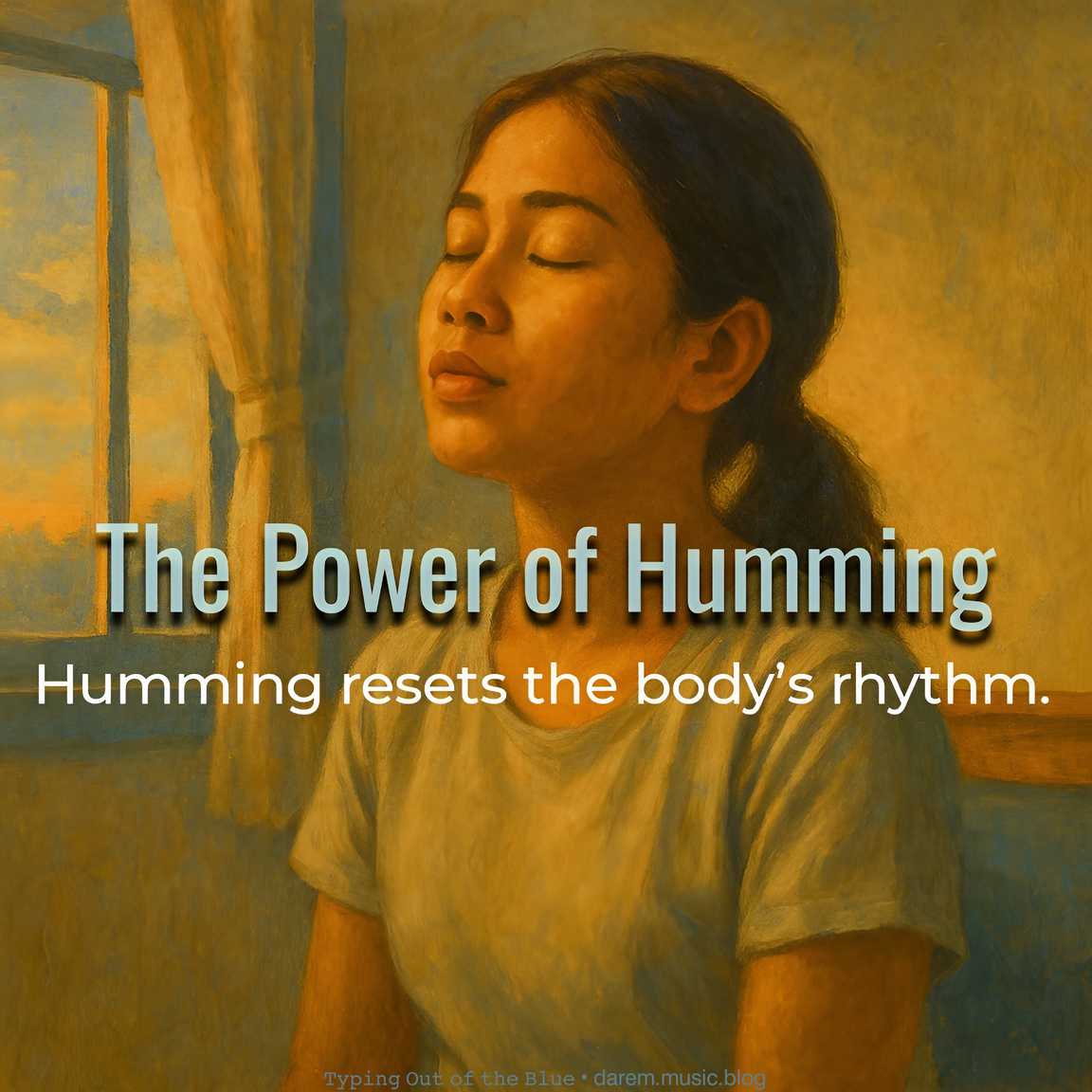
The Power of Humming

Humming calms, clears, and quietly brings your energy back—no rush, no rules, just sound.

Humming resets the body’s rhythm.

It’s odd how such a small sound can make you breathe easier. Just a quiet hum—low, soft, steady—can shift what’s happening inside you. When you hum, something in your body listens. Sometimes your body just gets the hint. The nerve that runs from your brain to your gut catches the signal and says, enough. Your heart takes a step back, breath finds its own pace, and the day stops feeling like a fight.

🎯 What Humming Can Do

Relieves stress. It helps your body unwind naturally. Muscles loosen, breath feels smoother.

Eases anxiety. The sound keeps your rhythm calm—thoughts slow down, heartbeat follows.

Lifts low moods. That small vibration moves oxygen and light through your chest. You start to feel a bit more alive.

Brings back energy. When the tension fades, your strength quietly returns. No caffeine, no rush.

Sharpens focus. It clears the mental fog and helps you notice things again.

Helps breathing and sinuses. The vibration opens space inside, making air move freer.

🛠 How to Do It Right

1. Find a quiet spot. Doesn’t need to be special—anywhere you can sit or stand still for a bit without noise bugging you.

2. Sit or stand—whatever. Just don’t slouch too much. Keep your back comfy enough to breathe right, not stiff like a robot. Shoulders? Let them drop.

3. Take air in through your nose. Real slow. No need to count or think about it. Just breathe, plain and normal.

4. Mouth closed, air goes out through your nose. Make that tiny “mmm” sound—barely there. Don’t try hard, just do it easy, like you’re half-humming to yourself.

5. Feel that faint buzz somewhere around your face or chest. That’s it—that tiny shake means your body’s listening.

6. Hold each hum for a short moment—no need to force it.

7. Try it for a few minutes—just enough to feel the shift.

8. For calm, hum low and slow.

9. To energize your mind, hum lighter and brighter.

10. When you stop, pause. Breathe. Let the silence wrap you.

No apps, no rules—just your own sound tuning you back to balance. When you start to feel tired or uneasy, hum a bit. Even half a minute helps. It’s your body’s way of telling you, slow down, you’re fine.

⌨ ᴛʸᵖⁱⁿᵍ ᴏᵘᵗ ᵒᶠ ᵗʰᵉ ʙˡᵘᵉ ᵈᵃʳᵉᵐ ᵐᵘˢⁱᶜ ᵇˡᵒᵍ