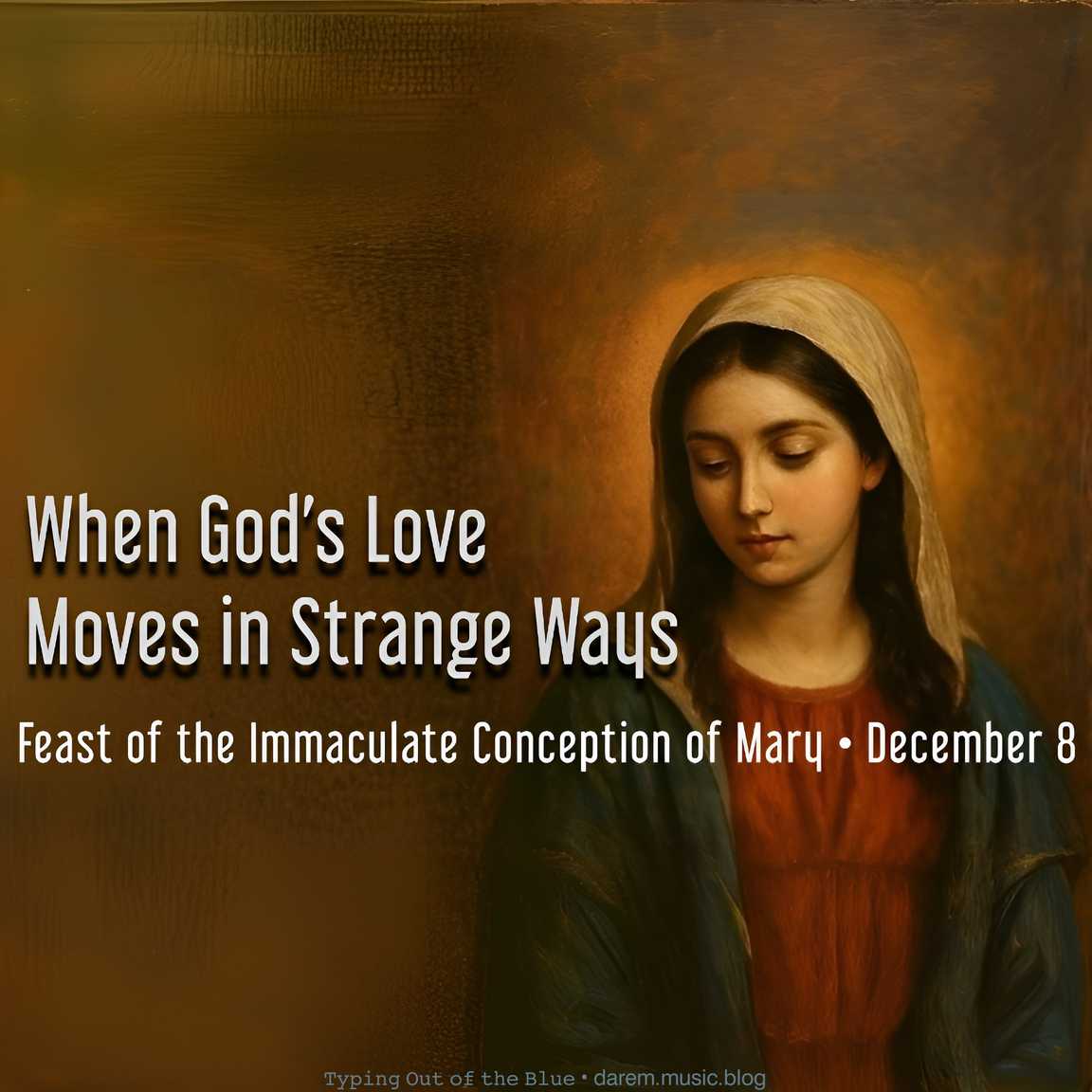
Feast of the Immaculate Conception of Mary • December 8
There’s this song from the 80s called Love Moves in Strange Ways by Blue Zoo. But that song talks about human love—timing that confuses us, emotions that shift, moments that feel uncertain. It’s the kind of love we already know: unpredictable because we can’t see the whole picture.
God’s love is different, though we also find it strange.
It moves in ways that feel unusual, not because it’s lost or unsure, but because it’s already several steps ahead. What looks strange to us is simply a plan we’re not ready to understand yet.
That’s why the Immaculate Conception stands out when you look at it this way. Before Mary even entered the world, God was already preparing the one heart that could freely say yes. Not through noise or spectacle, but through a quiet beginning shaped entirely by grace.
The feast isn’t only about Mary being free from sin.
It’s about the way God works—quiet, early, intentional.
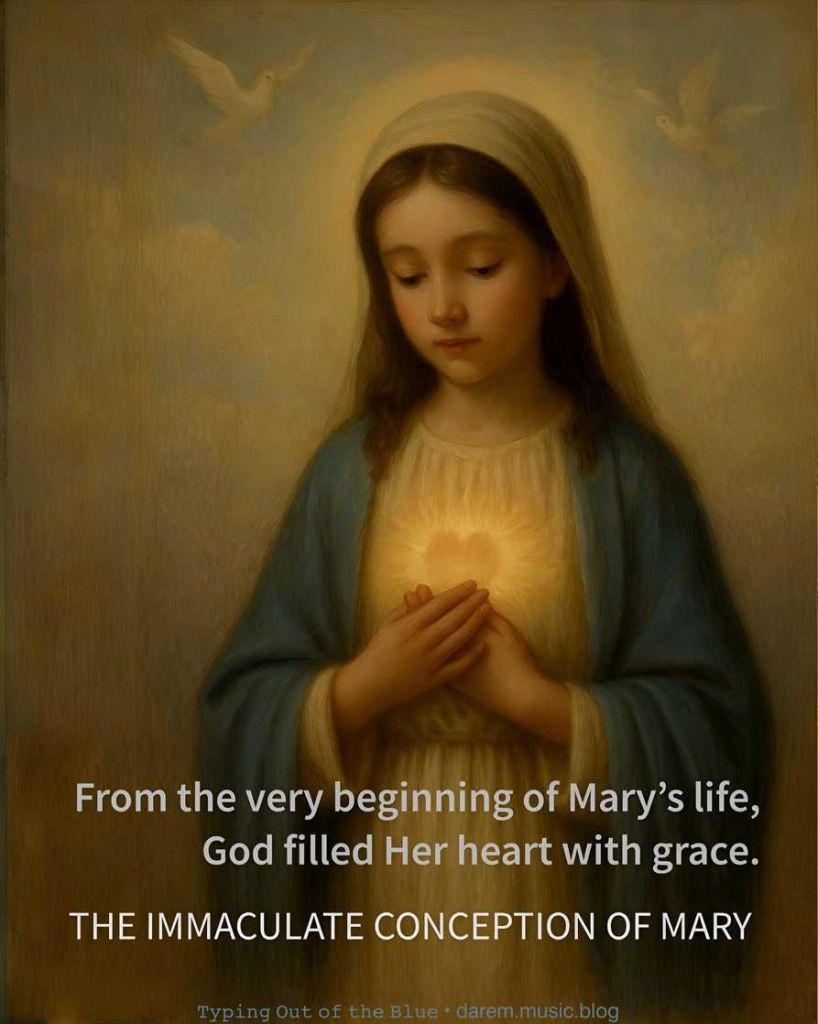
Long before the Angel appeared, long before Bethlehem, long before the Cross, God was already setting everything in place. His love was not reacting to history, but shaping it from the start.
And this is why December 8 doesn’t have to sound like the same reflection every year. It’s more than a theological point. It’s a reminder of God’s style: He prepares long before we notice. He moves ahead of our understanding. He surprises with purpose.
So when life feels scattered or out of sync, the Immaculate Conception whispers a simple truth:
God’s love may move in unexpected ways, but it always moves toward good.
⌨ ᴛʸᵖⁱⁿᵍ ᴏᵘᵗ ᵒᶠ ᵗʰᵉ ʙˡᵘᵉ ᵈᵃʳᵉᵐ ᵐᵘˢⁱᶜ ᵇˡᵒᵍ

Out this season on Bandcamp.

