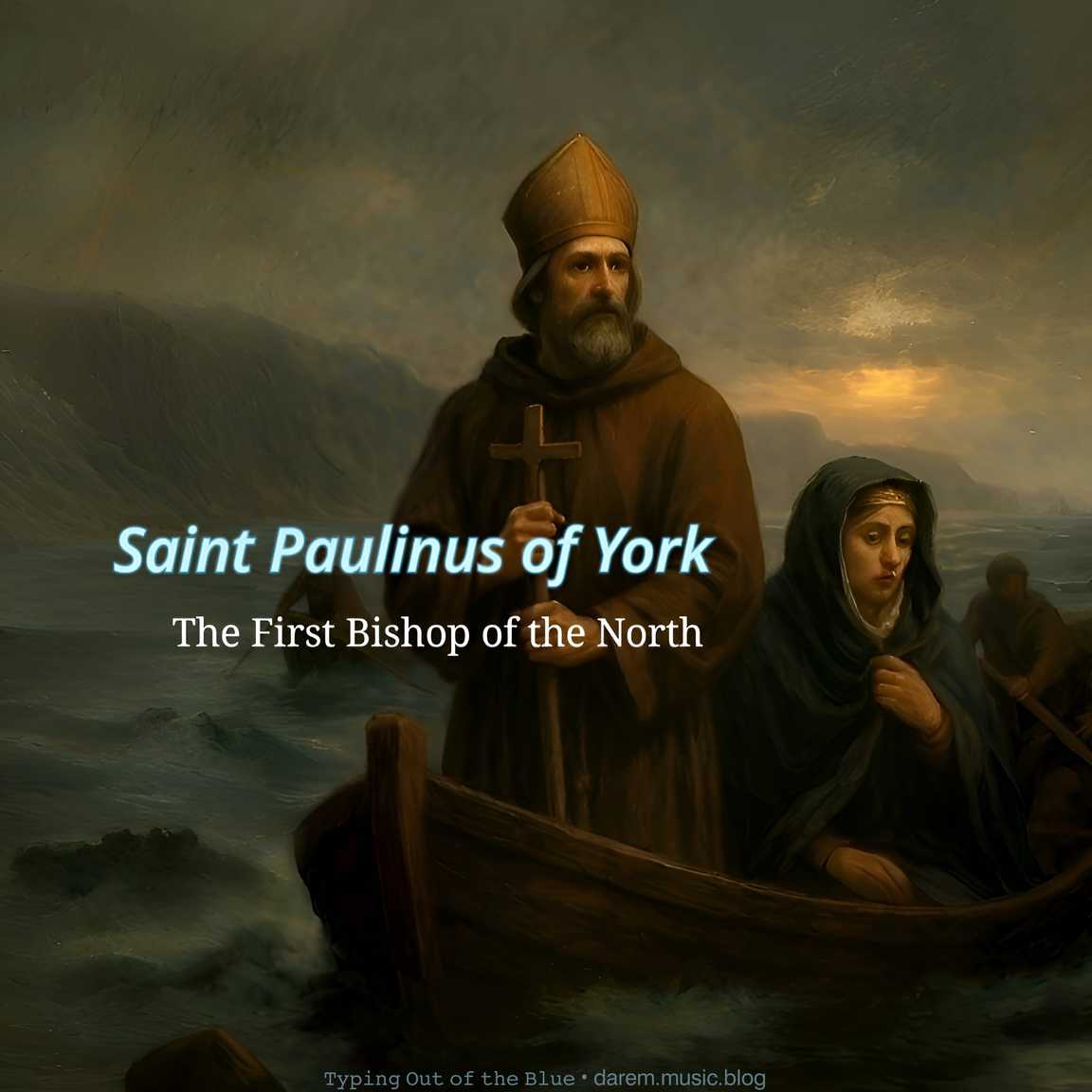
The First Bishop of the North
In the early 600s, King Edwin of Northumbria was a pagan ruler—strong, proud, and searching for meaning. Power was in his hands, but peace was missing in his heart. When he wanted to marry Princess Ethelburga of Kent, a Christian, her people agreed only if she could bring a bishop with her to keep her faith. That bishop was Paulinus, a quiet Roman monk sent by Pope Gregory the Great to bring light to the north of England.
At first, King Edwin didn’t care about Christianity. The court was full of doubt, and the old gods still ruled people’s minds. But after he survived an assassination attempt, he began to question everything. Bishop Paulinus spoke with calm and patience, showing a better way built on peace and hope. Slowly, King Edwin opened his heart. On Easter Day, 627, he was baptized in a small wooden church that would later become York Minster.
Faith started to grow across the land. Bishop Paulinus traveled through towns and rivers, baptizing thousands in the cold waters of the Trent and Swale. The north had found its light. But when King Edwin was killed in battle in 633, the old religion came back. The new faith weakened, and fear spread again. Bishop Paulinus escaped south with Queen Ethelburga, carrying only faith and courage.
He later served as Bishop of Rochester, where he stayed until his death in 644. But England never forgot who Saint Paulinus truly was—the first Bishop of York, the man who brought the Gospel to its northern lands and planted a faith that would rise again long after he was gone.
⌨ ᴛʸᵖⁱⁿᵍ ᴏᵘᵗ ᵒᶠ ᵗʰᵉ ʙˡᵘᵉ ᵈᵃʳᵉᵐ ᵐᵘˢⁱᶜ ᵇˡᵒᵍ
Listen on Apple Music, Apple Music Classical, and YouTube Music
