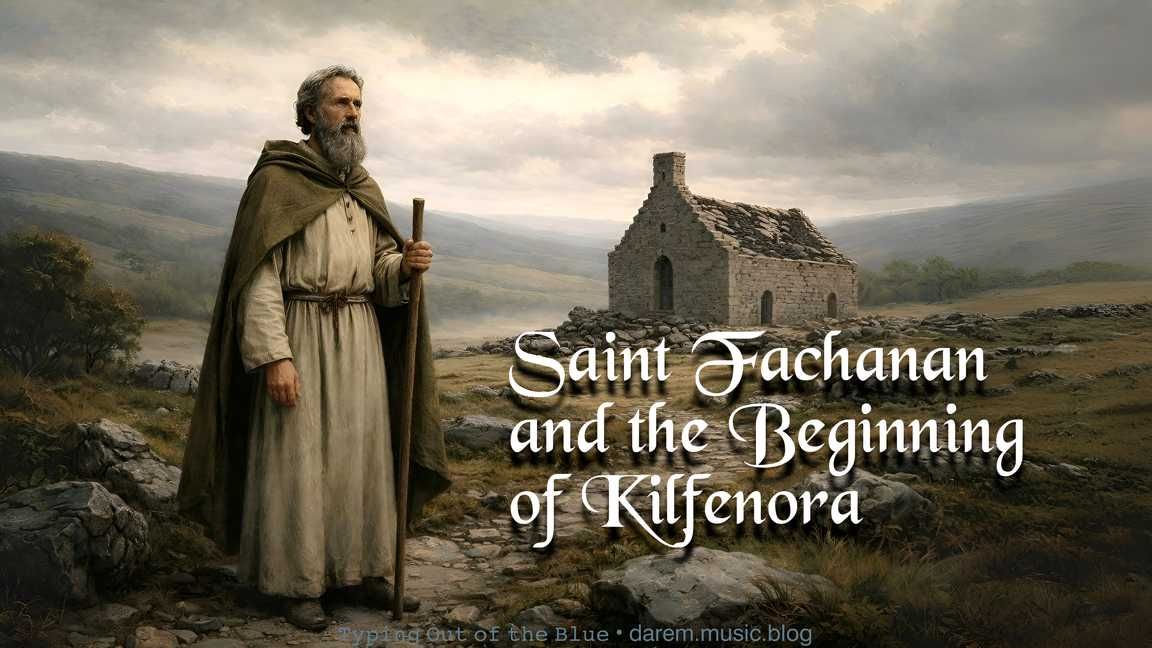
A sixth-century figure linked to the earliest beginnings of Christian life in Kilfenora, Ireland.
Fachanan was a sixth-century Irish church figure traditionally regarded as the founder and first bishop of the Christian church community in Kilfenora, in what is now County Clare, Ireland. He lived during the early spread of Christianity in Ireland, when faith grew quietly through small communities and steady daily practice.
Almost nothing is known about his personal life. No writings survive, and no confirmed miracles are recorded. What remains is his work—establishing a Christian church community that would outlast him by centuries.
Fachanan mattered not because history wrote much about him, but because what he started kept going.
A seventh-century Irish bishop whose life looks simple—until you notice what he deliberately walked away from.
Flannan lived in early seventh-century Ireland. He was born into a royal family, the son of an Irish king, at a time when power, land, and rivalry shaped everyday life. Instead of following the expected path of leadership or conflict, he chose monastic life and later served as bishop of Killaloe.
As bishop, Flannan worked quietly. He focused on pastoral care, the building of churches, and the steady formation of Christian communities. There are no records of dramatic miracles, political ambition, or public achievements attached to his name. What history remembers is his consistency—service lived over time, without spectacle.
Here is what makes Saint Flannan different.
Nothing happened.
He had every reason to climb. Royal blood. Authority. Respect. In his world, even religious roles were often used to gain influence. Flannan did not do that. He chose a small place and stayed there. No upgrades. No push for prominence. No attempt to turn faith into power.
Most saints have a rise, a fall, or a dramatic turning point. Flannan did not. He remained steady from beginning to end.
In an age driven by ambition and conflict, his quiet refusal to escalate was rare. He walked away from power not once, but as a way of life.
Saint Flannan was not exciting. He was intentional.