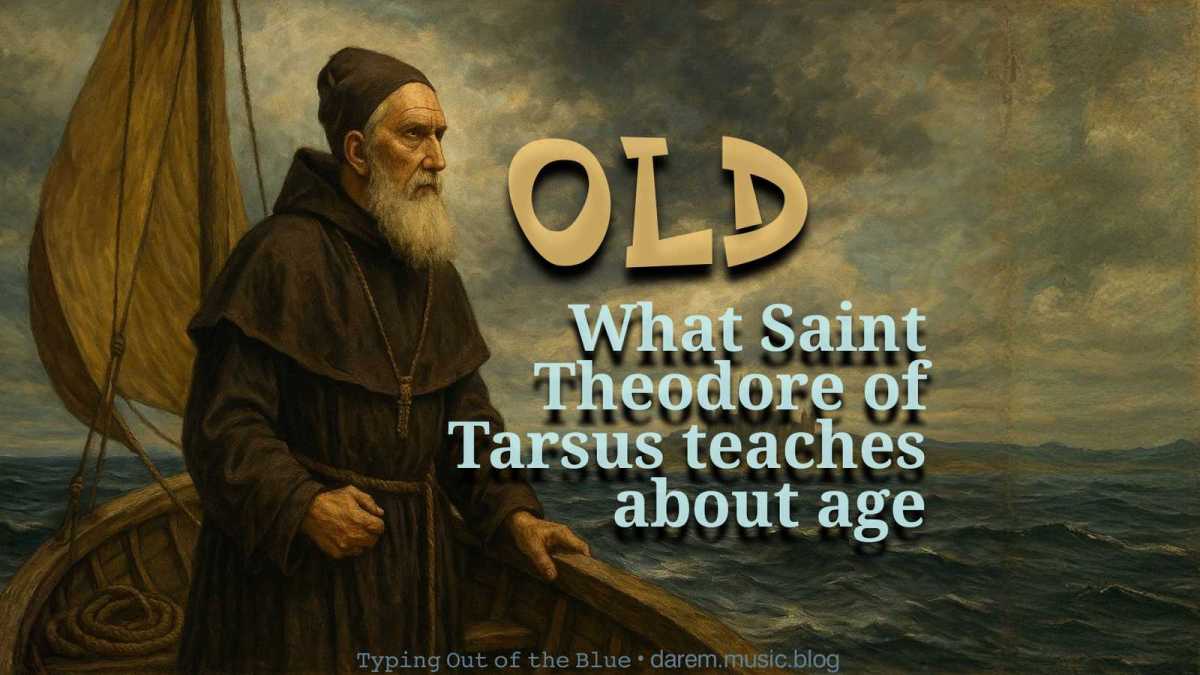
Old

Old doesn’t mean done. Saint Theodore of Tarsus proved that age can still build, lead, and leave a mark no one else can.

What Saint Theodore of Tarsus teaches about age

In the seventh century, average life expectancy was barely forty. At fifty you were ancient. At sixty you were expected to stay quiet, wait for death, and disappear.

But Theodore of Tarsus was sixty-six when Rome chose him to be Archbishop of Canterbury. He was only a monk in Rome, known for his learning. A scholar, not a bishop. To take the post, he first had to be ordained—all in one quick step, before being sent across the sea.

England’s Church was weak and divided. They needed a leader to bring order. People thought Theodore was too old. Too late. Too weak. Too close to the grave.

He could have believed them. He could have stayed behind. Instead, he crossed the sea and started again. He fixed what was broken. He gathered leaders. He built a school that lit up Europe. Younger men died before him, but he kept going. He lived to eighty-eight.

That is the truth of old. It feels heavy. It feels lonely. People look past you. Sometimes you even look past yourself. But inside, there is still fire.

Today, the world worships youth. The old are pushed aside. Many stop believing they can still matter. But the story of Saint Theodore of Tarsus says otherwise. Old doesn’t mean done. Old means tested. Old means strong. Old means you still carry something no one else can.

Old • Darem Placer

ᴛʸᵖⁱⁿᵍ ᴏᵘᵗ ᵒᶠ ᵗʰᵉ ʙˡᵘᵉ ᵈᵃʳᵉᵐ ᵐᵘˢⁱᶜ ᵇˡᵒᵍ

Thoughts drift like clouds across a fading sky, until you find yourself in a quiet room—Alone with a Piano.

Listen to Alone with a Piano on Apple Music and YouTube Music
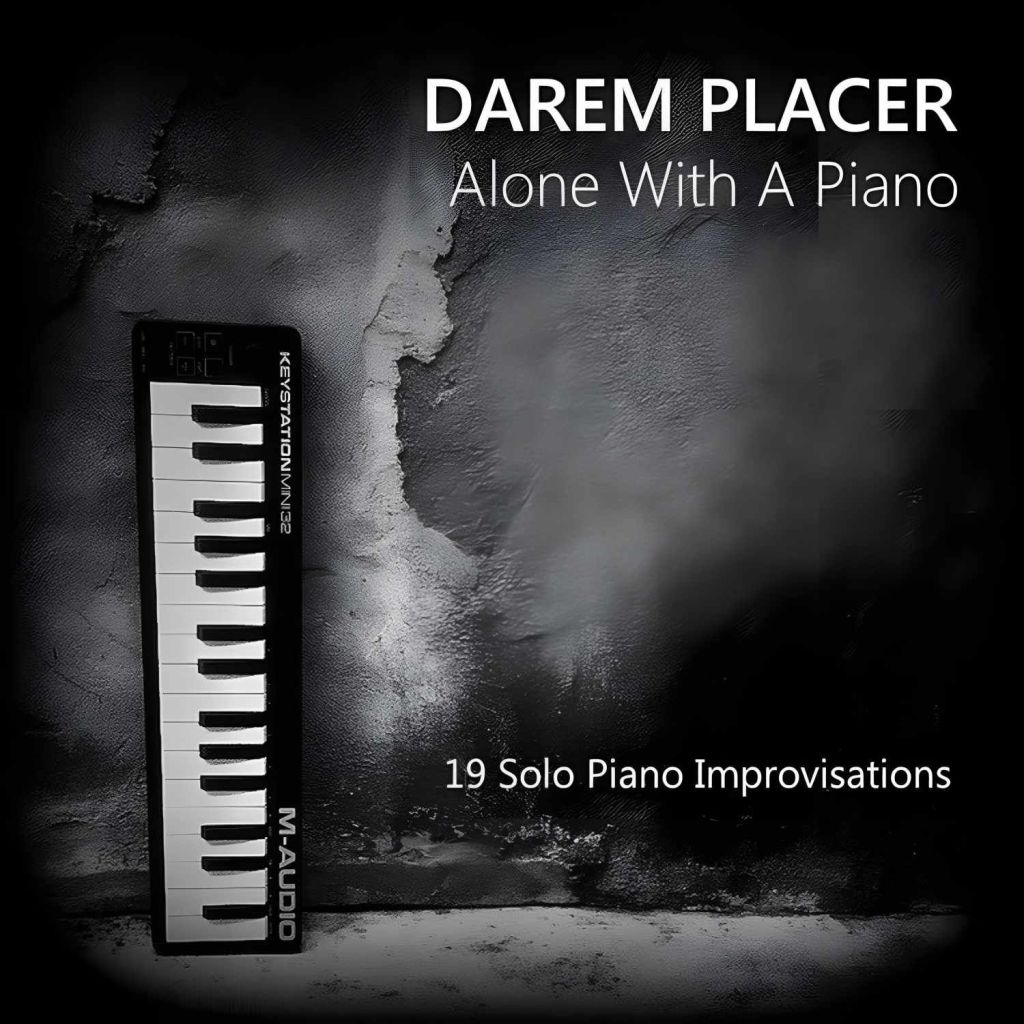
Alone with a Piano includes Old

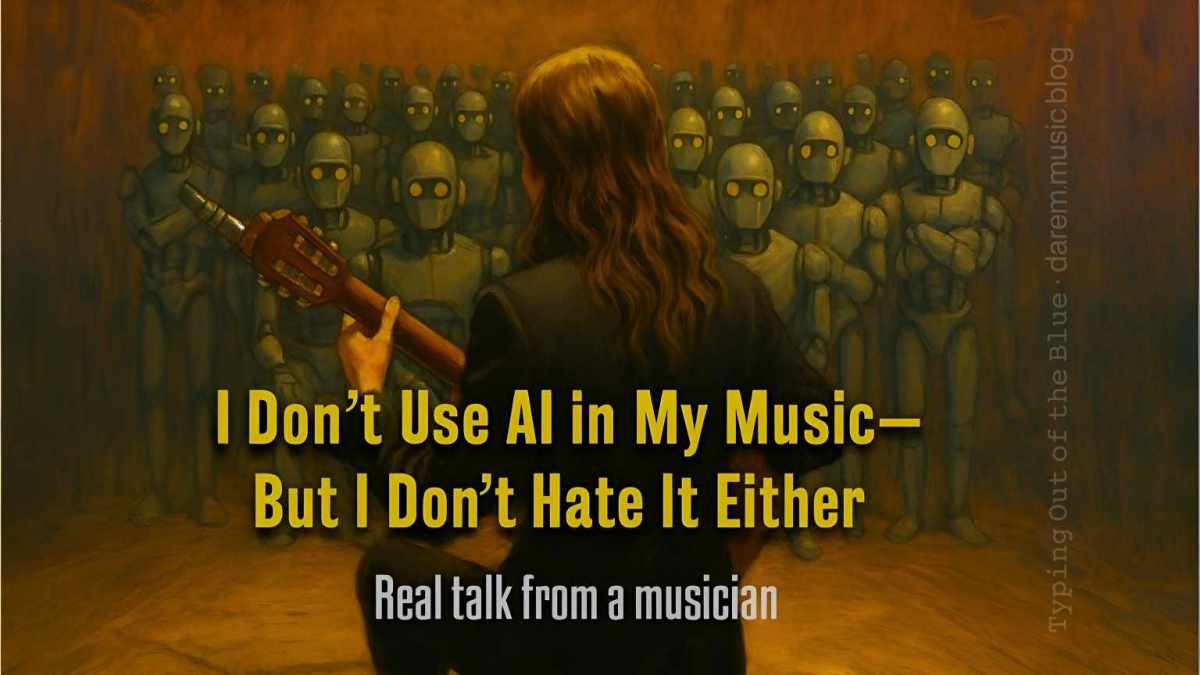
I Don’t Use AI in My Music—But I Don’t Hate It Either

People argue AI has no soul in music. But what if the soul was never in the song at all?

Real talk from a musician

People assume that if you defend AI music, you must be using AI to make yours. But no—I don’t. I can create music without it. That’s why I don’t need it.

Still, I think AI music is cool. Sometimes, it sparks new ideas. Just like when you listen to other human artists, you take what inspires you and discard the rest. It’s a source of inspiration, not a threat.

And honestly, I find it awesome that even frustrated musicians—those who can’t play, can’t mix, or can’t afford gear—can now create something that sounds professional. Sure, they might not be proud of it in the same way, because of guilt… like they cheated. It doesn’t feel fully theirs.

But does that really matter? If someone smiles, gets chills, or cries because of what they made—then it worked. That’s music doing its job.

AI is powerful—but music isn’t just sound. It’s story, struggle, intent, and identity. As the line blurs between human- and machine-made, the world’s artists are calling for one thing:

Let the audience know. Then let them choose.

And here’s the strange part—some people hear a song, get chills, then cancel it after learning it’s AI-made. “It has no soul,” they say.

Yeah, right.

Feelings don’t require permission slips. If it moved you, then it’s real—regardless of who (or what) made it.

The funny thing is, some of these people act like expert critics—“No feeling, no soul!”—as if they’re trained to measure emotional depth. Pretend musicologists, when in reality, real musicologists don’t even do that. They focus on how music works, not how it feels. They can break down a fugue, but not a heartbreak.

In truth, the soul of music has never been inside the song.

It has always been in the listener.

𝚃𝚢𝚙𝚒𝚗𝚐 𝙾𝚞𝚝 𝚘𝚏 𝚝𝚑𝚎 𝙱𝚕𝚞𝚎 • 𝖽𝖺𝗋𝖾𝗆.𝗆𝗎𝗌𝗂𝖼.𝖻𝗅𝗈𝗀