
Flaws and Imperfections: The Key to a Musician’s Unique Style

Real mastery isn’t copying your idols—it’s discovering what makes your flaws sound like you. That’s your real music.

Every musician starts somewhere, and for many, that means imitating their idols. It’s natural to want to play like the greats—copying their techniques, tone, and phrasing. But here’s something many don’t realize early on: true style doesn’t come from perfecting someone else’s—it comes from embracing what makes you different.

Flaws, in this case, don’t mean mistakes in a negative sense. They’re the little things that make your playing unique—your timing, your touch, the way you naturally phrase notes, or even how you approach a melody. If Jimi Hendrix had stuck to traditional guitar techniques, would his sound have been as iconic? If Thelonious Monk had played the piano with perfect precision instead of his offbeat, angular style, would he have stood out? Probably not.

Not everyone can play like their idols, and that’s okay. Some things just don’t come naturally, no matter how much time you spend trying. Instead of forcing yourself to master something that isn’t your strength, why not focus on what you can do? A guitarist with one hand won’t play the same way as someone with two—but that limitation can create a completely unique sound. Do you think a two-handed guitarist could ever sound exactly like him? Probably not.

Aspiring musicians often think mastery means sounding exactly like their idols. But the moment you stop chasing perfection and start playing in a way that feels natural to you, something shifts. Music isn’t about flawless technique—it’s about expression. Those little quirks, those imperfections? They aren’t flaws. They’re what make your music yours.

And as the music plays on, a sense of freedom settles in—a Classical Haze, where tradition and individuality blend, creating something uniquely yours.

Listen on Apple Music, Apple Music Classical, and YouTube Music

⌨ ᴛʸᵖⁱⁿᵍ ᴏᵘᵗ ᵒᶠ ᵗʰᵉ ʙˡᵘᵉ ᵈᵃʳᵉᵐ ᵐᵘˢⁱᶜ ᵇˡᵒᵍ
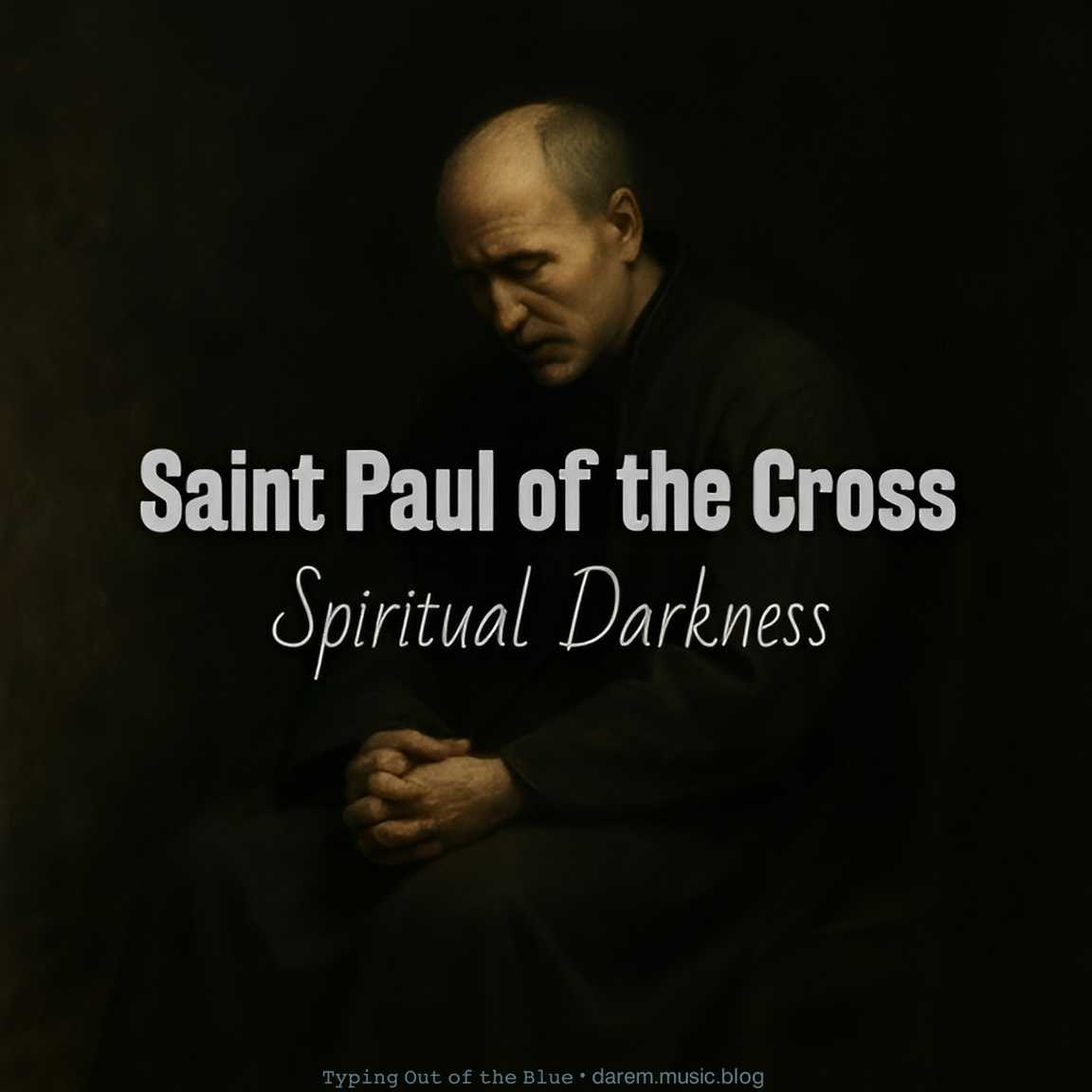
Saint Paul of the Cross—Spiritual Darkness

He couldn’t feel God for 40 years—but never gave up. A story of faith that stayed strong even in silence.

It happened in the early 1700s, in northern Italy—a time of quiet towns, simple faith, and people searching for meaning after war and loss. In that setting lived Paul Danei, who would later be known as Saint Paul of the Cross.

Paul was only 19 when his life changed. He started to feel a deep love and sadness whenever he thought about the Passion of Christ—how Jesus suffered out of love. That feeling became his mission.

At first, he thought serving God meant becoming a soldier. He even joined a crusade for a short time but later realized that fighting with weapons wasn’t what God wanted from him. He left that life behind and decided to serve through prayer and preaching instead.

By the time he was 26, Paul began writing rules for a new group he wanted to form—a community focused on remembering and sharing the message of the Cross. This became the Passionist Congregation. But around this same time, something painful began: a long period of spiritual darkness.

For more than 40 years, Paul went through a kind of silence from God. He kept praying, fasting, and helping others, but inside, he felt nothing—no peace, no inspiration, no sign that God was listening. Still, he refused to give up. Every day, he continued his mission, believing that faith is real even when you can’t feel it.

He taught that love for God isn’t about emotions but about staying faithful even in silence. People who listened to him were moved, even though he himself didn’t feel anything spiritual at the time.

When Paul died at 81, he left behind a strong community of Passionists who carried on his mission. His long years of darkness didn’t destroy him—they made his faith unshakable.

🕯 What Is “Spiritual Darkness”?

This experience—called spiritual darkness or dryness—is something that only deep contemplatives like priests, monks, and mystics often describe. It’s not depression or lack of belief. It’s when the feeling of God’s presence disappears, even if the person still believes.

I just did some research to understand it better, and scholars say it’s common among people who spend most of their lives in deep prayer. Ordinary people usually feel God’s presence through kindness, beauty, or small everyday moments. But for mystics like Saint Paul of the Cross, their faith happens deep inside—so when that inner feeling goes quiet, it can be confusing and heavy for a long time.

Even if we don’t experience mystical silence like he did, we all go through moments when life feels empty or unanswered. During those times, we can remember that faith isn’t about constant emotion—it’s about continuing to love, to care, and to believe in goodness.

When we see kindness, when we show compassion, or when we choose peace instead of anger—that’s where God’s presence quietly lives.

Maybe some people feel God in visions. Some, in silence. But most of us—just in each other.

⌨ ᴛʸᵖⁱⁿᵍ ᴏᵘᵗ ᵒᶠ ᵗʰᵉ ʙˡᵘᵉ ᵈᵃʳᵉᵐ ᵐᵘˢⁱᶜ ᵇˡᵒᵍ

Traces of courage, silence, and sacrifice—this is Saints.

Listen on Apple Music, Apple Music Classical, and YouTube Music