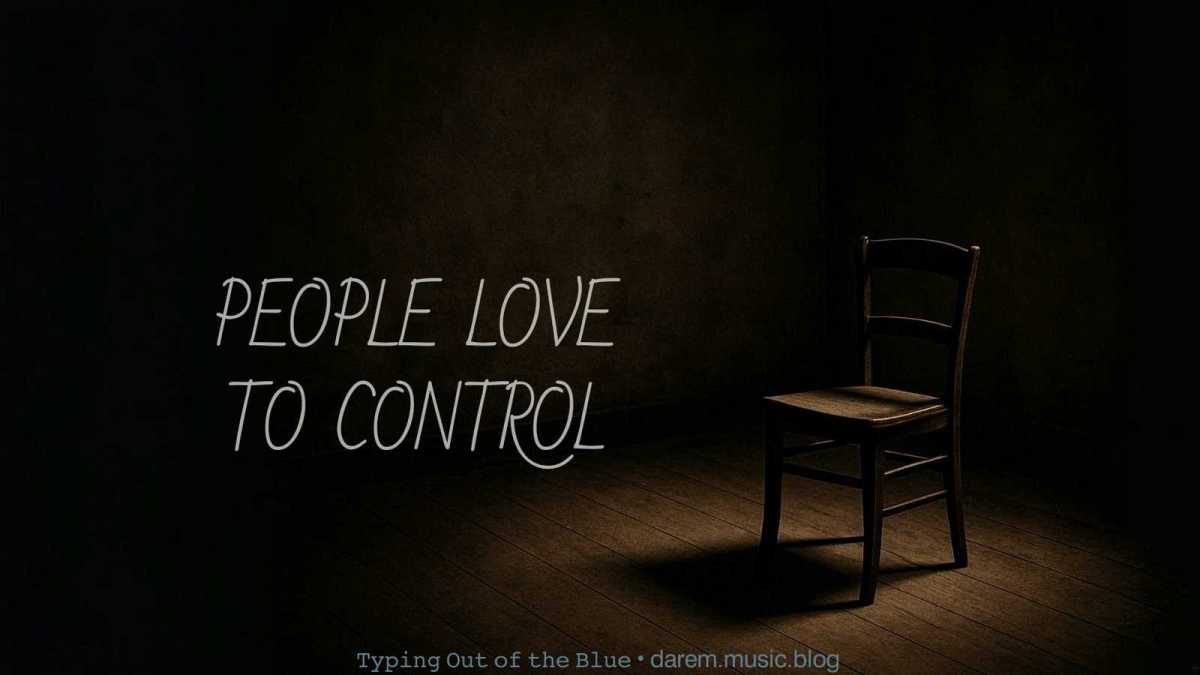
People Love to Control

Some chase control like air, but the grip they hold often reveals the fear they’re hiding inside.

Ever notice how control is like oxygen for some people? They breathe it, crave it, and panic when it slips away. But underneath, it’s rarely about power—it’s about fear.

Fear of losing status. Fear of chaos. Fear of looking weak. Control becomes their bandage, covering wounds they don’t want the world to see.

It feels like safety, but it’s a trick. The tighter they grip, the more they’re actually being gripped by their own fear. Control isn’t freedom—it’s a cage disguised as order.

And here’s the irony: those who look strongest when they dominate are usually the most fragile inside. Their need to call the shots, to direct every move, only reveals how insecure they really are.

The cycle repeats: insecurity sparks control, control boosts ego, ego masks fear, fear grows deeper. Round and round it goes.

People love to control. But maybe the real strength is in letting go—because letting go can sometimes be the only way to truly hold.
Hold • Darem Placer
daremplacer.bandcamp.com

ᴛʸᵖⁱⁿᵍ ᴏᵘᵗ ᵒᶠ ᵗʰᵉ ʙˡᵘᵉ ᵈᵃʳᵉᵐ ᵐᵘˢⁱᶜ ᵇˡᵒᵍ
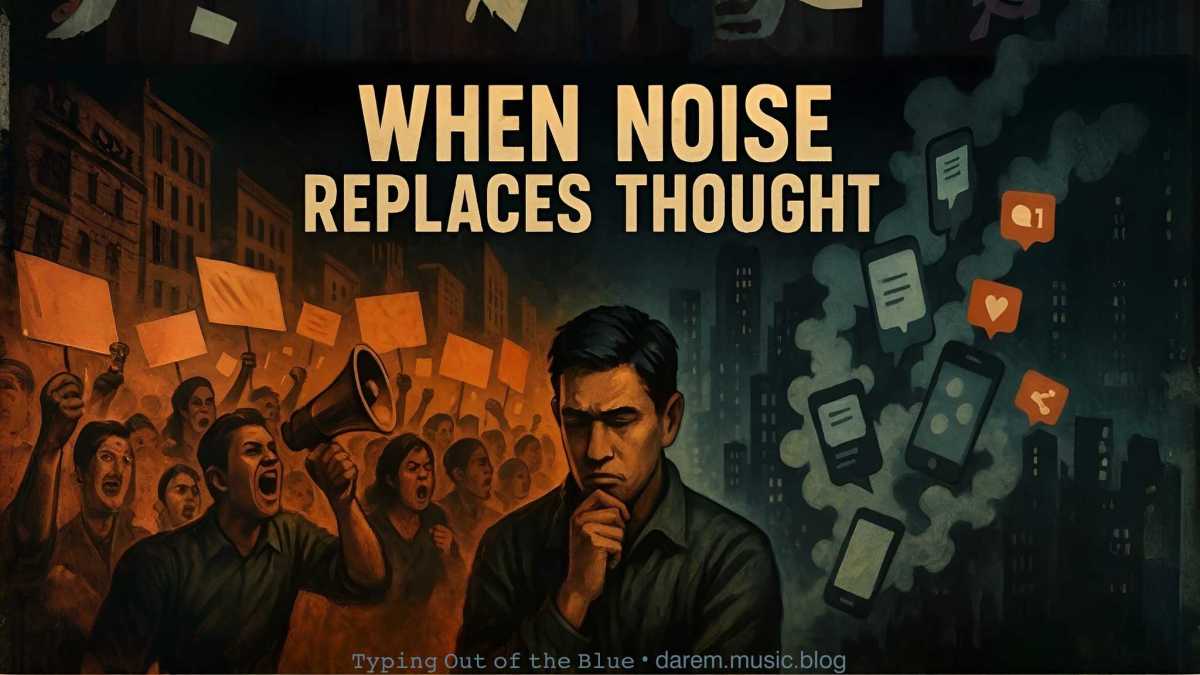
When Noise Replaces Thought

The world celebrates quick noise, yet the silence of thinking grows deeper every day.

It always plays out the same. A headline drops, a rumor spreads, a problem breaks out—and before the facts are even clear, someone calls for a strike, a boycott, or a shutdown. The result? Ordinary people pay the price while the real problem is still being sorted out. Action comes first, thinking comes last—if it comes at all.

And this isn’t just in one place. Crowds rush to the streets, blocking roads, burning barricades, chanting slogans. Online, a single clip or post can spread worldwide in hours, turning strangers into villains before the truth is even checked. Different countries, different forms, but the pattern is the same.

The first thought becomes the final move. No time to check, no time to reflect. Just noise.

Critical thinking is what’s missing. These are the questions we forget to ask:

• Is this true?
• Is this even my fight?
• Who really benefits?
• Who really suffers?

Instead, speed is the goal, noise is the reward, and shallow action gets the clicks, likes, and shares.

When noise replaces thought, meaning disappears. And when thinking itself is lost, action is nothing but stumbling in the dark.

“What’s my point?”

Now, you’re thinking critically.

ᴛʸᵖⁱⁿᵍ ᴏᵘᵗ ᵒᶠ ᵗʰᵉ ʙˡᵘᵉ
ᵈᵃʳᵉᵐ ᵐᵘˢⁱᶜ ᵇˡᵒᵍ