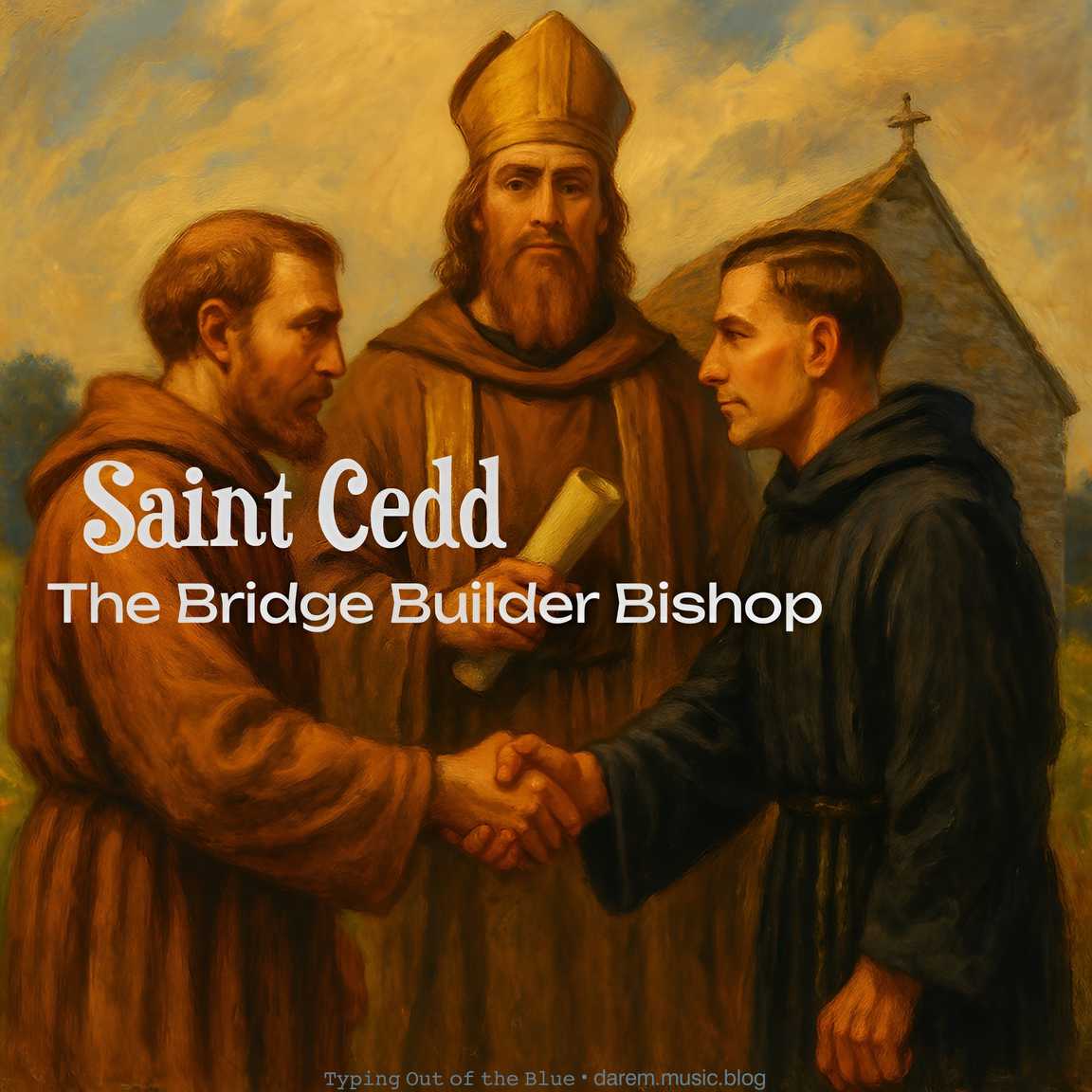
Saint Cedd—The Bridge Builder Bishop

He united rival believers through calm leadership, translation, and respect that healed division before debate.

In 7th-century England, church groups couldn’t agree. Some stuck with the Celtic way, others followed the Roman side. It was the same faith, but pride got in the way—they wouldn’t even pray together.

Bishop Cedd stepped into the middle of that mess quietly. He didn’t choose sides. He just lived among both, ate with them, learned how they spoke, and listened. When talks broke down, he went back and forth between them—explaining what each really meant and clearing up the noise that kept them apart.

He invited both sides to share a meal and pray in one place. No long speeches, no pressure—just calm presence. Little by little, anger turned into respect. His way of peace was simple: stop fighting over forms and remember Who you’re all praying to.

When the big meeting called the Synod of Whitby came, both groups trusted Bishop Cedd to interpret their words. The final decision went to the Roman side, but no war followed. Because by then, Cedd had already built the bridge—long before the vote was made.

Based on historical records from Bede’s Ecclesiastical History of the English People (Book III). Cedd’s role as bishop and interpreter at Whitby is verified, while the scenes of dialogue are reconstructions showing how he likely built peace through understanding.

⌨ ᴛʸᵖⁱⁿᵍ ᴏᵘᵗ ᵒᶠ ᵗʰᵉ ʙˡᵘᵉ ᵈᵃʳᵉᵐ ᵐᵘˢⁱᶜ ᵇˡᵒᵍ
Traces of courage, silence, and sacrifice—this is Saints.

Listen on Apple Music, Apple Music Classical, and YouTube Music
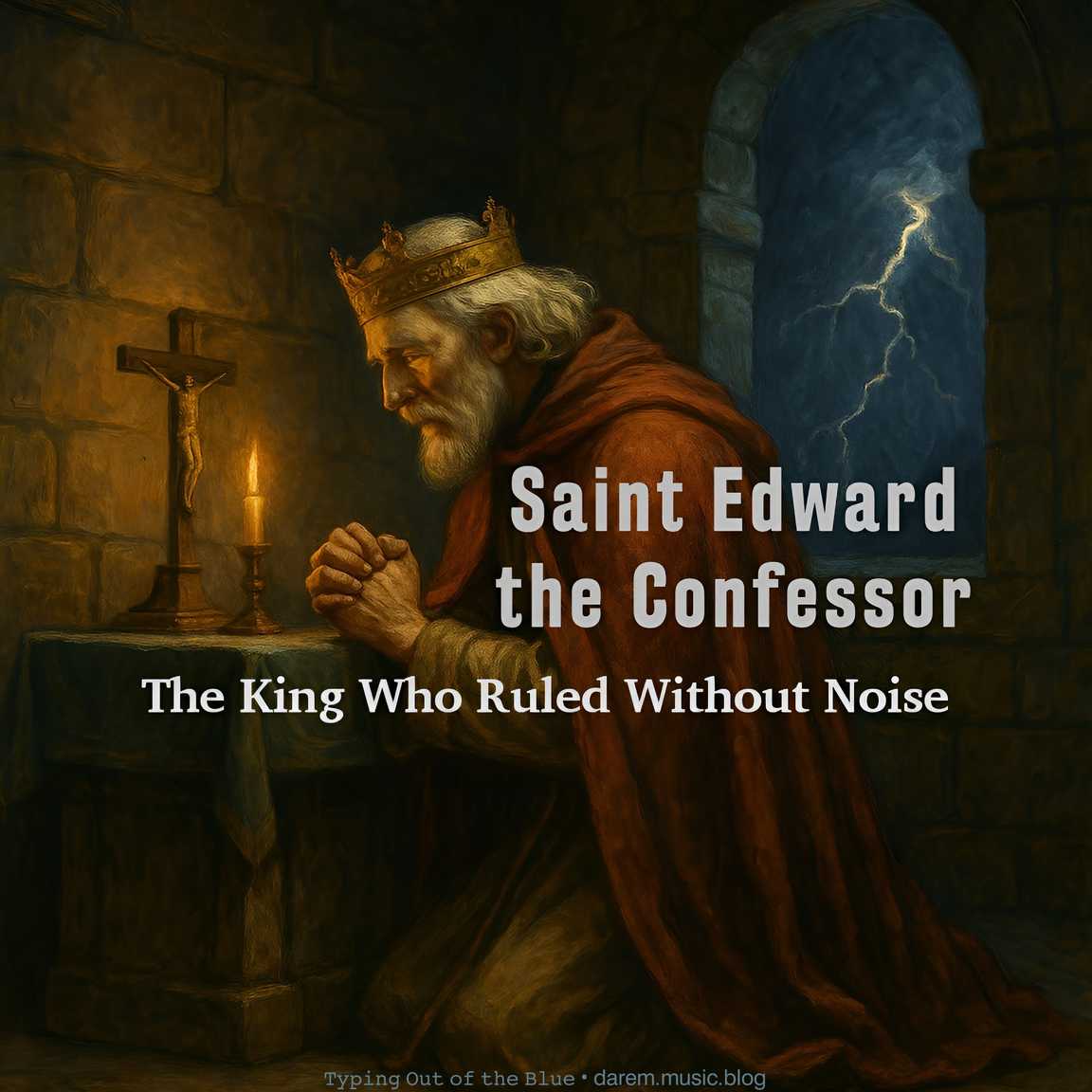
Saint Edward the Confessor

Amid the noise of power and pride, one king proved that peace can rule louder than any sword.

The King Who Ruled Without Noise

In the 11th century, when kings proved power through conquest, King Edward the Confessor ruled by peace. While others built empires through blood, he built trust through patience. When his court was full of greed and noise, he’d quietly walk out and pray, saying, “Lord, make me rule with peace, or take the crown from me.”

He didn’t need to roar to be heard. His silence had weight. His fairness outlasted swords. He’s probably the only medieval king remembered more for peace than conquest—and that’s what made him rare.

Maybe that’s why England remembered him—not as a warrior, but as a confessor: one who lived his faith instead of preaching it.

Today, his story speaks to every heart tired of the noise. In a world obsessed with control, King Edward reminds us that power means nothing without conscience. That true leadership begins where ego ends.

We don’t need thrones to follow his path. Just moments where we choose peace over pride, calm over chaos, kindness over winning.

It wasn’t his crown that made him a saint—it was his calm.

⌨ ᴛʸᵖⁱⁿᵍ ᴏᵘᵗ ᵒᶠ ᵗʰᵉ ʙˡᵘᵉ ᵈᵃʳᵉᵐ ᵐᵘˢⁱᶜ ᵇˡᵒᵍ

Traces of courage, silence, and sacrifice—this is Saints.

Listen on Apple Music, Apple Music Classical, and YouTube Music