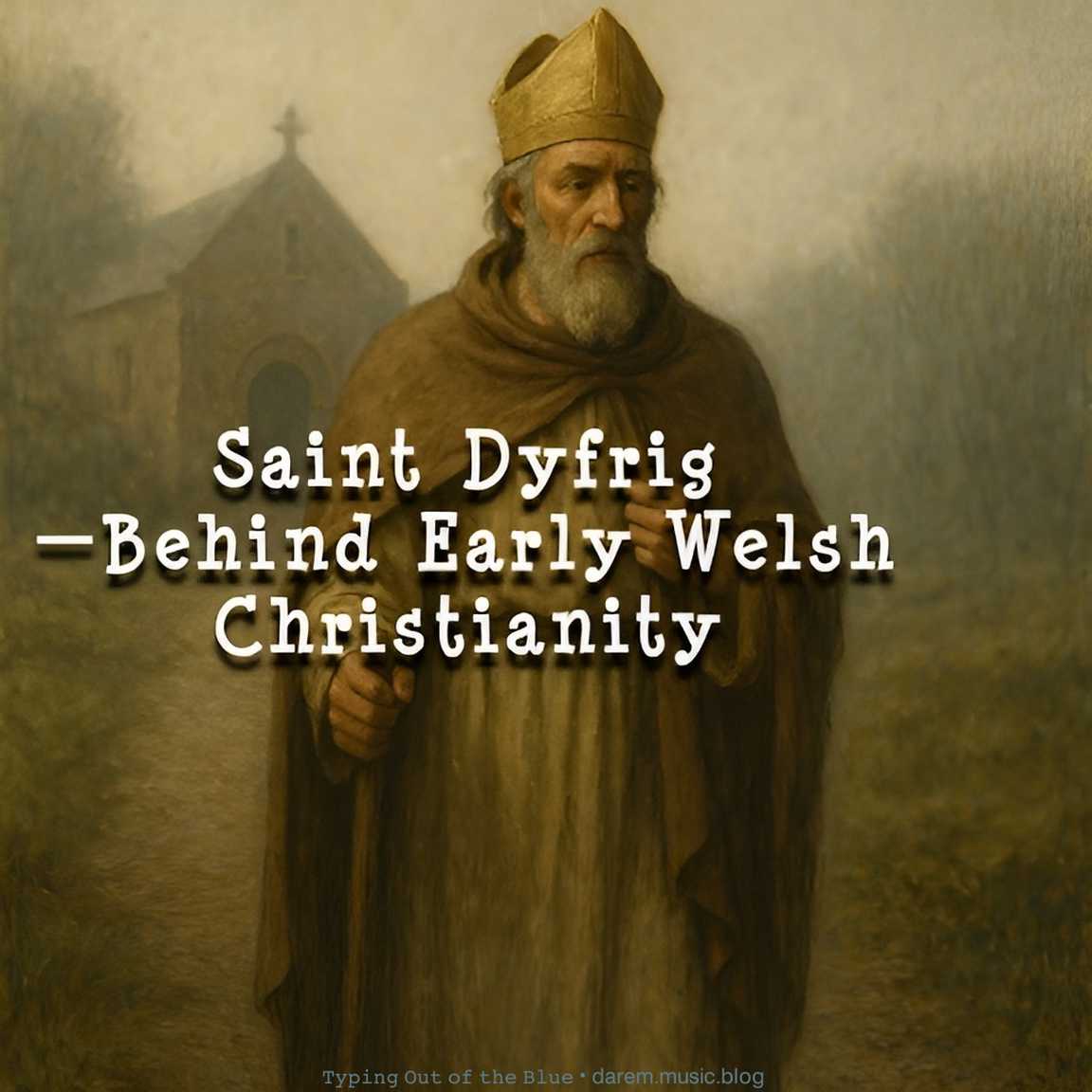
History doesn’t always leave loud heroes. Sometimes it leaves steady ones—people who build slowly, quietly, with a kind of strength that lasts longer than noise. Bishop Dyfrig is one of them.
He lived in Wales around the late 400s, a time when everything felt uncertain. Tribes were fighting, kingdoms were shifting, and people didn’t know who to trust. In that kind of world, Bishop Dyfrig chose a different path—he built places of learning, formed leaders, and created spaces where people could breathe, pray, and grow.
He founded Hentland and Mochros, both centers for training future priests. His work wasn’t dramatic. It was steady, day-to-day effort—teaching, guiding, and shaping a community that would outlive him. No flash. No theatrics. Just real work with real impact.
Later stories claimed he crowned King Arthur, but that belongs to legend. It’s fun to hear, but not the part that matters. The real Dyfrig didn’t need myths. His influence was already clear in the lives he shaped and the communities he strengthened.
He died around 550 AD, leaving behind a Wales that was more rooted and more hopeful than the one he entered. His relics were later brought to Llandaff Cathedral in Cardiff, where devotion to Saint Dyfrig grew through the centuries.
Saint Dyfrig shows that you don’t need to be loud to shape history. Sometimes the strongest people are the quiet builders—the ones who keep going even when the world around them is falling apart.
Through steady leadership and simple faith, Saint Dyfrig helped carry his people through a fragile time—proof that a humble life can leave a deep mark.
⌨ ᴛʸᵖⁱⁿᵍ ᴏᵘᵗ ᵒᶠ ᵗʰᵉ ʙˡᵘᵉ ᵈᵃʳᵉᵐ ᵐᵘˢⁱᶜ ᵇˡᵒᵍ
Listen on Apple Music, Apple Music Classical, and YouTube Music
